


Weekly marketing wisdom you can read in 5 minutes, for free. Add remarkable ideas and insights to your inbox, once a week, by subscribing to our newsletter.
Conversion Rate Optimisation
A Practical Guide on How to Improve Conversion Rates
If you want to improve conversion rates, you cannot just throw ideas at the wall and hope something sticks. The process is far more methodical: you must diagnose why your visitors are not taking action, then test targeted changes to your website and messaging.
This is about turning the website traffic you already have into real business outcomes, like qualified leads and sales, by systematically removing the friction that stops people from taking that next step.
Table of contents:
The Commercial Case for Conversion Rate Optimisation
Before exploring the tactics, it is crucial to understand why improving your conversion rate is one of the highest-impact activities any business can undertake. This is not about changing button colours for aesthetic reasons; it is a core commercial strategy that directly improves your bottom line.
If you are paying for traffic from Google Ads or investing heavily in SEO, a low conversion rate means a significant portion of that budget is wasted. You are, in effect, filling a leaky bucket.
Conversion Rate Optimisation (CRO) is the process of plugging those leaks. You are already doing the hard work of attracting potential customers. CRO ensures that effort delivers the maximum possible return by making your existing assets work much harder.
More Than Just a Percentage Point
Even a small, incremental improvement in your conversion rate can have a compounding effect on your entire business model. Bumping your conversion rate from 1% to just 2% is not a minor tweak—it doubles the number of leads you generate from the exact same traffic and marketing spend.
That simple change makes your business dramatically more efficient and scalable overnight.
For a UK business spending £5,000 per month on paid ads, doubling the conversion rate from 1% to 2% effectively halves the cost per lead from £50 to £25. This does not just save money; it frees up budget, fuels faster growth, and puts serious pressure on competitors who are not as efficient.
The Strategic Business Benefits
A solid focus on CRO delivers tangible results that go far beyond a better-looking website. The strategic advantages are clear, measurable, and commercially impactful:
- Lower Cost Per Acquisition (CPA): When you convert more of your existing visitors, you get more leads or sales without having to increase your ad spend. Every marketing pound you invest suddenly goes further.
- Increased Lead Quality and Volume: It is not just about getting more leads, but better leads. A well-optimised user journey ensures that prospects clearly understand your value proposition, so the leads you get are better qualified.
- Improved Return on Ad Spend (ROAS): Every channel driving traffic to your site—from paid social to organic search—delivers a much healthier financial return when your conversion rate is higher.
- Greater Scalability: A strong baseline conversion rate is the foundation for profitable growth. You can afford to bid more aggressively for traffic because you know each visitor is more likely to convert into a customer.
Ultimately, CRO is about building a more resilient and profitable business. It transforms your website from a passive digital brochure into an active, high-performance asset that consistently generates sales and leads. The next sections provide a practical framework to make that happen.
Diagnosing Your Conversion Funnel to Find Growth Opportunities
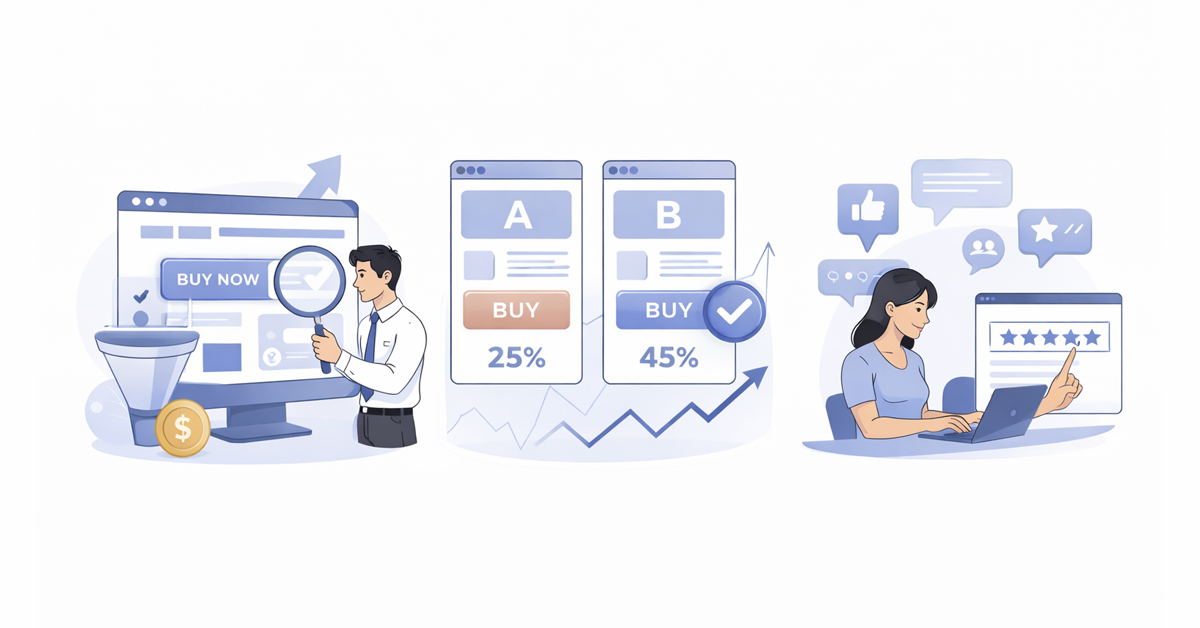
You cannot fix a problem you do not understand. To improve conversion rates, you first need to diagnose precisely where your sales funnel is leaking revenue. This is not about guesswork; it is about using data to find and act on the growth opportunities hiding in plain sight.
The starting point for any diagnosis is your website analytics, which for most businesses means Google Analytics 4. Think of this as the quantitative foundation: it tells you what is happening and points you towards the areas that require urgent attention.
Starting with a Quantitative Data Audit
Your analytics platform holds all the clues. Instead of getting bogged down in dozens of reports, your initial focus should be on a few critical areas to spot the biggest performance gaps. We are looking for pages that receive plenty of traffic but fail to turn that attention into action.
Start by digging into these key reports:
- Pages and screens report: Sort this by user volume to see your most visited pages. Now, cross-reference this with their conversion rates. A high-traffic landing page with a conversion rate near zero is a massive red flag and a prime candidate for immediate investigation.
- Funnel exploration: If you have set up conversion funnels (for a checkout process or an enquiry form, for example), this report is invaluable. It will show you exactly which step in the journey has the highest drop-off rate, pinpointing the specific point of friction.
When diagnosing your funnel, it is also crucial to assess the efficiency and usability of your payment processes. For detailed insights on optimising these critical stages, resources from expert payment solutions can be very helpful.
Uncovering the ‘Why’ with Qualitative Tools
Analytics tells you where the leaks are but rarely explains why they are happening. To understand the user behaviour behind the numbers, you need to add a qualitative layer to your investigation. This is where tools like heatmaps and session recordings become indispensable.
This simple flow chart captures the core CRO methodology, moving from understanding data to forming ideas and then testing them.
It perfectly illustrates how effective optimisation is a continuous cycle of insight, hypothesis, and validation—not a one-off fix.
- Heatmaps provide an aggregated, visual overview of where users click, move their mouse, and how far they scroll down a page. This can instantly reveal if your most important calls-to-action are being ignored or if people are clicking on non-clickable elements out of frustration.
- Session recordings are videos of anonymous users interacting with your site. Watching these is like looking over a user’s shoulder. You will see exactly where they hesitate, get confused, or run into bugs or clunky design.
I once discovered from session recordings that a critical form field was broken on a specific mobile device. It was an issue that would never have shown up in a standard analytics report, and that single insight uncovered a problem that was costing the client thousands in lost leads every month.
By combining the “what” from your analytics with the “why” from user behaviour tools, you build a complete picture. You go from knowing that a page has a high exit rate to understanding that users are leaving because the main CTA is buried below the fold and the form is too complicated. This clarity is the bedrock for creating smart, data-informed hypotheses with a high chance of improving your conversion rates.
Securing Quick Wins with High-Impact UX Fixes
While a structured testing programme is the engine for long-term growth, you do not have to wait months to see results. Often, the biggest barriers stopping users from converting are simple friction points in your website’s user experience (UX). Tackling these high-impact areas first can deliver immediate, measurable improvements to lead generation and sales.
These are not complex overhauls. Think of them as targeted, commercially-grounded fixes designed to remove roadblocks and make it simple for motivated prospects to take the next step. It is a pragmatic way to boost conversion rates without a large investment in time or resources.
Optimise Your Above-the-Fold Experience
The first screen a visitor sees—the “above-the-fold” section—is your most valuable digital real estate. If you fail to communicate your value in the first few seconds, you have likely lost them.
Your goal here is simple: answer three questions instantly. What do you do? Who is it for? Why should they care?
A vague headline or a confusing layout forces users to work too hard. Ensure your primary headline clearly states the outcome you deliver for your customers. Support this with a concise subheading and a hero image that reinforces your message rather than being purely decorative.
Page load speed is another critical factor. Research shows that a delay of just a few seconds can cause bounce rates to surge by over 100%. Compressing images and streamlining code are not just technical chores; they are vital commercial activities that keep potential leads on your site long enough to convert.
Redesign CTAs and Forms for Clarity
Your calls-to-action (CTAs) and lead capture forms are the final hurdles between a visitor and a conversion. This is where countless businesses unknowingly sabotage their own success with poor design choices.
Vague, passive CTAs like “Submit” or “Learn More” create uncertainty. Instead, switch to action-oriented language that sets clear expectations.
-
Weak CTA: “Submit”
-
Stronger CTA: “Get Your Free Quote”
-
Weak CTA: “Download”
-
Stronger CTA: “Download the 2024 Report”
The change is subtle but powerful. The user knows exactly what will happen when they click, which reduces friction and makes them more likely to follow through.
The most effective CTAs do not just tell a user what to do; they articulate the value the user will receive. This simple shift in perspective from instruction to value exchange is fundamental to improving conversion rates.
Your lead capture forms are just as important. The more fields you ask someone to fill in, the more friction you create. In a well-known example, Expedia found that removing a single non-essential field from their booking form increased annual profits by a staggering £9 million.
For B2B lead generation, be ruthless. Do you really need their company size and job title on the initial enquiry? Or can you gather that information later in the sales process? Every field you remove makes converting that little bit easier.
Simplify Navigation and Ensure Mobile Usability
Finally, do not overlook the basics of website navigation. If people cannot easily find what they are looking for, they will leave. It is that simple.
Review your main menu. Is it logical? Are the labels clear and unambiguous? A confusing navigation structure is a major source of frustration that directly harms your ability to convert traffic.
With so much traffic now coming from mobile devices, ensuring your site is fully responsive is non-negotiable. This means more than having a site that shrinks to fit a smaller screen. Forms must be easy to complete with a thumb, buttons need to be large enough to tap, and text must be readable without pinching to zoom. A poor mobile experience is a guaranteed way to alienate a huge segment of your audience and lose valuable leads.
Building a Hypothesis-Driven A/B Testing Framework
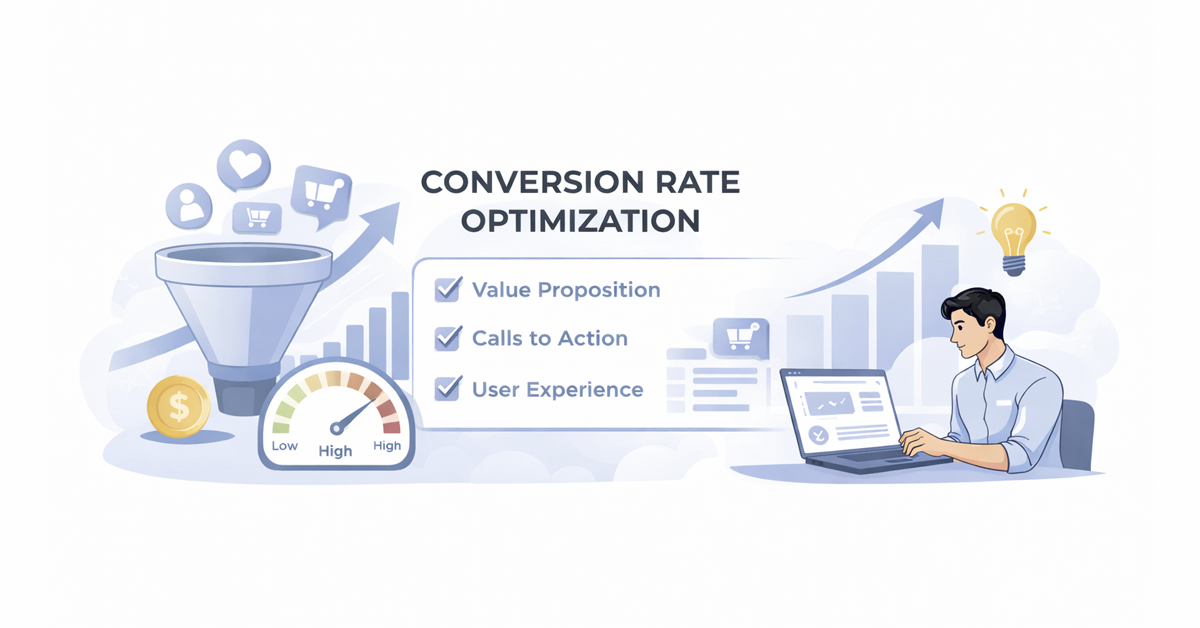
Once you have addressed the low-hanging fruit, sustainable growth comes from a more disciplined process. This means moving beyond quick fixes and guesswork to making decisions based on data, not gut feelings. This is where a proper A/B testing framework comes into play.
At its heart, an A/B test is a controlled experiment. You take a webpage, create two versions—the original ‘control’ (Version A) and your new idea, the ‘variation’ (Version B)—and show them to different groups of visitors simultaneously. By tracking which one achieves more conversions, you determine whether your change made a positive, negative, or negligible difference.
This process removes ego from decision-making. Choices are no longer based on what the CEO or marketing manager thinks looks better. Instead, they are based on hard data about what convinces people to take action.
From Observation to Testable Hypothesis
Every good A/B test starts with a solid hypothesis, not a random idea. The insights you uncovered during diagnostics—from your analytics deep-dive, heatmaps, and session recordings—are the ideal foundation for building these hypotheses.
A strong hypothesis has a clear structure: “If I change [X], then [Y] will happen, because of [Z].”
- [X] is the specific change you are making: For instance, swapping the CTA button text from a generic “Submit” to a value-driven “Get Your Free Proposal”.
- [Y] is the result you expect: A measurable increase in form submissions.
- [Z] is your reasoning: The new text is more specific, tells the user exactly what they’re getting, and clearly communicates the benefit.
This structure forces you to be strategic. It links a specific change to a real business metric and roots it in an understanding of user psychology. For a deeper dive into this, our guide on conversion rate optimisation best practices has more examples.
Prioritising Your Tests for Maximum Commercial Impact
You have a list of well-structured hypotheses. What next? You cannot test everything at once, and some ideas have far more potential to move the needle than others. This is where you need a simple prioritisation method.
A framework I have found incredibly effective is PIE. It forces you to score each testing idea against three criteria:
- Potential: How big an improvement could this change realistically deliver? Testing a new headline on your highest-traffic landing page has massive potential compared to tweaking a button colour on a forgotten blog post.
- Importance: How valuable is the traffic on this page? Optimising your main service page where high-intent visitors land is far more important than fiddling with your ‘About Us’ page.
- Ease: How difficult is this test to implement? Changing text is easy. A complete page redesign requiring a developer is not.
Score each idea from 1 to 10 for each category and add them up to create a prioritised roadmap. This simple exercise ensures your limited resources are always focused on the tests most likely to deliver a significant commercial return, quickly.
Sample A/B Testing Ideas for B2B Websites
For most B2B service firms, the biggest wins often come from tests that clarify value, build trust, and reduce friction for potential clients.
Here is a table of common A/B tests that tend to perform well in a B2B context.
| Element to Test | Hypothesis Example | Primary Metric |
|---|---|---|
| Headline & Sub-headline | A benefit-led headline will outperform a feature-led one because it speaks directly to the customer’s desired outcome. | Enquiry Form Submissions |
| Call-to-Action (CTA) Text | Changing CTA text from “Contact Us” to “Request a Consultation” will increase clicks because it sets a clearer expectation. | CTA Click-Through Rate |
| Landing Page Layout | Placing the lead capture form above the fold will increase conversions by making it visible without scrolling. | Lead Conversion Rate |
| Social Proof Placement | Moving client logos and testimonials higher up the page will build trust earlier and reduce the page exit rate. | Bounce Rate / Form Fills |
This is just a starting point. Your own diagnostics will reveal the best opportunities for your specific audience.
Finally, you cannot talk about A/B testing without mentioning statistical significance. This is a measure of how confident you can be that your results are not just a random fluke. You should aim to run any test until it reaches at least a 95% confidence level. One of the biggest mistakes people make is stopping a test too early just because one version is ahead. Patience is key. Rigorous, statistically sound testing is the only way to build a reliable lead generation engine.
Optimising Key Marketing Channels for Higher Conversions
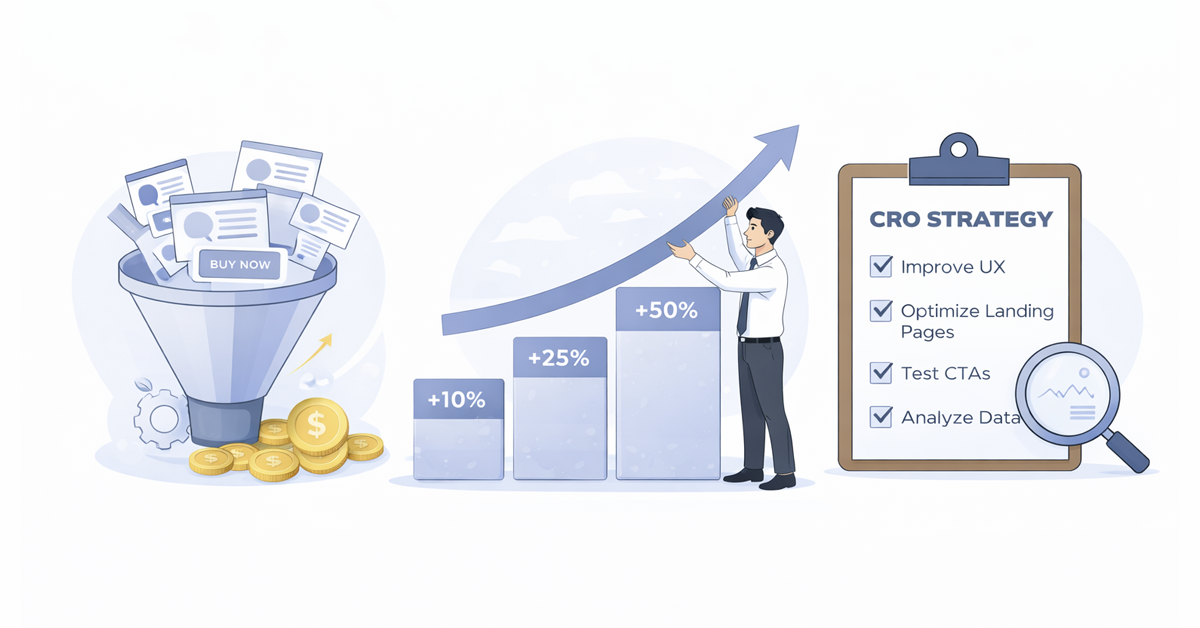
You can have the most persuasive website in the world, but if the journey to get there is disjointed, you are wasting money. Effective conversion optimisation is not just about tweaking your site; it is about creating a seamless path from every marketing channel that sends you traffic.
A potential customer might click an advert that makes a specific promise, only to land on a generic page that does not follow through. Or they find you through a Google search but cannot figure out what to do next. These are classic lead-leaking scenarios. Real growth happens when you create a cohesive, high-performance journey across every touchpoint.
This means aligning your messaging, user experience, and calls-to-action from the initial click all the way through to the final conversion. Each channel has its own nuances, and the trick is optimising them individually while ensuring they work together.
Aligning Paid Advertising with Dedicated Landing Pages
One of the most common—and expensive—mistakes in paid advertising is sending high-intent traffic from a Google or Meta Ad to a generic homepage. It is a conversion killer. Your ad promises a specific solution, and if the landing page does not instantly deliver on that promise, people will leave. This pushes up your cost per lead and harms your conversion rate.
The solution? Create dedicated, message-matched landing pages for each major ad group or campaign.
- Mirror the Ad Copy: Your landing page headline should directly echo the ad headline they just clicked. It is an immediate signal that they are in the right place.
- Remove Distractions: A dedicated landing page has one job. Remove the main website navigation, footer links, and anything else that could pull the user away from the primary call-to-action.
- Maintain Visual Consistency: Use similar imagery, colours, and branding from your ad creative on the landing page. It builds trust and creates a frictionless experience.
This focused approach smooths the user’s journey, directly connecting the problem they searched for with the solution you offer.
Optimising High-Intent SEO Pages
For organic search, the principle is the same, but the execution is different. The goal is to fine-tune your high-intent commercial pages—your core service or product pages—to give visitors from search engines a clear and compelling path to conversion. These people are actively looking for what you sell; your job is to make it easy for them to choose you.
A crucial part of this is mastering effective Call to Action (CTA) strategies. Ensure your CTAs are impossible to miss, clearly state the benefit of clicking, and are placed logically where a user would naturally look for the next step.
For a keyword like “commercial cleaning services London,” the user’s intent is clear. The page must immediately present the service, build credibility with testimonials or case studies, and feature prominent “Get a Free Quote” buttons both above the fold and after key sections.
Creating a Cohesive Multi-Channel Experience
Today’s B2B buyers rarely convert after a single interaction. They might see a LinkedIn ad, Google your company name, and then sign up for your newsletter before they consider making an enquiry. If your channels are operating in silos, you are missing how modern buyers behave.
A cohesive strategy ensures your brand message is consistent everywhere and that each channel supports the others, creating a powerful compounding effect. Multi-channel lead generation is no longer a “nice-to-have”. UK businesses using multiple touchpoints are seeing conversion rates that are a staggering 287% higher than those sticking to single-channel campaigns.
In practice, you could run a LinkedIn ad campaign targeting a specific industry. When someone clicks through to your site, a remarketing pixel fires, allowing you to show them follow-up ads on Google’s display network. At the same time, their engagement could trigger a personalised email sequence, nurturing their interest until they are ready to talk. This integrated system works much harder and is more likely to turn a prospect into a high-quality lead.
Measuring Success and Proving the ROI of Your Efforts
Conversion optimisation is not a one-off project; it is a continuous commercial activity. To justify the ongoing investment and demonstrate its value, you must tie every test and tweak back to tangible business outcomes.
Success is not just about nudging a conversion rate up by a percentage point. It is about proving the financial impact on the bottom line.
This means you need to look beyond the primary conversion rate. While that number is important, it is only one piece of the puzzle. An effective measurement framework focuses on the KPIs that matter most to senior stakeholders and the finance department—the metrics that show how your work is driving profitable growth.
Establishing Your Core Commercial KPIs
To prove the return on investment (ROI) of your CRO work, your reporting must be simple, clear, and focused on commercial impact. Ditch vanity metrics and build your reporting around these essentials:
- Cost Per Lead (CPL): This calculates the direct cost of acquiring each new lead. As you improve your website’s conversion rates, your CPL should drop, which is hard evidence that your marketing spend is becoming more efficient.
- Lead-to-Customer Rate: This is about the quality of the leads you are generating. A higher website conversion rate should ideally be accompanied by a stable or increasing lead-to-customer rate. It proves you are not just getting more leads, but better leads.
- Return on Ad Spend (ROAS): For paid campaigns, this is the ultimate measure of success. It shows the direct revenue generated for every pound spent on advertising. Improving landing page conversions directly boosts this figure.
These are the metrics that connect your website optimisation efforts directly to sales efficiency and revenue.
Advancing Beyond Volume to Quality with Lead Scoring
One of the most powerful ways to improve your entire sales funnel is to get serious about lead qualification. Not all leads are created equal. Implementing a lead scoring system helps your sales team focus their energy on the prospects most likely to buy.
In fact, behavioural lead scoring may be the highest-leverage conversion improvement available to UK marketing teams. Companies that deploy this methodology see MQL-to-SQL conversion rates of 39-40%, nearly three times the baseline industry average of 13%.
By assigning points based on what a user does—like visiting your pricing page, re-watching a demo, or downloading a specific case study—you create a clear hierarchy of intent. This ensures that your high-value Marketing Qualified Leads (MQLs) are fast-tracked to the sales team, which dramatically improves efficiency and shortens the sales cycle.
Answering Your Top CRO Questions
Over the years, I have noticed the same questions come up repeatedly from business owners trying to get a handle on CRO. Here are some clear, commercially-focused answers.
What Is a Good Conversion Rate for a UK B2B Website?
You will often hear people cite a visitor-to-lead conversion rate of 2-5% as a general benchmark. However, fixating on that number can be a distraction. The only metric that truly matters is your own baseline.
A ‘good’ rate is one that improves every month, driving real, profitable growth for your business. The goal is not to hit a generic industry figure that might be irrelevant to your sector, pricing, or sales cycle. The win is achieving predictable, incremental progress. Focus on beating your own numbers.
How Long Should I Run an A/B Test For?
This is a critical point. You need to run an A/B test long enough for the results to be statistically significant, which means you can be confident the outcome is not a fluke. We always aim for a confidence level of at least 95%.
In practice, this usually means running a test for at least one or two full business cycles—typically two to four weeks. This helps smooth out any fluctuations in user behaviour between a Monday morning and a Friday afternoon.
Crucial Tip: Never stop a test early just because one variation takes the lead. It is a classic mistake that often leads to false positives and costly decisions. Let it run its course.
Can I Improve Conversion Rates Without a Full Website Redesign?
Yes, absolutely. In fact, for most businesses, it is a much smarter approach. A full website redesign is a massive, high-risk gamble. When you change everything at once, it becomes impossible to know what actually caused performance to improve or decline.
A proper CRO programme is about small, iterative, and measurable improvements. You systematically test individual elements—a headline, a call-to-action, a different form layout—and make decisions based on hard data. These targeted tweaks are lower risk, easier to measure, and often deliver huge gains without the high cost and disruption of starting from scratch.
Ready to stop leaving money on the table? The team at Lead Genera builds high-performance websites and lead generation strategies that turn more of your traffic into revenue.
Categories
Do You Need Assistance With
Sign Up To Our Newsletter