


Weekly marketing wisdom you can read in 5 minutes, for free. Add remarkable ideas and insights to your inbox, once a week, by subscribing to our newsletter.
Content Marketing
How to Create a Content Strategy That Drives Commercial Growth
Knowing how to create a content strategy is what separates a marketing cost from a valuable commercial asset. The process requires defining your audience, setting clear commercial goals, and building a repeatable system for creating content that attracts qualified leads and directly supports your sales pipeline.
Table of contents:
Why Your Business Needs a Commercial Content Strategy
Content marketing is often misunderstood. For many businesses, it’s simply about writing blog posts or keeping social media channels active. This approach treats content as an operational task, a cost centre with unpredictable returns.
A robust commercial content strategy turns that idea on its head. It is not about vague “brand storytelling”; it is about engineering a predictable growth engine for your business.
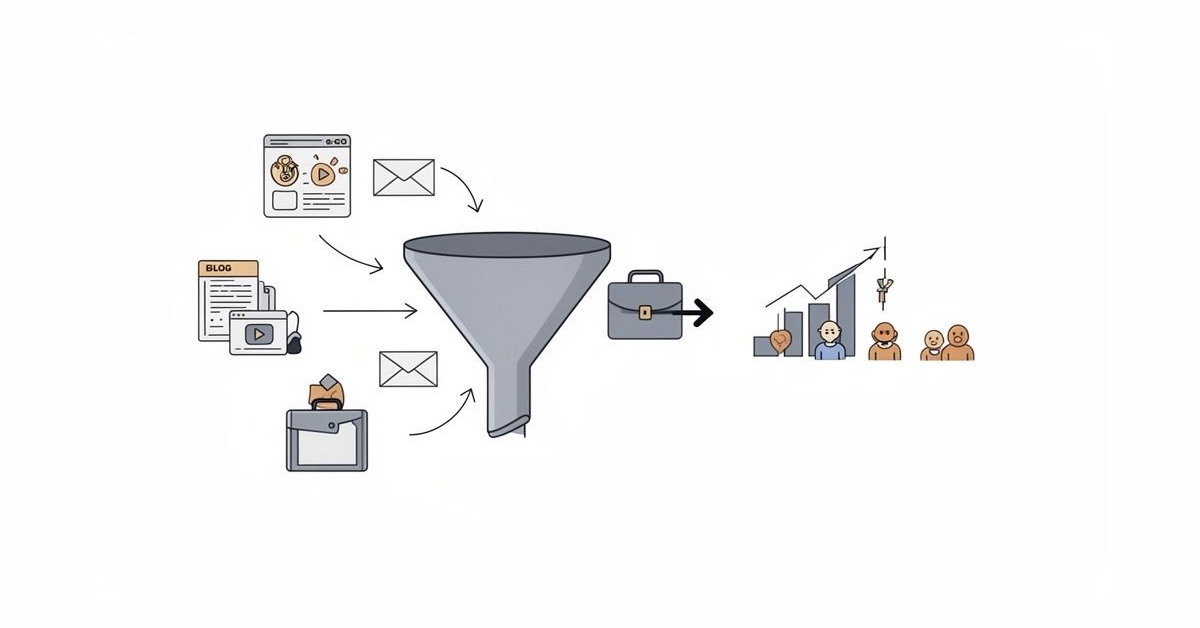
Without a strategy, your content creates noise. With a strategy, you build a system that delivers tangible business results. The objective is to move away from random acts of content and develop an integrated machine where every article, video, and social post is aligned with revenue growth.
From Cost Centre to Growth Engine
The difference between simply “doing content” and executing a content strategy is significant. Publishing content without a plan might generate occasional traffic spikes, but it rarely builds sustainable momentum. A strategic approach ensures every piece of content has a specific job to do within your sales funnel.
This shift in thinking delivers clear commercial benefits:
- Lower Cost Per Lead: By consistently attracting qualified prospects through search and social media, you reduce reliance on expensive paid advertising. Your content becomes a long-term asset, generating leads for months and years after publication.
- Improved Sales Efficiency: High-quality content answers common questions, addresses objections, and builds trust before a prospect speaks to your sales team. This shortens the sales cycle and allows your team to focus on closing deals with well-informed, high-intent leads.
- Enhanced Brand Authority: When you consistently publish genuinely valuable content, you position your business as a trusted expert. This authority not only attracts customers but also builds a competitive advantage that is difficult to replicate.
An effective content strategy transforms your website from a digital brochure into your most effective salesperson. It works 24/7 to educate prospects, build trust, and qualify leads before they enter your pipeline.
Ultimately, knowing how to create a content strategy is about building an accountable, results-driven marketing function. It focuses your efforts, ensures your budget is invested wisely, and guarantees your content contributes directly to revenue.
To execute this correctly, it helps to understand the broader context. This modern social media and content strategy guide is a useful resource for understanding the “why” before we explore the practical “how” of building your own growth-focused plan.
Foundational Audit and Audience Analysis
Creating a content strategy without a clear starting point is like building a house without foundations. You need a brutally honest assessment of your current position and a deep understanding of who you are trying to reach. This initial work ensures every subsequent decision is grounded in commercial reality, not guesswork.

This process is not about chasing vanity metrics like total traffic or social media followers. It is a strategic audit designed to uncover what is, and what is not, contributing to your bottom line. The goal is to build your new strategy on a solid foundation of commercial data.
Conducting a No-Nonsense Content Audit
Before creating new content, you must analyse what you already have. Most businesses possess a handful of high-performing pages that, with some optimisation, could deliver significantly more value. Your first task is to identify them.
Focus your audit on these key commercial questions:
- Which pages generate qualified leads? Analyse goal completions in Google Analytics. Pinpoint the blog posts, service pages, or case studies that are actually driving form submissions, phone calls, or demo requests.
- What content ranks for high-intent keywords? Use tools like Semrush or Ahrefs to find pages ranking for keywords with commercial terms such as “services,” “company,” or “for sale.” These are your most valuable SEO assets.
- Where are your competitors winning? A content gap analysis reveals valuable keywords your competitors rank for that you do not. This provides a direct roadmap for creating content to capture their market share.
This audit provides a clear, objective view of the competitive landscape. You will quickly see which content formats are working, which topics resonate with your audience, and where the biggest commercial opportunities lie. It prevents wasted resources and directs your budget towards proven performers.
Moving Beyond Generic Personas
Once you know what works, you need to understand who it works for. The typical marketing persona, a vague character sketch with a stock photo, is often useless. To create a content strategy that drives leads, you need customer profiles built on real-world data, not assumptions.
An effective customer profile is a strategic document, not a creative writing exercise. It should be built from direct customer feedback and sales intelligence, detailing the specific pains, triggers, and objections that influence a purchasing decision.
To build these commercially focused profiles, you must gather qualitative intelligence. This means moving beyond basic demographics to understand the psychology of your buyer.
Your intelligence-gathering process should include:
- Interviewing Your Sales Team: They are on the front line every day. Ask them what questions prospects always ask, what objections they have to overcome, and what “aha” moment typically precedes a sale.
- Speaking to Real Customers: Phone your best clients. Ask them what problem they were trying to solve when they found you, what other solutions they considered, and why they ultimately chose your business.
- Analysing Website and CRM Data: Look for patterns. Which industries or job titles are most common among your leads? What journey did they take through your website before converting?
This deep analysis forms the second pillar of your foundation. You will know exactly what problems your audience faces and the language they use to describe them. This knowledge is essential for creating content that connects, builds trust, and persuades. For a more detailed approach, see our guide on segmenting your target market for better lead generation.
Defining Your Core Message and Content Pillars
With a solid grasp of your audience and market position, it’s time to define what you are going to say. This is where strategic thinking translates into tangible action. We move from analysis to building a messaging framework that makes your business the only logical choice for your ideal customer.
This is not a vague mission statement to be forgotten. We are talking about a clear, compelling core message that addresses the exact pains and goals you uncovered during audience research. A strong core message is the central thread that runs through all of your marketing activities.
Crafting Your Core Messaging Framework
Your core message must be a direct answer to one question: “Why should someone choose us over a competitor, or doing nothing at all?” It has to forge a direct link between your unique value and your customer’s biggest challenge. Think of it as the bedrock for every piece of content you will create.
To establish this framework, focus on three key elements:
- The Problem: Get crystal clear on the specific, tangible problem your ideal customer is facing. Use their own words, the exact language you gathered from sales calls and customer interviews.
- The Solution (Your Unique Approach): Explain how you solve that problem in a way that is different from anyone else. This is your unique selling proposition (USP), framed as a direct answer to their problem.
- The Outcome: Describe the successful future your customer will achieve after working with you. This needs to be a measurable, desirable business outcome, such as an increase in lead quality, a reduction in operational costs, or a more efficient sales pipeline.
This simple structure forces you to be honest about the value you provide. It keeps your messaging firmly focused on the customer and their results, helping you avoid the vague, self-serving jargon common in B2B marketing.
Translating Messaging into Content Pillars
With your core message established, the next step is to break it down into 3-5 core content pillars. These are the high-level themes or topics your business will own. They act as strategic guardrails for your editorial calendar, ensuring every blog post, case study, or video is relevant, consistent, and contributes to your business goals.
Content pillars are the antidote to ‘random acts of content’. They provide the structure needed to build topical authority with search engines and establish genuine expertise with your target audience, turning your content from a scattered collection of articles into a cohesive library of valuable assets.
For example, if you are a B2B software company focused on sales efficiency, your pillars might be:
- Sales Process Optimisation: Content focused on frameworks for shortening sales cycles, improving qualification, and streamlining team workflows.
- Lead Management & Nurturing: This would cover managing inbound leads, creating effective follow-up sequences, and converting MQLs into SQLs.
- Sales Performance Analytics: This pillar would be dedicated to tracking the right KPIs, building insightful dashboards, and using data to coach sales teams.
Notice how these are not just keywords. They are broad subject areas that tie directly back to the core message. They give your team a clear brief on what to create, making content planning far more efficient.
To explore this further, you can learn more about what a content pillar is and why it matters for SEO in our detailed guide. Getting this step right is crucial for building a content engine that delivers predictable, long-term growth.
Choosing the Right Channels and Content Formats
Once you have defined your core message and content pillars, you must decide where to publish and what to create. A common mistake is to adopt the latest platform or content trend without asking: “Is our audience even here?”
Excellent content on the wrong channel is a waste of time and money.
This is not about being everywhere. It is about being exactly where your ideal customers are actively looking for solutions. Your channel selection must be a sharp, commercial decision, not a reaction to what others are doing.
Aligning Channels with Your Audience
Your audience analysis provides the map for this stage. Where do your ideal clients spend their time online? A director at a construction firm is far more likely to be on LinkedIn or browsing industry forums than watching TikTok videos. Conversely, a B2C brand targeting Gen Z would be foolish to ignore Instagram and short-form video.
You must prioritise the platforms that directly support your business goals. Consider the user’s mindset on each channel.
- Search Engines (Google): Users here have a problem and want an immediate solution. Their search intent is high, making it the perfect place for SEO-driven blog posts, service pages, and in-depth guides that answer specific questions.
- LinkedIn: This is the default B2B platform for networking and professional development. It is the ideal place to share industry insights, case studies, and thought leadership articles to build authority and reach decision-makers.
- Email: This is your direct communication channel. Use it to nurture leads with exclusive content, share your best articles, and promote high-value assets like webinars or downloadable guides.
- Industry-Specific Forums & Communities: These are often-overlooked goldmines. Participating in relevant discussions and sharing genuine expertise, not just sales pitches, can build incredible trust and generate highly qualified leads.
Do not spread yourself too thin by trying to master every channel at once. It is far more effective to dominate one or two core channels where your audience is truly engaged than to have a weak, sporadic presence on five.
Start where you have the highest chance of connecting with prospects who are ready to take action. You can always expand later as you gather data and see what is working.
Selecting Commercially Viable Content Formats
With your channels chosen, the next task is selecting the right content formats. The key is to create a balanced mix that engages people at different stages of their buying journey and matches their consumption preferences.
Recent data shows a clear preference in the UK for a blend of visual and written content. According to a recent LOCALiQ report, 65% of UK businesses actively use content marketing. The most popular format is images (79%), closely followed by newsletters (61%) and blogs (60%).
Interestingly, while 64% of businesses create short-form video, crucial bottom-of-funnel assets like case studies are only used by 47%. This highlights the importance of a balanced strategy that both captures attention and proves your value. You can explore the details in the full UK digital marketing statistics report.
This infographic provides a visual breakdown of how your core message flows down into pillars and, ultimately, into the specific content you produce.
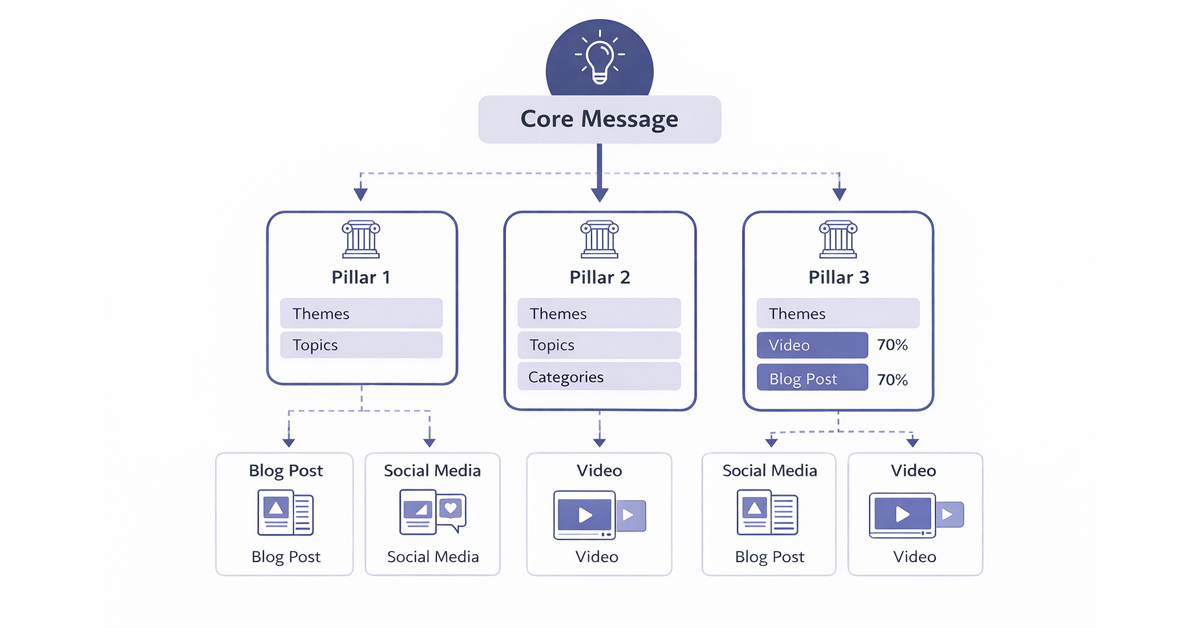
As you can see, there is a logical flow from your central strategy to structured pillars, which then guide the creation of specific, targeted assets.
Choosing the right format can be challenging, so I have created a quick comparison table showing the popularity of different formats versus their typical impact for B2B lead generation in the UK.
UK Content Format Adoption vs. Lead Generation Impact
| Content Format | Adoption Rate (UK Businesses) | Typical B2B Lead Gen Impact | Strategic Consideration |
|---|---|---|---|
| Blog Posts / Articles | 60% | High | The foundation of SEO and authority. Essential for attracting organic traffic and educating prospects at every stage. |
| Case Studies | 47% | Very High | Crucial for converting late-stage leads. Provides the social proof needed to close deals. Often underutilised. |
| Email Newsletters | 61% | High | Excellent for nurturing existing leads and driving repeat business. A direct line to your most engaged audience. |
| Downloadable Guides / Whitepapers | Not specified | Very High | A classic B2B lead magnet. Perfect for capturing contact details from prospects actively researching solutions. |
| Video (Short-Form) | 64% | Medium | Great for top-of-funnel brand awareness on social media, but direct lead attribution can be more difficult. |
| Video (Webinars / Long-Form) | Not specified | High | A powerful tool for generating qualified leads and demonstrating deep expertise to a captive audience. |
This table highlights a key point: just because a format is popular (like short-form video) does not mean it is the most effective for B2B lead generation. A strategic mix is always the best approach.
Here is a practical way to think about building your content mix:
- Blog Posts & Articles: These are the workhorses of any SEO-driven content strategy. They attract organic traffic, establish your expertise, and educate prospects from the moment they identify a problem.
- Case Studies & Testimonials: These are essential for building trust and proving you can deliver on your promises. They are non-negotiable for prospects who are close to a decision and need final validation.
- Video (Short & Long-Form): Video is excellent for demonstrating complex products, sharing client success stories, or building a more personal connection. Use short clips for social media and longer webinars or demos for serious lead generation.
- Downloadable Guides & Whitepapers: This is a cornerstone B2B lead generation tactic. By offering a valuable resource in exchange for an email address, you fill your pipeline with individuals who have shown clear interest in your services.
Your final content plan should be a deliberate blend of formats, all designed to attract, engage, and convert your ideal customer. My advice is to start with foundational written content like blogs, then layer in trust-building formats like case studies and engaging media like video. This is how you build a comprehensive and effective content engine.
Building Your Content Production and Distribution Engine
A strategy document is worthless if it remains unused. The real test is turning those ideas into a living system for creating and distributing content that gets results, week after week. This is where you build the engine that powers your entire marketing effort.
An effective content engine is not just about having good ideas. It is about process, efficiency, and relentless execution. It is the operational backbone that ensures every article, video, or social post is produced to a high standard, tied to a commercial goal, and actively promoted to the right audience.
From Calendar to Workflow
Think of your editorial calendar as the roadmap. It is a practical tool that outlines what content you are creating, for which content pillar, and when it will be published. However, a calendar alone is not enough. You need a clearly defined workflow that guides an idea from concept to completion smoothly.
This workflow should define:
- Roles and Responsibilities: Who briefs the work? Who writes, edits, and designs? Who publishes? Clear ownership is key to avoiding bottlenecks.
- Timelines and Deadlines: Be realistic about how long tasks take. A well-researched article can easily take several hours, so factor that into your schedule.
- Quality Control: What is the sign-off process? Create a simple checklist to ensure every piece is accurate, on-brand, and optimised for its channel before publication.
To improve the efficiency of your content machine, you can use tools to help with heavy lifting. For example, modern AI text-to-image tools can generate compelling visuals for blog posts and social media in a fraction of the time required for manual creation.
The Neglected Art of Distribution
Here is a hard truth: creating great content is only half the battle. The single biggest mistake businesses make is hitting “publish” and then hoping for the best. That passive approach is a recipe for failure.
Content distribution is not an afterthought; it is a fundamental part of the strategy itself. It is pointless to invest ten hours creating a brilliant article if you only spend ten minutes distributing it.
Effective distribution is an active, systematic process. It is about building a multi-channel framework focused on platforms that you know deliver commercial results. The data is clear. Only 29% of B2B marketers rate their content strategy as ‘very effective’, often because distribution is an afterthought. For B2B firms, LinkedIn delivers the best value for 85% of marketers, and email marketing still generates an impressive £36 for every £1 spent. This is why a documented distribution plan is non-negotiable.
Building a Content Repurposing Engine
To maximise your reach and ROI without burning out your team, stop thinking in terms of single content pieces and start thinking in terms of content campaigns.
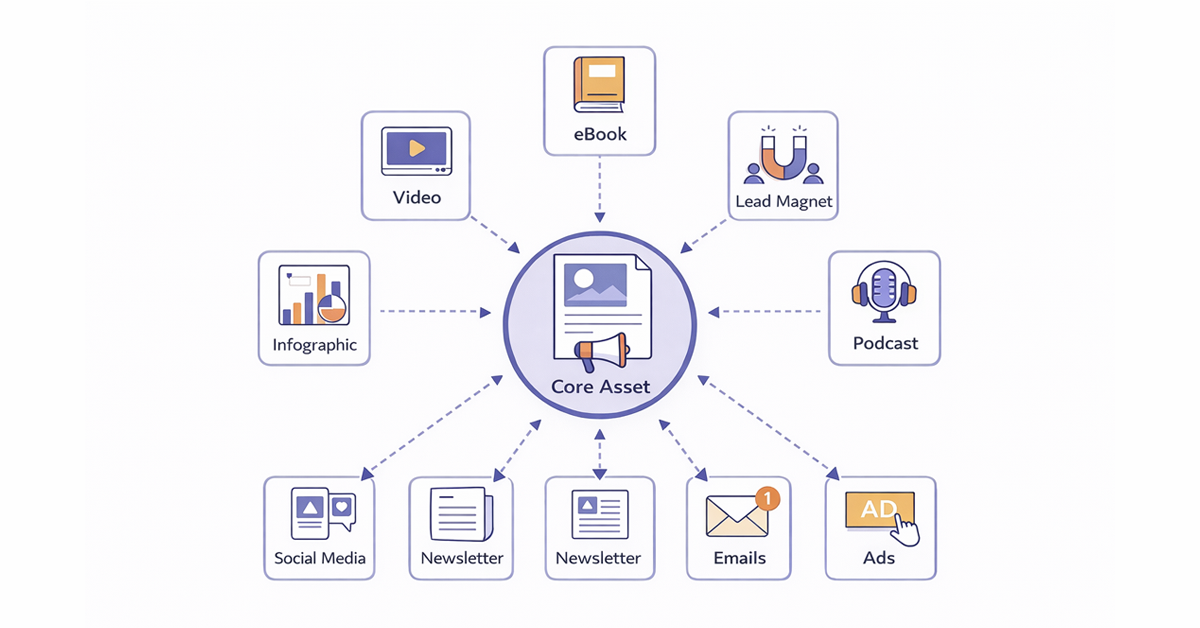
The idea is simple: create one substantial “core” asset, your main pillar piece, and then strategically adapt it into multiple formats for different channels. This “create once, distribute many” model builds a repeatable system that consistently drives value.
Here is a practical example of how this works:
- Core Asset: Start with a comprehensive, 2,500-word guide on “How to Choose the Right CRM for a Service Business.” This is your pillar, optimised for SEO to attract high-intent traffic.
- LinkedIn Articles: Break the guide down into three shorter, focused articles for LinkedIn. For example, “Top 5 CRM Features for Tradespeople” or “Common Mistakes When Buying a CRM.”
- Email Nurture Sequence: Turn the key insights into a five-part email series for your subscribers. Deliver bite-sized value directly to their inbox, always linking back to the full guide.
- Short-Form Video: Create a handful of 60-second video clips for LinkedIn or YouTube Shorts. Each video can answer a single, specific question addressed in the guide.
- Infographic: Design a visual summary of the key decision-making steps from the guide. This is perfect for sharing on social media and embedding in other blog posts.
With this approach, one major piece of work becomes a dozen or more marketing touchpoints. You get your core message in front of a much wider audience across multiple platforms, extracting maximum value from your initial investment. That is a powerful, lead-generating machine.
Measuring Performance and Optimising for Growth
A content strategy is not something you create and forget. It is a living part of your commercial engine that requires constant attention, measurement, and refinement. If you are not measuring, you are guessing. And guessing is an expensive way to run a marketing department.
The objective is to move beyond vanity metrics. Page views and social media likes may feel positive, but they reveal little about the commercial impact of your efforts. A successful strategy is judged by one thing: its direct impact on your business goals. You must focus on the tangible, bottom-line results that prove your investment is paying off.
Establishing Commercially Relevant KPIs
To determine whether your content is working, you need to track key performance indicators (KPIs) that are directly tied to lead quality and sales pipeline value. These are the metrics that show you not just who is consuming your content, but what they do next and how valuable those actions are to the business.
Your core measurement framework should focus on metrics like these:
- Marketing Qualified Leads (MQLs): The total number of leads from your content assets, such as downloadable guides or webinar sign-ups. This is your top-of-funnel volume.
- Sales Qualified Leads (SQLs): This is a critical metric. How many MQLs are strong enough for the sales team to actively pursue? This indicates the relevance of your content.
- Lead-to-Customer Conversion Rate: What percentage of leads generated by your content become paying customers? This is the ultimate test of your content’s effectiveness.
- Cost Per Acquisition (CPA): This is the total investment in a content campaign divided by the number of new customers it generated. It is your efficiency score.
Of course, tracking these properly depends on a solid analytics setup. You can get a handle on this by reading our detailed guide on what to know about GA4 to ensure your data is accurate from the start.
The Feedback Loop for Continuous Improvement
Data is useless if it does not lead to better decisions. Your entire measurement process should be built to create a continuous feedback loop that enables agile, smart adjustments. This means regularly reviewing your KPI dashboard and asking tough questions.
For instance, is a particular content pillar generating a high volume of MQLs but very few SQLs? This is a significant indicator. It suggests you have identified a popular topic, but your content may be attracting the wrong audience or failing to qualify them properly.
Conversely, what if one specific case study only brings in a handful of leads, but every one converts into a high-value customer? This is a clear signal to double down on that format and topic. It is clearly resonating with your ideal buyers.
A data-driven feedback loop transforms your content strategy from a set of best guesses into a system of continuous improvement. It provides the clarity to invest your budget with confidence, pivot away from what is not working, and build a truly predictable growth engine.
This commitment to measurement and refinement separates successful businesses from the rest. The data is compelling: businesses investing £4,000 or more per post are 2.6 times more likely to report their strategy as ‘very successful’. Meanwhile, around 20% of those spending under £500 report poor performance.
With over 80% of UK businesses planning to increase their content spend, it is clear that strategic investment backed by measurable outcomes is the foundation for genuine growth.
Frequently Asked Questions About Content Strategy
Putting a content strategy into action always raises practical questions. Here are some of the most common queries from business owners and marketing directors, with straightforward answers.
How long does it take for a content strategy to generate leads?
This is a critical question. While you can see tactical wins in the first 3-6 months, a content strategy is a long-term investment. Think of it as building a valuable commercial asset.
Realistically, you should expect to see meaningful traction and a steady stream of qualified leads within 9-12 months. This is the time it takes for your SEO authority to build and for your content library to become a genuinely useful resource.
Consistency is key. Early results often come from bottom-of-funnel content that answers specific, buying-intent questions. However, it is the top-of-funnel articles that build the sustainable organic traffic that delivers value for years.
How much should a UK business budget for content strategy?
Budgets can vary significantly depending on your goals and industry competitiveness. As a practical guide, a small business might invest between £1,500-£5,000 per month. For mid-sized companies, that figure often sits in the £5,000-£15,000+ range.
A useful tip: do not think of it as a cost. Tie the investment directly to your revenue goals and customer acquisition cost (CAC) targets. Frame the conversation around the potential return and the value it adds to your pipeline, not just the upfront price of content creation.
What is the single most important content metric to track?
Fixating on a single metric is a mistake. You will get a much clearer picture by focusing on a core set of commercial KPIs that directly link your content efforts to the bottom line. Move beyond vanity figures like traffic or social shares.
The metrics that truly matter are typically:
- Marketing Qualified Leads (MQLs)
- Sales Qualified Leads (SQLs)
- Cost Per Acquisition (CPA)
- Content-Influenced Revenue
These are the numbers that tell you if your strategy is contributing to revenue growth. They provide a true, commercial view of what is working.
At Lead Genera, we don’t just create content; we build and execute strategies designed to deliver a measurable commercial impact. If you need a partner to create a predictable lead generation engine for your business, get in touch to discuss your growth goals.
Categories
Do You Need Assistance With
Sign Up To Our Newsletter