



Weekly marketing wisdom you can read in 5 minutes, for free. Add remarkable ideas and insights to your inbox, once a week, by subscribing to our newsletter.
SEO
10 Practical SEO Tips for Small Business Growth
For a small business, SEO is not about vanity metrics or ranking for irrelevant keywords. It is a commercial tool designed to generate high-quality leads, drive profitable revenue, and build a sustainable growth engine. Most guides offer generic advice that sounds good in theory but falls short in practice, wasting valuable time and resources.
This article provides a prioritised list of commercially grounded small business SEO tips, focusing on actions that deliver a tangible return on investment. The goal is to move beyond the technical jargon and connect every optimisation directly to your bottom line.
This is a practical roadmap covering immediate local wins, foundational on-page fixes, content strategies that capture commercial intent, and the technical essentials that underpin it all. You will learn not just what to do, but why it matters for lead generation and how to implement it efficiently. We will cover the specific tactics we use to ensure our clients’ SEO efforts translate into measurable business growth.
1. Master Local SEO to Win High-Intent Customers
For any small business serving a specific geographic area, local SEO is not a tactic; it is the foundation of its lead generation strategy. It ensures you appear in Google’s ‘Local Pack’ results and on Google Maps when potential customers nearby are actively searching for the services you offer. This is one of the most powerful small business SEO tips because it captures high-intent prospects at the precise moment they are ready to buy.
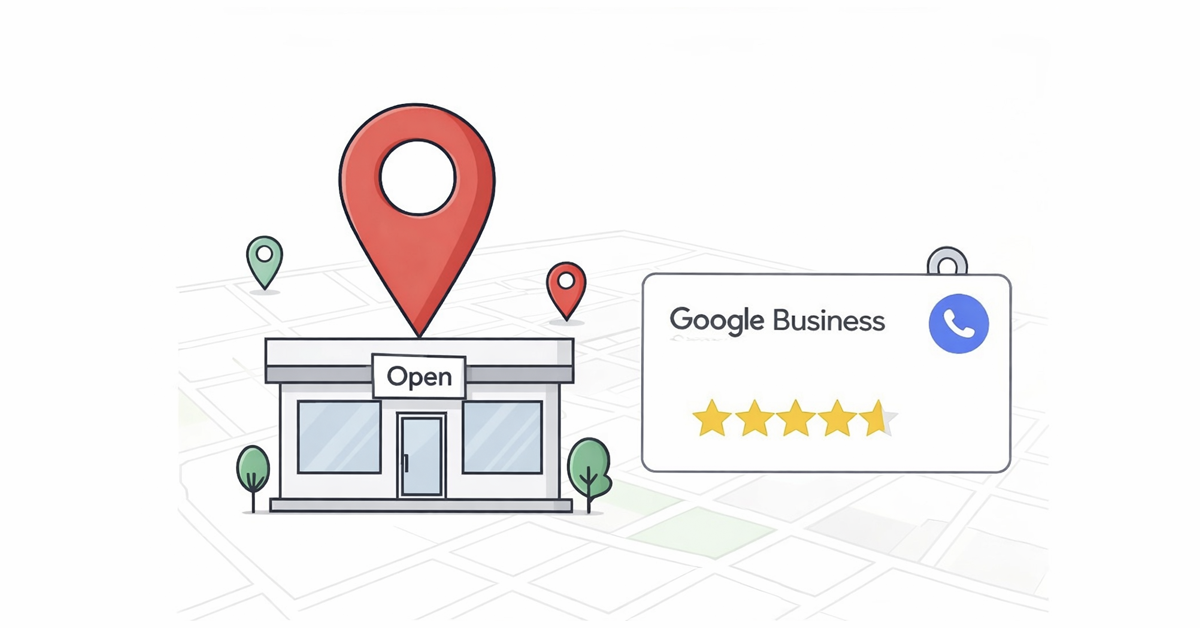
A Norwich-based plumbing company ranking first for ’emergency plumber Norwich’ can generate 15+ qualified leads every month from its optimised Google Business Profile (GBP) without any ad spend. This approach provides an immediate and measurable impact on your sales pipeline.
How to Implement Local SEO
- Optimise Your Google Business Profile: This is your digital shopfront. Complete every section with accurate business hours, a detailed description, a precise service area, and high-quality images of your work and premises. Use the ‘Posts’ feature to share updates and offers.
- Build Consistent Local Citations: Ensure your business name, address, and phone number (NAP) are listed consistently across relevant UK online directories like Yell and Thomson Local, as well as industry-specific portals. Our guide to local business listings provides a full breakdown.
- Encourage and Manage Reviews: Systematically ask satisfied customers for reviews. Crucially, respond professionally to every single review, positive or negative, to demonstrate customer commitment.
- Create Location-Specific Pages: If you serve multiple towns, create dedicated landing pages on your website for each location. This signals your relevance to Google for searches like ‘[your service] in [town name]’.
2. Implement a Commercially Focused Keyword Strategy
Effective keyword research is the compass for your entire SEO strategy. It involves identifying the exact phrases potential customers use when searching for your products or services. For small businesses, focusing on long-tail keywords (phrases of three or more words) is a highly effective tactic. These longer queries typically have lower search volume but signal much higher purchase intent, allowing you to bypass competition from larger, established brands.
An IT support firm targeting the generic term ‘IT services’ faces immense competition. By shifting focus to ‘affordable IT support for small law firms in Manchester’, they attract a specific, high-value client at the moment of need. An e-commerce store will achieve a far better return targeting ‘best ergonomic office chair under £200’ than the broad term ‘office chairs’. This precision is one of the most vital small business SEO tips for driving qualified, sales-ready traffic.
How to Implement a Keyword Strategy
- Analyse Search Intent: Understand the user’s goal. Are they looking for information (e.g., ‘how to improve office ergonomics’), comparing options (‘ergonomic chair vs gaming chair’), or ready to buy (‘buy ergonomic office chair UK’)?
- Use Keyword Research Tools: Use tools like SEMrush or Ahrefs to find long-tail variations of your core service terms. Focus on queries with reasonable search volumes and lower keyword difficulty scores.
- Investigate Competitor Keywords: Analyse the top-ranking pages of your direct competitors to see which keywords drive their traffic. This can reveal valuable opportunities. You can also explore how to find low-competition keywords for rapid growth.
- Create a Keyword Map: Organise your findings by grouping related keywords into thematic clusters. Assign each cluster to a specific page on your website, such as a service page or blog post, to ensure your content is targeted and relevant.
3. Execute Foundational On-Page SEO
On-page SEO is the practice of optimising individual web pages to rank higher and earn more relevant traffic. It ensures both users and search engine crawlers can clearly understand your content’s purpose and relevance. This is one of the most fundamental small business SEO tips because it directly impacts your visibility and click-through rates from search results.
A lead generation agency can see its click-through rate jump from 2.3% to over 4.8% simply by rewriting title tags and meta descriptions to better match user intent. Similarly, a service provider can secure a top-three ranking for a high-value keyword by restructuring its page with clear H2 headings that directly answer user questions. These are core adjustments that deliver a significant commercial advantage.
How to Implement On-Page SEO
- Refine Your Meta Tags: Your title tag is a primary ranking factor. Include your target keyword once, naturally, near the beginning. Write your meta description as a compelling advert for your page, answering the user’s core question and including a call-to-action like ‘Discover how…’ or ‘Get a free quote’.
- Structure Content with Headers: Use one H1 tag for your main page title. Use H2 tags for major sections and H3s for sub-sections within them. This creates a logical hierarchy that improves readability and helps search engines understand the page structure.
- Create Clean, Descriptive URLs: Your URL should be easy to read. Use your primary keyword, separated by hyphens. For example, use
/commercial-boiler-repair/instead of/p=123?service_id=45. - Optimise Your Content: To ensure your on-page content is both search engine friendly and highly engaging, mastering current SEO content writing best practices is essential. Include your primary keyword and related variations naturally throughout your copy to signal relevance without sacrificing quality.
4. Build Authority with Topic Clusters
Content is the engine of modern SEO. Instead of publishing random blog posts, a strategic approach using topic clusters signals deep authority to search engines. This involves creating a central ‘pillar’ page covering a broad topic comprehensively, then linking out to more specific ‘cluster’ articles that explore related subtopics in detail. This structure is one of the most effective small business SEO tips for establishing commercial authority and driving qualified traffic.
A trades company that creates a pillar guide on ‘Commercial HVAC Systems’ can support it with cluster posts on specific unit types, maintenance, and regulations. This organised approach helps them rank for dozens of long-tail keywords and positions them as the definitive expert, directly fuelling their lead generation pipeline by attracting prospects at every stage of the buying journey.
How to Implement a Topic Cluster Strategy
- Identify Core Business Topics: Brainstorm the main problems you solve for your customers. These broad themes, such as ‘lead generation strategy’ or ‘boiler installation’, will form the basis of your pillar pages.
- Map Out Cluster Content: For each pillar topic, identify 5-10 related subtopics or specific questions your customers ask. These become your cluster articles. Use keyword research tools to validate search demand for these narrower subjects.
- Create Authoritative Pillar Content: Your pillar page should be a comprehensive, high-value resource. It should cover the topic broadly but link out to your cluster articles for readers who want to dive deeper into specific areas.
- Build a Strong Internal Linking Structure: Your pillar page must link to every cluster page, and every cluster page must link back to the pillar page. This creates a tightly organised content hub that Google rewards.
5. Address Technical SEO and Site Speed
Technical SEO is the foundational work that ensures search engines can efficiently find, understand, and rank your website. For a small business, this is not a luxury; it is a critical factor impacting both user experience and search visibility. A slow, clunky, or insecure website frustrates potential customers and signals poor quality to Google, directly harming your lead generation efforts.

An e-commerce site that improves its page load time from 4.2 seconds to 1.8 seconds can see a 12% increase in conversion rate and a significant rankings boost. Similarly, optimising a lead generation landing page to load in under one second can dramatically improve form submission rates. These technical fixes deliver a direct and measurable commercial return.
How to Implement Technical & Speed Optimisations
- Benchmark Your Performance: Use free tools like Google’s PageSpeed Insights or GTmetrix to analyse your website’s current speed and identify specific issues.
- Compress and Optimise Images: Large image files are a primary cause of slow load times. Use tools to compress images without losing visual quality and serve them in modern formats like WebP.
- Enable Caching and Compression: Work with your developer to enable GZIP compression on your server and leverage browser caching. This allows returning visitors’ browsers to load your site much faster.
- Ensure Mobile Responsiveness: With over 60% of traffic coming from mobile devices, your site must provide a flawless experience on smartphones. Test its mobile usability and speed specifically.
- Fix Broken Links and Redirects: Use a tool like Screaming Frog (free for up to 500 URLs) to find and fix broken links (404 errors) and ensure old pages are properly redirected (301s) to live ones.
- Improve Core Web Vitals: These are specific metrics Google uses to measure user experience. Focusing on them is key to modern SEO. You can find out more in our guide to improving Core Web Vitals.
6. Build High-Quality Backlinks to Establish Authority
Backlinks, which are links from other websites to yours, remain a cornerstone of Google’s algorithm for determining trust and authority. For a small business, a strategic approach focused on high-quality, relevant links is far more valuable than accumulating a high quantity of low-value ones. This is one of the most impactful small business SEO tips because it directly signals to search engines that your business is a credible entity in its field.
A well-executed backlink strategy builds a powerful, long-term asset. For instance, a local service firm that secures links from its Chamber of Commerce and respected industry associations can dominate local search results. Similarly, a startup featured in an industry news roundup can earn high-authority backlinks that drive significant organic traffic growth and build its brand reputation.
How to Implement a Backlink Strategy
- Analyse Competitor Backlinks: Use tools like Ahrefs or SEMrush to see which high-authority websites are linking to your competitors. This analysis provides a clear roadmap of potential link-building opportunities.
- Create Link-Worthy Content: Develop original research, insightful data, or comprehensive guides that journalists and industry bloggers will want to cite. This turns your website into a valuable resource that naturally attracts links.
- Pitch Relevant Guest Posts: Identify non-competing blogs and publications in your industry and offer to write a valuable article for their audience. A well-placed guest post earns a backlink and exposes your brand to a new, relevant audience.
- Leverage Local and Industry Partnerships: Build relationships with local businesses, suppliers, and industry bodies. These partnerships can lead to valuable links from their websites, reinforcing your local and topical relevance.
7. Turn Traffic into Leads with Conversion Rate Optimisation
Attracting high-quality organic traffic is a significant achievement, but it delivers zero commercial value if those visitors do not take action. Conversion Rate Optimisation (CRO) bridges the gap between your SEO traffic and actual business results. It focuses on systematically improving your website pages to convert a higher percentage of visitors into leads or customers, turning ranking improvements directly into a healthier sales pipeline.

This is one of the most commercially astute small business SEO tips because it multiplies the value of your existing traffic. For example, a B2B services firm that adds client testimonials to its service pages can improve its conversion rate from 1.8% to 3.2%, effectively doubling its lead volume from the same number of visitors. Reducing a contact form from eight fields to four can increase submissions by over 30%, a quick win that directly boosts lead flow.
How to Implement CRO on Your SEO Pages
- Analyse User Behaviour: Use free tools like Microsoft Clarity to watch session recordings and view heatmaps. These show you exactly where users get stuck, what they ignore, and what captures their attention, revealing critical friction points.
- A/B Test Key Elements: Do not guess what works. Systematically test one element at a time on your high-traffic pages. Test your call-to-action (CTA) button colour, the wording on your forms, or the main headline.
- Simplify Your Forms: Every additional field creates friction. Only ask for the absolute essentials needed for the initial follow-up. You can always gather more information later in the sales process.
- Build Trust and Urgency: Place trust signals like industry certifications or awards near your primary CTAs. Our guide on using CTAs effectively provides more detail on this.
8. Prioritise Mobile SEO for Today’s User
Since 2021, Google has operated on a mobile-first indexing model, meaning it primarily uses the mobile version of your website for ranking. With over 60% of searches now happening on mobile devices, a flawless mobile experience is no longer optional; it is a critical ranking factor and a core component of any effective small business SEO strategy.
A flawed mobile site not only frustrates potential customers but also tells Google your website provides a poor user experience, directly harming your search visibility. For example, a local service business that optimised its lead generation landing pages for mobile saw its conversion rate increase by 18% and jumped eight positions in search rankings. This demonstrates the direct commercial impact of prioritising the mobile user journey.
How to Implement Mobile SEO
- Test on Real Devices: Go beyond browser emulators. Test your website on actual smartphones using typical 4G connections to understand real-world loading times and usability.
- Design for Touch: Ensure all buttons and links are large enough to be easily tapped without accidental clicks. A minimum size of 48×48 pixels is a reliable guideline.
- Simplify Navigation: Replace complex desktop menus with a streamlined ‘hamburger’ menu to help users find what they need with the fewest possible taps.
- Optimise Forms for Mobile: Test every form on your site. Fields should be easy to select, and the keyboard should automatically adapt where possible (e.g., showing the number pad for a phone number field).
- Use Google’s Tools: Use the official Google Mobile-Friendly Test to quickly diagnose major issues and identify areas for improvement.
9. Implement SEO Analytics and Performance Tracking
Effective SEO is not a “set and forget” activity; it is a data-driven process of continuous improvement. Monitoring performance through analytics is essential to understand what is working, what is not, and where to focus your resources for maximum impact. Without tracking, you are navigating your marketing strategy in the dark, unable to justify investment or prove ROI. This turns guesswork into a predictable growth engine.
A service-based business might notice that while a certain keyword drives significant traffic, it results in zero qualified leads. By analysing the data in Google Search Console and Google Analytics, they can identify ‘bottom-of-funnel’ keywords that, despite lower search volumes, deliver prospects who are ready to buy. This insight allows them to reallocate their efforts towards activities that directly generate revenue.
How to Implement SEO Analytics and Tracking
- Establish Your Foundation: Set up Google Analytics 4 (GA4) and Google Search Console from day one. These free tools are non-negotiable for understanding your audience and how your site performs in search results.
- Define and Track Conversions: In GA4, create specific goals (or ‘conversions’) for valuable user actions, such as a contact form submission, a phone number click, or a quote request. This is crucial for attributing business value to your organic traffic.
- Monitor Keyword Rankings: Use a rank tracking tool to monitor your position for your top 20-50 commercial keywords. This provides an early indicator of your SEO performance and helps you react quickly to competitor movements.
- Conduct Regular Performance Reviews: Dedicate time each month to review your data. Compare month-on-month and year-on-year performance to account for seasonality, identify trends, and make informed decisions to refine your strategy.
10. Optimise for E-commerce SEO and Build Trust
SEO for e-commerce sites is fundamentally different from service-based SEO. It involves managing vast product catalogues and capturing customers at various buying stages. Combining technical product optimisation with strong trust signals like reviews and testimonials is one of the most powerful small business SEO tips for driving both rankings and conversions.
A home goods retailer that optimises its category pages for transactional keywords and builds a robust strategy around user-generated reviews can generate over 60% of its total revenue from organic search. An electronics seller implementing product schema markup can see a significant uplift in click-through rates from search results, directly impacting sales. This approach turns your website into a trusted, high-performing sales asset.
How to Implement E-commerce SEO and Build Trust
- Create Unique Product and Category Content: Avoid using generic manufacturer descriptions. Write unique, compelling copy for every product and optimise category pages for transactional keywords like ‘buy [product name] online’.
- Implement Product Schema Markup: This structured data helps search engines understand your product details, including price, availability, and ratings. This information can then appear as ‘rich snippets’ in search results, boosting visibility and clicks.
- Systematically Collect and Showcase Reviews: Use tools like Trustpilot or Google Customer Reviews and make it easy for customers to leave feedback. Prominently display star ratings and testimonials on product pages to build credibility.
- Respond to All Customer Feedback: Engage with every review, positive or negative. A professional response demonstrates excellent customer service and builds trust with potential buyers.
Small Business SEO: 10-Point Comparison
| Strategy | 🔄 Implementation Complexity | ⚡ Resource Requirements | 📊 Expected Outcomes (⭐) | 💡 Ideal use cases | Key advantages |
|---|---|---|---|---|---|
| Local SEO Optimisation | Low–Medium — setup + ongoing citation/review management | Moderate — Google Business Profile, local citations, review management | ⭐⭐⭐⭐ Fast local visibility; high-intent leads via Maps and directories | Local trades, service-area firms, brick-and-mortar providers | Targeted ready-to-buy traffic; cost-effective; strong phone/footfall correlation |
| Keyword Research & Long-Tail Strategy | Medium — ongoing research and clustering | Moderate — paid tools (Ahrefs/SEMrush), analyst time | ⭐⭐⭐⭐ Better targeting & conversion; guides content and PPC | SMBs competing with larger brands; content-led growth campaigns | Reveals intent; finds low-competition opportunities; improves ROI of content/ads |
| On-Page SEO (Meta Tags, Headers, Structure) | Low — controllable, repeatable optimisations | Low — copywriter + minor dev adjustments | ⭐⭐⭐⭐ Quick CTR and relevance gains; visible in weeks | Service pages, landing pages, content assets requiring ranking improvements | Direct control; fast CTR lifts; improves readability and indexing |
| Content Creation & Topic Clusters | High — strategic planning and sustained production | High — writers, research, multimedia, editorial calendar | ⭐⭐⭐⭐⭐ Long-term topical authority and sustained organic traffic | Brands building authority (SaaS, B2B), complex service niches | Scalable organic traffic; multi-keyword ranking; stronger domain authority |
| Technical SEO & Site Speed Optimisation | High — developer expertise and platform-specific fixes | Moderate–High — dev time, tools, CDN, auditing | ⭐⭐⭐⭐ Removes ranking barriers; improves UX and conversions | Large sites, e-commerce, sites with mobile-heavy traffic | Faster pages; improved crawlability; better Core Web Vitals and rankings |
| Backlink Strategy & Link Building | High — outreach, PR and relationship building | High — content assets, outreach resources, PR effort | ⭐⭐⭐⭐⭐ Long-term authority gains and sustained ranking improvements | Competitive niches, authority-building campaigns, B2B SaaS | Boosts domain authority; editorial referrals; durable ranking impact |
| Lead Capture & Conversion Rate Optimisation | Medium — requires testing & iterative design | Moderate — CRO tools, designer, analyst time | ⭐⭐⭐⭐ Direct lift in leads and revenue; quick measurable wins | High-traffic landing pages, paid + organic acquisition funnels | Multiplies traffic value; data-driven improvements; fast ROI impact |
| Mobile SEO & Mobile-First Indexing | Medium–High — responsive design plus cross-device QA | Moderate — dev, testing on devices and networks | ⭐⭐⭐⭐ Improved mobile rankings and conversion rates | Any site with majority mobile users; local & e-commerce sites | Essential for rankings; better mobile UX; reduces bounce on mobile |
| SEO Analytics & Performance Monitoring | Medium — initial setup can be complex (GA4, attribution) | Moderate — analytics tools, dashboards, analyst time | ⭐⭐⭐⭐ Enables data-driven pivots and ROI reporting | All businesses needing measurable SEO impact and attribution | Proves ROI; identifies high-value keywords; supports optimisation decisions |
| E‑commerce SEO & Trust Building | High — catalog scale + review/reputation systems | High — dev, content, review collection tools, PR | ⭐⭐⭐⭐⭐ Direct revenue growth; higher CTR via rich snippets | Online retailers, marketplaces, product-heavy businesses | Drives sales; rich snippets improve visibility; reviews increase conversions |
Your Strategic Next Steps for SEO Growth
Navigating SEO can feel overwhelming when you are balancing the countless other demands of running a small business. However, a powerful, lead-generating SEO strategy is not built on random acts of optimisation. It is the result of a deliberate, prioritised, and commercially focused approach. You do not need to do everything at once; you need to do the right things in the right order.
The journey to sustainable online visibility begins with mastering the foundations. Start by claiming and meticulously optimising your local search presence through Google Business Profile. This is often the fastest path to capturing high-intent customers in your service area. Simultaneously, ensure your website is technically sound, mobile-friendly, and offers a seamless user experience, as these elements form the bedrock upon which all other efforts are built.
Prioritising for Commercial Impact
Once your foundations are solid, your focus should shift to building authority and relevance through strategic content. The small business SEO tips in this guide highlight a crucial theme: intention. Your keyword research, on-page optimisation, and content creation must be laser-focused on answering the specific questions your ideal customers are asking. By creating valuable, structured content around topic clusters, you demonstrate expertise and build a durable asset that attracts qualified traffic for years to come.
Remember, effective SEO is a marathon, not a sprint. The key takeaways are:
- Start Local: Master your local SEO and Google Business Profile to secure immediate, high-intent leads.
- Fix the Foundations: A fast, mobile-friendly, technically sound website is non-negotiable.
- Build with Intent: Develop content that directly addresses customer pain points and search queries to attract qualified traffic.
- Measure What Matters: Track leads, enquiries, and sales, not just rankings and traffic. Your SEO efforts must be accountable to your bottom line.
By adopting this methodical approach, you transform SEO from a marketing cost into a predictable and profitable engine for business growth. You move from chasing algorithms to building a strategic system that consistently delivers value.
Ready to turn these small business SEO tips into a tangible, performance-driven strategy? The team at Lead Genera specialises in building commercially focused SEO and lead generation systems that deliver measurable results. Contact us for a pragmatic, no-obligation consultation to discover how we can build a predictable growth engine for your business.
Categories
Do You Need Assistance With
Sign Up To Our Newsletter