



Weekly marketing wisdom you can read in 5 minutes, for free. Add remarkable ideas and insights to your inbox, once a week, by subscribing to our newsletter.
Conversion Tracking
Conversion Rate Optimisation Best Practices for Measurable Growth
In today’s competitive market, a website must be more than a digital brochure; it must be a high-performance lead generation asset. Too many businesses invest heavily in driving traffic, only to see potential customers leave without taking action. The disconnect often lies in a lack of strategic Conversion Rate Optimisation (CRO).
Table of contents:
CRO is not about guesswork or chasing design trends. It is a systematic, data-driven discipline for improving your website’s performance and turning more visitors into qualified leads. It is the crucial link between attracting an audience and generating revenue. A well-optimised website works relentlessly, ensuring your marketing spend on SEO and paid advertising delivers a tangible return.
This article moves beyond generic advice to provide a commercially focused roundup of 10 conversion rate optimisation best practices. Each point is designed to deliver measurable results, helping you reduce your cost per lead, increase lead quality, and build a more efficient sales pipeline.
We will explore the strategic frameworks and tactical execution needed to transform your website into a system that consistently converts visitors into valuable leads. You will learn how to diagnose performance issues, implement targeted improvements, and foster a culture of continuous testing. From optimising forms and landing pages to leveraging social proof and personalisation, these are the essential practices for building a predictable lead generation engine that fuels sustainable business growth.
1. A/B Testing and Multivariate Testing: From Guesswork to Growth
A/B testing, also known as split testing, is a foundational practice in conversion rate optimisation. It involves comparing two versions of a webpage or element (A and B) to see which one performs better at converting visitors. Multivariate testing is a more advanced version, testing multiple variables simultaneously to understand how they interact.
This data-driven approach removes guesswork from your marketing. Instead of relying on assumptions or what you think looks best, you make decisions based on actual user behaviour. For a performance-led growth partner, a rigorous A/B testing framework is non-negotiable. It directly impacts lead quality and volume by scientifically optimising landing pages, calls-to-action (CTAs), and form fields, ensuring every marketing pound is maximised for return.
Practical Application and Examples
Effective testing focuses on high-impact elements that directly influence user decisions.
- Landing Page Headlines: Test a benefit-led headline (“Increase Your ROI by 30%”) against a feature-led one (“Our New AI-Powered Platform”) to see which resonates more with your target audience.
- CTA Buttons: Compare button copy like “Get Your Free Quote” versus “See Pricing” or test a high-contrast orange button against a more subdued, brand-aligned blue to measure impact on lead capture.
- Form Layouts: Test a single-step form against a multi-step version. While counterintuitive, breaking a form into smaller, manageable chunks can often improve completion rates and lead quality.
Actionable Implementation Tips
To run effective tests and build a reliable optimisation programme, follow a structured process.
- Test one element at a time in an A/B test for clear attribution. If you change the headline and the button colour, you will not know which change caused the uplift.
- Run tests for a sufficient duration to account for daily and weekly variations in traffic behaviour, typically at least one to two weeks.
- Establish a minimum sample size before starting. You typically need 100–200 conversions per variation to reach statistical significance.
- Prioritise high-traffic pages first. These pages gather data faster, allowing you to get reliable results and implement wins more quickly.
- Document all learnings, even from failed tests. This creates an invaluable internal knowledge base that informs future strategy.
2. Conversion Funnel Analysis and User Journey Mapping
Conversion funnel analysis is a diagnostic process that maps the entire customer journey, from initial awareness to the final conversion action. By visualising each stage, such as a visitor landing on a page, viewing a service, and completing a contact form, you can pinpoint exactly where prospects are dropping off and why. This moves optimisation from a page-level activity to a holistic, journey-level strategy.
Understanding this flow is critical for any performance-focused business. It reveals hidden friction points that kill conversions, such as a confusing navigation path or an unexpected cost revealed late in the process. For a lead generation partner, a detailed funnel analysis is the first step in diagnosing why a marketing campaign might be underperforming. It allows us to identify and fix the biggest leaks first, ensuring marketing spend translates directly into qualified leads and a healthier sales pipeline.
Practical Application and Examples
Effective funnel analysis turns raw data into a clear narrative about user behaviour, highlighting high-impact opportunities.
- B2B Lead Funnel: Analysis might reveal that visitors who view the “Case Studies” page before the “Contact Us” page convert at a 3x higher rate. This insight would inform a strategy to promote case studies more prominently.
- E-commerce Checkout Funnel: A common finding is a significant drop-off when shipping costs are revealed. This could trigger an experiment to test free shipping thresholds or display delivery costs earlier in the journey.
- SaaS Trial Funnel: Mapping the journey from free trial sign-up to paid subscription might show that users who engage with a specific feature (e.g., “create a report”) are far more likely to convert. The onboarding process can then be optimised to guide new users towards this key action.
Actionable Implementation Tips
To turn funnel analysis into a consistent growth driver, implement a structured and repeatable process.
- Track micro-conversions: Monitor smaller steps like newsletter sign-ups or PDF downloads. These are leading indicators of engagement and help identify which parts of your journey are building trust effectively.
- Segment your data: Analyse funnels separately for different traffic sources (e.g., Google Ads vs. SEO), device types, and audience segments. A funnel that works for desktop users from Google search may fail completely for mobile users from a social media ad.
- Use qualitative tools: Combine quantitative data from tools like Google Analytics with qualitative insights from heatmaps and session recordings. This helps you see where users drop off and understand why.
- Set stage-specific targets: Establish benchmark conversion rates for each step of the funnel (e.g., landing page to form view, form view to submission). This allows you to monitor performance and spot issues proactively.
- Talk to your users: Conduct interviews with prospects who abandoned the funnel at a key stage. A short conversation can reveal friction points that data alone will never show.
3. Form Optimisation and Friction Reduction
Your lead capture form is the final gateway between a potential customer and a conversion. Form optimisation is the practice of systematically removing friction from this process to maximise submissions. This involves streamlining fields, improving design, clarifying the value exchange, and reinforcing trust at the point of conversion.
For a performance-led growth partner, form optimisation is a critical lever for improving lead volume and quality. A simpler form might attract more submissions, but a slightly longer one can pre-qualify prospects, saving your sales team valuable time. Striking the right commercial balance between these two outcomes is a key part of our conversion rate optimisation best practices.

Practical Application and Examples
Effective form optimisation focuses on making the user’s journey as effortless as possible.
- Field Reduction: A famous case study showed that reducing a form from 11 to 4 fields increased conversions by 120%. Each field you ask for adds cognitive load, so be ruthless in cutting anything that is not essential for initial qualification.
- Multi-Step Forms: For more complex B2B services, break the form into two steps. The first step captures high-intent data like a name and email address. The second step can ask for qualifying information like company size or job title. Even if the user abandons step two, you have still captured a lead.
- Progressive Profiling: Tools like HubSpot allow you to use progressive profiling. This means you show different form fields to returning visitors, gradually building a more complete profile over time without overwhelming them in a single interaction.
Actionable Implementation Tips
To turn your forms into efficient conversion tools, implement these strategic adjustments.
- Only ask for what you need for the immediate next step. If you only need an email to send a guide, do not ask for a phone number.
- Optimise for mobile first. Use a single-column layout, large input fields, and clear, tappable buttons to ensure a smooth experience on smaller screens.
- Place high-friction fields last. Questions about budget or phone number often cause the most drop-offs. Ask for them at the end when the user is already committed.
- Add trust signals. Include SSL badges, links to your privacy policy, or a short testimonial directly below the submit button to reassure users.
- Use smart defaults and auto-formatting. Pre-populate fields for returning users and automatically format inputs like phone numbers to reduce user effort.
4. Landing Page Optimisation and Design Best Practices
Landing page optimisation is the process of creating focused, single-purpose pages designed purely to convert visitors into leads or customers. Unlike a homepage with multiple navigation options, a high-performing landing page eliminates distractions and guides the user towards one specific action. It must maintain a strong message match with the ad or link that brought the user there, reinforcing their decision and building trust.
This focused approach is critical for any performance-based marketing campaign. For a lead generation partner, optimised landing pages directly impact lead acquisition costs and the quality of enquiries. Every element, from the headline and imagery to the call-to-action (CTA), must work together to support a single conversion goal. This is a core pillar of conversion rate optimisation best practices, as it ensures marketing spend is converted as efficiently as possible.
Practical Application and Examples
Effective landing pages are built on clarity, relevance, and a compelling value proposition. They immediately answer the user’s question, “What’s in it for me?”.
- Message Matching: If your Google Ad promises a “Free SEO Audit for Plumbers,” your landing page headline must repeat that exact phrase. This reassures visitors they are in the right place, drastically reducing bounce rates.
- Value Proposition: Dropbox’s famous early landing page simply stated, “Your files, anywhere,” with a short explainer video. This clear, benefit-driven message helped it achieve high conversion rates with minimal design.
- Audience Segmentation: A B2B tech company could create separate landing pages for “enterprise” and “startup” segments. Each page would feature testimonials, case studies, and messaging tailored to that specific audience’s pain points, improving relevance and conversions.
Actionable Implementation Tips
To build landing pages that convert reliably, focus on removing friction and reinforcing value.
- Remove all navigation menus and footer links. The only clickable path should be your primary CTA button or a form submission.
- Use a benefit-driven headline, not a feature-led one. “Get 10 Qualified Leads This Month” is more compelling than “Our Lead Generation Software.”
- Keep critical elements above the fold. Your headline, a concise value proposition, and your primary CTA should be visible without scrolling.
- Use a high-contrast CTA button with action-oriented text. “Get My Free Audit” performs better than a passive word like “Submit.”
- Incorporate specific social proof. Instead of “Trusted by businesses,” use “Trusted by over 500 UK businesses to generate £10M in revenue.”
- Ensure the page loads in under 3 seconds on mobile devices, as speed is a critical conversion factor. The principles of effective website design for lead generation are paramount here.
5. Call-to-Action (CTA) Optimisation: The Final Push to Conversion
Call-to-Action (CTA) optimisation is the art and science of crafting buttons and links that compel users to take the next step. The CTA is frequently the single most important element on a landing page, serving as the bridge between passive browsing and active engagement. It is the final nudge that turns a prospect into a lead.
Effective CTAs are a cornerstone of conversion rate optimisation best practices because they directly influence user decisions at the most critical moment. For a performance-led growth partner, optimising CTAs is not just about changing colours; it is about using precise, action-oriented language that clarifies value and reduces friction, directly impacting lead volume and the overall return on marketing spend.
Practical Application and Examples
Successful CTA optimisation transforms generic instructions into compelling, value-driven prompts.
- Benefit-Oriented Copy: Instead of a generic “Submit,” test a CTA like “Get My Free Lead Audit.” This shift in language, which focuses on the user’s gain, has been shown to increase conversions by over 30% by framing the action as a direct benefit.
- Contrasting Design: Amazon’s iconic orange “Add to Cart” button is a masterclass in visual hierarchy. It stands out against the page’s colour scheme, drawing the user’s eye and making the primary action unmissable.
- High-Intent Phrasing: For a SaaS business, testing “Start Free Trial” against a lower-commitment CTA like “Learn More” often reveals that the more direct, action-oriented phrase converts better with qualified traffic, capturing users at their peak point of interest.
Actionable Implementation Tips
To turn your CTAs into powerful conversion drivers, apply a systematic and user-centric approach.
- Use specific, action-driven verbs. Begin your CTA with a clear command like ‘Get’, ‘Download’, ‘Claim’, or ‘Schedule’ to remove ambiguity.
- Test first-person copy. Phrasing the CTA from the user’s perspective (“Get My Free Audit” vs. “Get Your Free Audit”) can create a stronger sense of ownership and increase click-through rates.
- Create strong visual contrast. Your CTA button should be one of the most prominent elements on the page. Use a colour that stands out from the background but still aligns with your brand’s palette.
- Ensure mobile-friendliness. CTA buttons must be easily tappable on mobile devices. A minimum size of 44×44 pixels is recommended to avoid user frustration.
- Place CTAs strategically. Repeat your primary CTA at the bottom of longer pages so users do not have to scroll back up once they are convinced.
6. Lead Magnet Strategy and Value Exchange
A lead magnet is a valuable, free resource offered to prospects in exchange for their contact information, typically an email address. This strategy centres on a simple value exchange: you provide an immediate, specific solution to a user’s problem, and they grant you permission to market to them. It is a cornerstone of effective conversion rate optimisation best practices because it transforms passive website visitors into engaged, qualified leads.
For a performance-led growth partner, a well-defined lead magnet strategy is critical for building a high-quality inbound pipeline. Instead of a generic “Contact Us” form, offering a tangible asset like a checklist, guide, or tool establishes authority and builds trust from the very first interaction. This approach ensures that the leads generated are not just names on a list, but individuals who have a genuine interest in your expertise.
Practical Application and Examples
Successful lead magnets are highly specific and deliver immediate value, directly addressing a pain point your ideal customer faces.
- Tools and Assessments: HubSpot’s ‘Website Grader’ or Neil Patel’s ‘SEO Analyzer’ are prime examples. These tools provide instant, personalised value and generate hundreds of thousands of qualified leads by solving a problem on the spot.
- Actionable Guides and PDFs: A B2B firm might offer a “Lead Scorecard Template” or an “ROI Calculator for [Service]”. These assets are practical, easily digestible, and position the company as a helpful expert.
- Free Audits or Consultations: Offering a free, no-obligation “SEO Audit” or “Paid Ads Performance Review” is a powerful B2B lead magnet. It provides immense value while directly showcasing your core service capabilities.
Actionable Implementation Tips
To create a lead magnet that drives conversions and attracts your ideal audience, focus on relevance and quality.
- Solve a hyper-specific problem. A guide on “10 Ways to Improve Your Google Ads for E-commerce” is far more effective than a generic “Digital Marketing Guide”.
- Ensure immediate delivery. The resource must be delivered instantly via email upon form submission. This builds trust and maintains momentum.
- Design for quality. Your lead magnet is a reflection of your brand. Use high-quality design and professional copywriting to demonstrate your expertise.
- Promote across all channels. Feature your lead magnet on your homepage, in blog posts, on social media, and in paid ad campaigns to maximise its reach.
- Create an automated follow-up sequence. Nurture new leads with an automated email series that provides more value and guides them towards a consultation or sale. Learn more about how to use them effectively here.
7. Page Speed and Technical Performance Optimisation
Page speed is not a ‘nice-to-have’; it is a foundational component of conversion rate optimisation. The time it takes for your page to load directly impacts user experience, bounce rates, and ultimately, your bottom line. Slow-loading pages deter visitors, especially those from paid advertising campaigns, and signal to Google that your site offers a poor experience, harming your search rankings.
For any business focused on generating leads, speed is paramount. Even a one-second delay can cause a significant drop in conversions, wasting ad spend and losing potential customers before they even see your offer. Optimising technical performance ensures your investment in traffic has the best possible chance to convert.
Practical Application and Examples
The commercial impact of site speed is well-documented by major online players, demonstrating its critical role in driving revenue.
- E-commerce and Sales: Amazon famously calculated that a 100-millisecond delay in page load time could cost them 1% in sales, a figure that translates to billions in lost revenue over a year.
- User Engagement: Google found that improving search result speed by just two seconds resulted in an 18% increase in user traffic, highlighting how performance directly influences user behaviour and retention.
- Lead Generation: For a lead generation landing page, a slow load time is a guaranteed conversion killer. If a user clicks an ad and waits more than three seconds, the likelihood they will abandon the page increases exponentially, destroying the return on ad spend.
Actionable Implementation Tips
Improving site speed involves a systematic approach to technical optimisation. It is crucial to understand how your hosting service affects website speed, as this is a foundational aspect of technical performance.
- Benchmark and Monitor: Regularly test your key pages using tools like Google PageSpeed Insights and GTmetrix to identify performance bottlenecks.
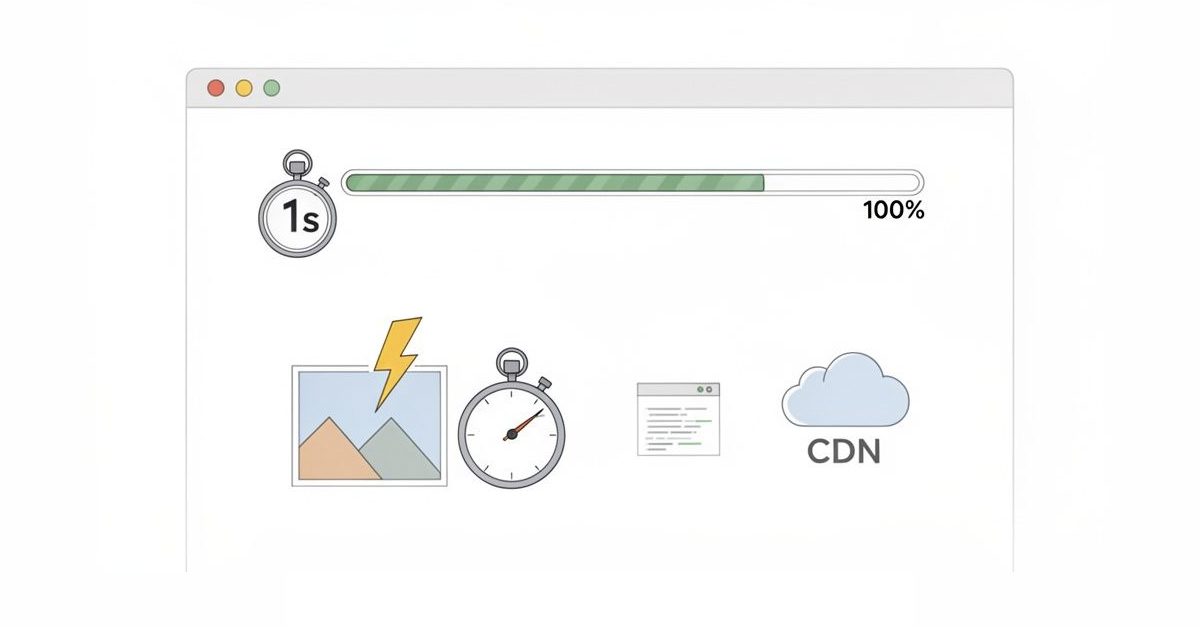
- Optimise Images: Compress all images before uploading. Use modern formats like WebP, and implement lazy loading so images below the fold only load as the user scrolls.
- Minify Code: Reduce the file size of your CSS, JavaScript, and HTML by removing unnecessary characters, spaces, and comments without affecting functionality.
- Leverage Caching: Use browser caching to store static assets (like logos and CSS files) on a visitor’s device, so they do not need to be re-downloaded on subsequent visits.
- Use a Content Delivery Network (CDN): A CDN stores copies of your site on servers around the world, delivering content to users from the server geographically closest to them, significantly reducing load times.
8. Personalisation and Audience Segmentation
Personalisation is the practice of tailoring website content, messaging, and offers to individual visitors based on their characteristics, such as location, device type, traffic source, or past behaviour. Audience segmentation involves grouping your visitors into distinct clusters with shared traits, allowing for more relevant and targeted communication.
This approach moves away from a one-size-fits-all website experience. Instead of showing every visitor the same generic message, you deliver content that speaks directly to their context and needs. For a performance-led growth partner, intelligent segmentation is a powerful lever for improving lead quality. By presenting a prospect from a paid search campaign with a different value proposition than an organic visitor, you increase relevance and, consequently, conversion rates.
Practical Application and Examples
Effective personalisation focuses on delivering a more relevant user journey, which directly impacts conversion.
- Traffic Source Personalisation: A user arriving from a Google Ad for “enterprise SEO services” should see a landing page with enterprise-specific case studies and a “Request Enterprise Demo” CTA. A visitor from an organic search for “small business SEO tips” should see content focused on affordability and a “Get Started” CTA.
- Industry-Specific Content: Using B2B data enrichment tools like Clearbit, you can identify a visitor’s industry and dynamically change headlines, testimonials, and imagery. A logistics company would see a case study from the transport sector, while a fintech firm sees one from financial services.
- Behavioural Retargeting: A returning visitor who previously viewed your pricing page could be shown a pop-up offering a time-sensitive discount or a consultation call, personalising the offer based on their demonstrated interest.
Actionable Implementation Tips
To implement a successful personalisation strategy, start with clear segments and measurable goals.
- Start simple: Begin by personalising based on traffic source (e.g., Google Ads vs. organic search) and device type (mobile vs. desktop). These are easy to track and offer quick wins.
- Create distinct audience segments based on valuable data points like job title, industry, or company size for B2B audiences.
- Use UTM parameters consistently in your campaigns to track traffic sources accurately and trigger the correct personalised experience on your landing pages.
- Implement dynamic CTAs. Show a “Schedule Demo” button to visitors from small companies and a “Book a Strategic Consultation” CTA to those from enterprise-level accounts.
- Test geographic personalisation by showing localised copy, currency (e.g., £ for UK visitors), and social proof relevant to the visitor’s region.
- Measure the impact carefully. Personalisation only delivers ROI if the experience is genuinely more relevant. Track conversion lift for each segment against a control group.
9. Social Proof, Trust Signals, and Authority Building
Social proof and trust signals are psychological levers that reduce buyer friction by demonstrating credibility and validation from others. They work by showing sceptical prospects that your business is reputable, that others like them have had positive experiences, and that you are an expert in your field. This is a critical component of conversion rate optimisation best practices, especially in B2B markets where decisions are risk-averse and evidence-based.
For a performance-led growth partner, building this trust is not a ‘nice-to-have’; it is fundamental to converting high-value leads. When a prospect lands on a page, they are subconsciously looking for reasons to leave. Social proof, like client logos and testimonials, provides compelling reasons to stay, engage, and ultimately, convert. It directly addresses the user’s primary question: “Can I trust this company to solve my problem?”.
Practical Application and Examples
Effective trust signals are specific, relevant, and strategically placed to reassure users at key decision points.
- Client Logos: Displaying the logos of recognisable clients, as Slack does with Fortune 500 companies on its homepage, instantly borrows authority and communicates enterprise-level credibility.
- Specific Testimonials: A vague quote like “Great service!” is useless. A powerful testimonial includes a name, title, company, and a specific outcome, such as “Their SEO strategy increased our organic demo requests by 75% in six months.”
- Data-Driven Case Studies: B2B buyers need proof of results. Develop detailed case studies that outline the client’s initial problem, your solution, and the measurable business impact (e.g., ‘How we reduced Cost Per Lead by 42% for a SaaS client’).
Actionable Implementation Tips
To effectively integrate trust signals and build authority, focus on authenticity and strategic placement.
- Quantify results in all testimonials and case studies. Numbers are more persuasive than adjectives. Instead of “improved our traffic,” use “increased organic traffic by 150% in 90 days.”
- Use video testimonials where possible. Seeing and hearing a real person discuss their success with your service builds a much stronger connection and is perceived as more authentic.
- Place trust badges strategically. Security seals (SSL certificates), payment provider logos (Visa, Mastercard), and industry certifications should be placed near forms and CTA buttons to alleviate last-minute anxiety.
- Keep social proof fresh. A testimonial from 2018 suggests you have not had a happy client since. Regularly update your case studies and testimonials to demonstrate ongoing success.
- Leverage industry-specific proof. If you are targeting the legal sector, a case study from a well-known law firm will be far more impactful than one from an e-commerce brand.
10. Analytics, Tracking, and a Continuous Testing Culture
Effective CRO is impossible without a robust analytics infrastructure to track visitor behaviour, conversion paths, and return on investment. This involves implementing accurate tracking pixels, configuring goals, and establishing regular reporting. Data-driven decision-making replaces assumptions with evidence, enabling a culture of continuous improvement through ongoing experimentation.
This foundation of solid data and systematic testing is what separates high-growth businesses from the rest. For a performance-led growth partner, transparent reporting and hands-on analytics are core differentiators. Understanding precisely what is working, what is not, and why, allows for continuous optimisation that proves ROI and builds long-term success. It moves the conversation from quick wins to sustainable, predictable growth.
Practical Application and Examples
A culture of testing relies on accurate data to identify opportunities and measure outcomes.
- Lead Quality Tracking: A B2B firm uses UTM parameters to track lead sources meticulously. By integrating their CRM with Google Analytics, they discover that leads from LinkedIn Ads have a 25% higher close rate than those from other channels, allowing them to reallocate their budget for maximum impact.
- E-commerce Optimisation: An online retailer tracks everything from initial product views to final revenue. They identify a significant drop-off on the checkout page and run a series of A/B tests on the layout, payment options, and trust signals, ultimately increasing completed purchases by 18%.
- Cultural Commitment to Testing: Companies like Amazon and Netflix embody this principle. Every significant change, from a website’s button colour to a new feature rollout, goes through rigorous experimentation before being deployed to all users, ensuring every decision is backed by data.
Actionable Implementation Tips
Building a data-first testing culture requires process, not just tools.
- Configure your analytics properly. Ensure Google Analytics 4 goals are set up and tested. Understanding the importance of conversion tracking for lead generation campaigns is the critical first step.
- Track both macro and micro conversions. Monitor primary goals like form submissions (macro) alongside secondary indicators of engagement like video plays or PDF downloads (micro).
- Create a prioritised testing roadmap. Use an impact/effort matrix to decide which experiments to run first, focusing on changes that offer the highest potential return for the least amount of work.
- Use a hypothesis-driven approach. Frame every test with a clear hypothesis, for example: “If we change the CTA from ‘Submit’ to ‘Get My Free Audit’, then form completions will increase because the new copy offers a clear, tangible benefit.”
- Document and share all learnings. Maintain a library of all test results, including failures. A failed test provides valuable insight into user behaviour and informs future strategy, building organisational knowledge and accelerating growth.
10-Point CRO Best Practices Comparison
| Technique | 🔄 Implementation Complexity | ⚡ Resource Requirements | 📊 Expected Outcomes | 💡 Ideal Use Cases | ⭐ Key Advantages |
|---|---|---|---|---|---|
| A/B Testing and Multivariate Testing | 🔄 Medium–High — statistical setup, experiment design | ⚡ Moderate — testing tools, sufficient traffic, analyst | 📊 Measurable conversion lifts; reliable ROI signals (⭐⭐⭐⭐) | High-traffic landing pages, CTA/form optimization, iterative improvements | ⭐ Data-driven decisions; risk reduction before full rollout |
| Conversion Funnel Analysis & User Journey Mapping | 🔄 High — multi-stage attribution & cross-channel analysis | ⚡ High — analytics stack, data engineers, time | 📊 Deep insight into drop-offs; prioritizes high-impact fixes (⭐⭐⭐) | Complex B2B funnels, multi-touch buyer journeys, prioritization | ⭐ Holistic view; identifies bottlenecks to improve lead quality |
| Form Optimization & Friction Reduction | 🔄 Low–Medium — UX/design and validation changes | ⚡ Low — designers/devs, form tools | 📊 Quick uplifts in completion rates (10–50%); trade-off qty vs quality (⭐⭐⭐) | Lead capture forms, mobile signups, quick CRO wins | ⭐ Fast implementation; significant lift in submissions |
| Landing Page Optimization & Design Best Practices | 🔄 Medium — copy, design, and iterative testing | ⚡ Medium — copywriter, designer, developer | 📊 Large conversion improvements (2–5× common) and lower CPA (⭐⭐⭐) | Paid campaigns, single-purpose lead-gen pages, ad landing pages | ⭐ Focused UX that improves ad ROI and trust |
| CTA Optimization | 🔄 Low — copy and visual tweaks | ⚡ Low — copy/design and A/B tests | 📊 Noticeable lift (20–50% possible) from small changes (⭐⭐) | Any page with a conversion action (buttons, forms, banners) | ⭐ High ROI for minimal effort; quick to test |
| Lead Magnet Strategy & Value Exchange | 🔄 Medium — content creation and targeting | ⚡ Medium–High — content production, promotion, design | 📊 Increased qualified leads and list growth; supports nurturing (⭐⭐⭐) | Top-of-funnel lead capture, list building, authority positioning | ⭐ Attracts qualified prospects; builds trust and reusable assets |
| Page Speed & Technical Performance Optimization | 🔄 Medium–High — audits, dev fixes, infrastructure | ⚡ Medium–High — developers, CDN/hosting costs | 📊 Improved conversions (≈7% per 1s), lower bounce, SEO gains (⭐⭐⭐) | Mobile-heavy audiences, paid landing pages, high-traffic sites | ⭐ Directly improves UX, conversions, and search performance |
| Personalization & Audience Segmentation | 🔄 High — data, rules, and dynamic content systems | ⚡ High — data infrastructure, personalization tools, content | 📊 Significant lifts when relevant (10–30% common) but complex to scale (⭐⭐⭐) | ABM, segmented campaigns, repeat visitors, multi-product sites | ⭐ Relevance increases lead quality and engagement |
| Social Proof, Trust Signals & Authority Building | 🔄 Low–Medium — gather and present verified proof | ⚡ Low — content/design; case study production as needed | 📊 Strong conversion uplift when credible (50–100% in some cases) (⭐⭐⭐) | High-trust B2B offers, high-value purchases, early-stage trust building | ⭐ Reduces perceived risk; builds credibility quickly |
| Analytics, Tracking & Continuous Testing Culture | 🔄 High — governance, tagging, experiment roadmaps | ⚡ High — tools, analysts, cross-functional time | 📊 Sustainable, compounding improvements; clear ROI measurement (⭐⭐⭐⭐) | Agencies scaling CRO, enterprise programs, long-term optimization | ⭐ Enables systematic learning and prioritized optimization |
Your Strategic Next Steps to Higher Conversion Rates
We have explored the core disciplines of modern conversion rate optimisation, from the foundational necessity of accurate analytics to the nuanced art of building trust and personalising the user journey. The journey from a basic website to a high-performance lead generation asset is not one of chance; it is a direct result of applying a structured, data-informed methodology. These conversion rate optimisation best practices are not a checklist to be completed once, but a continuous framework for sustainable commercial growth.
The temptation for many businesses is to chase shiny objects, focusing on a new design trend or a competitor’s latest feature. However, true, lasting improvement comes from a disciplined focus on the fundamentals. It begins with understanding what is happening on your site through robust analytics and why it is happening through user journey mapping and funnel analysis. Only with this diagnostic clarity can you move forward with confidence.
From Theory to Tangible Results: Your Action Plan
To transform these principles into profit, you must move from understanding to implementation. Your immediate priority should be to establish a baseline. Without clear, reliable data, every change is a guess.
Here is your strategic roadmap for the next 90 days:
- Conduct a Technical & Analytics Audit: Before you test a single headline, verify your foundation. Ensure your page speed is competitive and that your analytics tracking, from Google Analytics to your CRM, is flawless. Are you tracking the right goals? Is your data clean? This is the non-negotiable first step.
- Identify the Biggest Leak: Analyse your conversion funnel. Where is the most significant drop-off? Is it from the product page to the basket? From the landing page to the form submission? Focus your initial efforts where the potential for impact is greatest. This is about leverage, not just activity.
- Target Low-Hanging Fruit: While mapping out a full testing programme, implement the quick wins. Optimise your CTAs for clarity and contrast, simplify your forms to reduce friction, and add prominent social proof and trust signals. These small adjustments can often yield surprisingly rapid improvements and build momentum.
- Develop a Prioritised Testing Hypothesis: Based on your funnel analysis, formulate your first A/B test. Do not just test random elements. Create a clear hypothesis, such as: “By changing the headline to focus on the primary benefit X, we believe we can increase form submissions by 15% because it will resonate more directly with our target persona’s key pain point.” This structured approach turns testing from a lottery into a science.
Adopting a Culture of Continuous Improvement
Ultimately, mastering these conversion rate optimisation best practices is about embedding a new mindset into your business. It is a shift from launching a website and hoping for the best, to treating your digital presence as a dynamic system that must be constantly refined and improved. Every test, whether it wins or loses, provides valuable insight into your customers’ behaviour, motivations, and objections.
This iterative process builds a powerful competitive advantage. While your competitors are debating subjective design preferences, you will be making decisions based on empirical data. This is how you build a predictable, scalable pipeline of high-quality leads and achieve a superior return on your marketing investment. The goal is to create a growth engine, not just a prettier website.
Ready to move beyond guesswork and implement a data-driven CRO programme that delivers measurable results? Lead Genera specialises in designing and building high-performance websites and executing strategic lead generation campaigns. We provide the expertise and accountability to transform your web traffic into a reliable source of high-quality leads and sustainable business growth. Contact us today to discuss your growth objectives.
Categories
Do You Need Assistance With
Sign Up To Our Newsletter