


Weekly marketing wisdom you can read in 5 minutes, for free. Add remarkable ideas and insights to your inbox, once a week, by subscribing to our newsletter.
Inbound Marketing
An Inbound Marketing Strategy for B2B That Drives Revenue
Great content is one thing, but a successful B2B inbound marketing strategy is built on commercial intelligence. It starts with understanding who your most profitable customers actually are. This way, every piece of content you create and every pound you spend is aimed with precision.
Table of contents:
Building Your Commercial Foundation
Many B2B marketing plans fall flat. It is usually not because the execution was poor, but because they were aiming at the wrong people from day one. They get bogged down in vague “buyer personas” that describe an ideal person but completely ignore the commercial reality of the companies they work for.
A proper inbound strategy must start with something more solid and rooted in data: your Ideal Customer Profile (ICP).
An ICP is not about demographics or job titles. It is about defining the specific, concrete traits of the companies that get the most value from what you sell and, just as importantly, bring the most value back to your business. We are not talking about who could buy from you. We are talking about who should.
From Vague Personas to a Commercial ICP
This means a real shift in how you think. Forget about creating a fictional “Marketing Mary.” Your job is to build a profile based on hard facts. You will be pulling together data from a few different places to create a crystal-clear picture of your target accounts.
The core parts of a commercially driven ICP look like this:
- Firmographics: These are the simple, quantifiable facts about a company. Think industry, annual revenue, employee count, location, and even the tech stack they use. You are looking for the common threads that tie your best customers together.
- Behavioural Triggers: What happens that signals a company is about to start looking for a solution like yours? It could be a fresh round of funding, a new hire for a key role (like a ‘Head of Sales’), or expansion into a new region. Even chatter about their frustration with a competitor can be a major buying signal.
- Business Pains and Goals: You need to dig deeper than surface-level problems. What are the real operational, financial, or strategic headaches you solve? Are they desperate to lower their cost per lead, make their sales team more efficient, or scale up without adding headcount?
A razor-sharp ICP is the single most important building block for a profitable inbound strategy. It ensures all your effort is spent attracting prospects who have the highest revenue potential and are most likely to become customers.
Gathering the Right Intelligence
To build this profile, you need to investigate inside your own company. Your most valuable data is probably already there, waiting for you.
Start with your existing customer list. Pull out your top 20% of customers based on revenue, profitability, and how long they have stuck with you. What do they all have in common?
Next, talk to your sales team. They are on the front line every day. Ask them directly:
- What kinds of companies are the easiest to sell to?
- What are the most common objections they have to overcome?
- What is the ‘aha’ moment that makes a prospect’s eyes light up during a demo?
Finally, and this is crucial, pick up the phone and talk to your best customers. Set up a few short, structured interviews to understand why they chose you, the exact problem they needed to fix, and the results they have seen. This direct feedback is gold dust for understanding the real-world value you provide.
When you combine these internal insights with a detailed market mapping definition, you get a complete picture of your biggest opportunities. This disciplined, data-first approach ensures your entire B2B inbound marketing strategy is built on solid commercial ground, ready to generate qualified leads and drive real, sustainable growth.
Mapping Content to the B2B Buyer Journey
Once you have nailed down your Ideal Customer Profile, the next job is turning their challenges into a content plan. This is not just about creating things; it is about building a journey that guides them from the moment they realise they have a problem right through to signing a contract.
Good content is the engine of any inbound plan. We have seen it time and again: content marketing within a solid inbound framework pulls in three times more leads than old-school outbound methods, and it costs 62% less for B2B companies in the UK. This became particularly clear after 2020, when the shift to remote work led to a massive 71% spike in online B2B research. Suddenly, assets like ebooks and blogs were not just nice-to-haves; they became commercially vital.
The diagram below shows how you can turn raw data into a customer profile that actually means something.
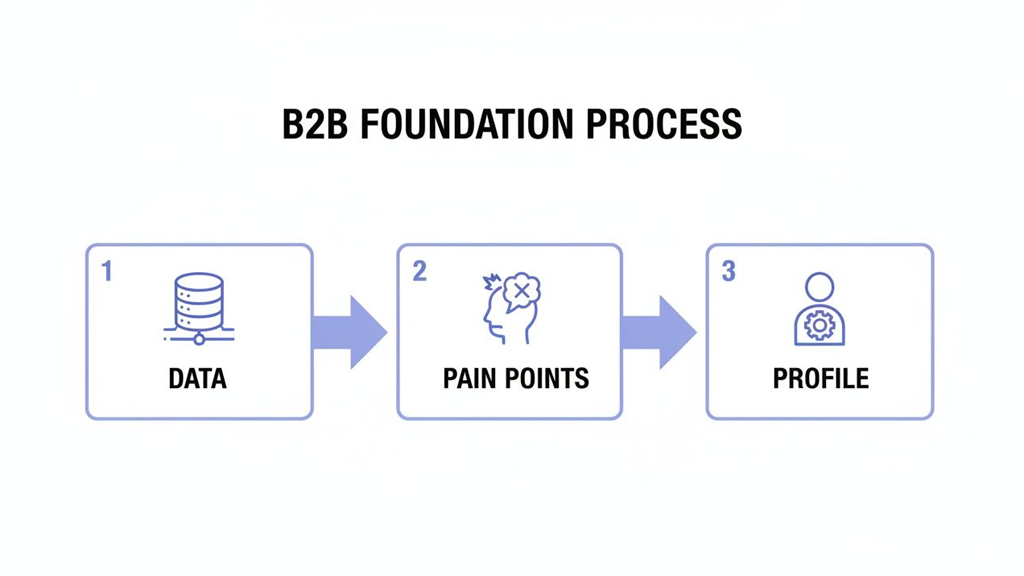
This process maps out the path from basic company data to a genuine understanding of customer pain points, which is what you need to build a laser-focused Ideal Customer Profile. Following this kind of structured approach is what makes the difference between content that gets ignored and content that gets results.
Aligning Content with Buyer Intent
The B2B buying journey is rarely a straight line, but you can generally break it down into three core phases: Awareness, Consideration, and Decision. Your content needs to meet your ICP in each phase, answering the exact questions they are asking at that moment.
-
Awareness Stage: Your prospect has a problem, but they might not have a name for it yet. Your job is to educate. Think blog posts, white papers, and research reports that help them diagnose their challenges without being pushy about your solution. The aim is to become their go-to resource for information.
-
Consideration Stage: Now they have put a name to their problem and are actively looking for ways to solve it. Your content needs to help them weigh up their options. This is the perfect spot for detailed comparison guides, webinars, and case studies that show how different approaches work.
-
Decision Stage: The buyer has now settled on a solution type and is looking at specific providers (like you). Your content needs to build trust and make it easy for them to choose you. This is where you bring out the free trials, implementation checklists, pricing guides, and ROI calculators.
The goal is to build a complete library of assets that helps your prospect at every turn. This does not just attract them; it qualifies them. The content they consume is a huge clue as to where they are in the sales cycle.
Keyword Research with Commercial Intent
Mapping content to the buyer journey only works if people can find it. This means your keyword research needs to be all about commercial intent, not just chasing high-volume vanity traffic. Ranking for a generic term might look good in your analytics, but it rarely brings in qualified leads.
You need to focus your SEO on keywords that show someone is looking for a solution. These are often questions or longer, more specific phrases.
For example, someone in the Awareness stage might search for “signs of inefficient project management”. As they move into the Consideration stage, they might try “best project management software for small teams”. By the time they are in the Decision stage, you could see them searching for “[Your Competitor] vs [Your Brand] pricing”.
By targeting these intent-driven keywords, you attract people who are not just browsing; they are on a mission to solve a real business problem. This is a core part of building a robust content marketing strategy for B2B that drives real growth. Do this right, and you will have a content calendar that turns your website into a lead generation machine.
Optimising Your Website for B2B Lead Conversion
It is easy to think of your website as a digital brochure: a pretty online space to show off what you do. That is a mistake. Your website is your single most important lead generation asset, and a successful inbound marketing strategy depends on it. It needs to be engineered from the ground up to turn anonymous traffic into qualified leads.
This means looking past the design and focusing on the commercial mechanics that actually drive conversions.
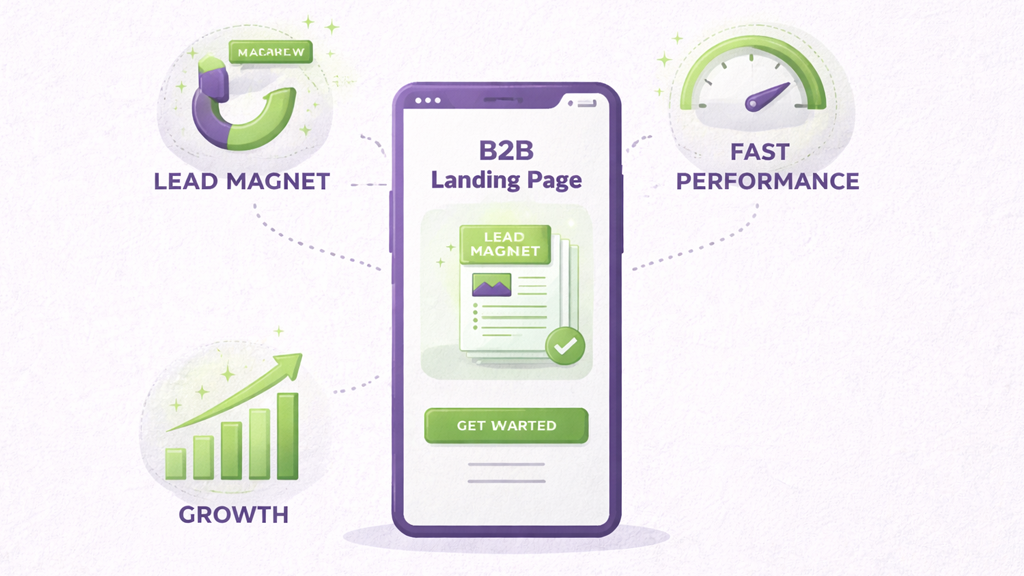
The entire foundation of a high-converting website rests on its technical performance. In the B2B world, you are dealing with decision-makers who are short on time and have zero patience for a clunky user experience. Speed and accessibility are not optional extras; they are absolute commercial necessities.
The Non-Negotiable Technical Foundations
Before you even start thinking about calls-to-action or shiny buttons, you have to get the basics right. A slow-loading site is the number one killer of conversions. If a visitor bounces before your page even finishes loading, that is a lead you have lost forever.
Here are the technicals you absolutely have to nail:
- Page Speed: Every single second counts. Aim for your pages to load in under three seconds. This means optimising your images, keeping your code clean, and investing in good, fast web hosting.
- Mobile Experience: A huge amount of B2B research now happens on a phone, often during a commute or after hours. Your website must deliver a flawless, intuitive experience on any screen size.
- Site Security (HTTPS): That little padlock in the browser bar builds instant trust. It is also a confirmed Google ranking factor, making it crucial for both user confidence and your SEO.
A technically solid website is the bedrock of B2B lead generation. It ensures the valuable traffic you are driving with your content has the best possible chance to convert, maximising the return on your marketing investment.
To turn your website from a simple online presence into a real lead-generating machine, you need to add specific on-page elements. Each one has a distinct job to do.
Below is a quick checklist of the critical elements and the commercial impact they have.
B2B Website Conversion Elements
| Element | Purpose | Commercial Impact |
|---|---|---|
| Clear Value Proposition | Instantly answers “What’s in it for me?” | Reduces bounce rates and keeps visitors engaged. |
| High-Value Lead Magnet | Offers something valuable in exchange for contact details. | Generates qualified MQLs for your pipeline. |
| Strategic CTAs | Guides visitors to the next logical step. | Increases form submissions and demo requests. |
| Trust Signals | Builds credibility (e.g., testimonials, client logos, case studies). | Overcomes scepticism and increases conversion confidence. |
| Frictionless Forms | Makes it easy for prospects to give you their information. | Boosts lead capture rates by removing barriers. |
| Fast Page Speed | Ensures a smooth, frustration-free user experience. | Lowers bounce rates and improves SEO rankings. |
Getting these elements right is the core of Conversion Rate Optimisation (CRO): the discipline of turning more of your visitors into actual leads.
Designing Landing Pages That Convert
With a solid technical base, your focus can shift to the pages themselves. The key to optimising your site for B2B leads is to constantly measure, analyse, and improve. Exploring the best analytics tools for digital marketing gives you the hard data needed to make smart decisions instead of just guessing.
For B2B buyers, landing pages need to be laser-focused. They must be crystal clear, compelling, and speak directly to a visitor’s specific pain point. They have to answer the question, “What problem are you solving for me?” within seconds.
A truly high-performing landing page is stripped of all distractions. There is no navigation bar, no social media links, no sidebars, just a singular goal: getting the visitor to take one specific action.
Creating Compelling B2B Lead Magnets
A lead magnet is simply the valuable thing you offer in exchange for a prospect’s email address and contact details. To grab the attention of a busy B2B professional, your offer needs to deliver genuine commercial insight, not just generic fluff.
Some of the most effective B2B lead magnets we have seen include:
- Diagnostic Tools or Calculators: Think of an ROI calculator or a maturity assessment tool. These help a prospect put a number on their problem, making the need for a solution more urgent.
- Exclusive Research or Data: Original industry data or survey results give your audience a unique perspective they cannot find anywhere else.
- Comprehensive Guides or Blueprints: These are detailed, actionable resources that solve a specific, high-value problem for your Ideal Customer Profile.
The quality of your lead magnet has a direct impact on the quality of your leads. A seriously valuable resource attracts serious professionals, effectively pre-qualifying leads before they even hit your pipeline. A statistic from a 2026 audit of 500 UK B2B sites hammers this home: organic search drives a massive 79% of B2B website traffic. This dominance started back in the 2010s when Google’s algorithms began heavily favouring sites with valuable content.
Ultimately, your website has to work as one cohesive system. From the underlying technical SEO to the words on your landing pages, every single element must work together to guide visitors smoothly toward a sales conversation. To go deeper on this, check out our full guide on website design for lead generation and see how every component can be optimised for performance.
Driving Demand with Smart Content Distribution
You have poured time and effort into creating a fantastic piece of content. The research is solid, the insights are sharp. But what happens next? A brilliant white paper that nobody reads will not generate a single lead or penny of revenue. This is where you need a smart plan to get it seen.
The trick is to build a system where all your channels work together. Forget about thinking of them as separate tasks. Instead, you are building a well-oiled machine that drives the right kind of traffic to your website, creating a pipeline you can actually rely on.
Building Your Organic Foundation
Organic channels are the bedrock of any inbound strategy that is built to last. They help you build genuine authority and an audience that trusts you, which means you will rely less on paid advertising over time.
For B2B, your main organic channels are:
- Search Engine Optimisation (SEO): This is your most powerful long-term asset. When you optimise your content for the keywords your ideal customers are actually typing into Google, you catch them at the exact moment they are looking for answers. This is not about chasing vanity rankings; it is about owning the digital shelf where your customers shop for solutions.
- LinkedIn: In the B2B world, LinkedIn is not just another social network; it is a professional hub. You can reach key decision-makers by sharing your content, joining in with industry group discussions, and even encouraging your team to build their own professional profiles. It is a place where people are already in a business mindset.
Think of your organic presence as your brand’s digital home. It is where you establish yourself as a credible, trustworthy authority. Paid advertising then comes in as an accelerator, pushing targeted traffic to the valuable assets you have already built.
Amplifying Reach with Paid Advertising
While organic traffic builds up over time, paid advertising gives you immediate, targeted reach. It is the perfect way to get your best content straight in front of your ideal customers without waiting for the algorithms to catch up. This is a game-changer for generating leads more quickly and for testing what content really hits the mark.
It is best not to see paid ads as a separate activity, but as a turbo-boost for your existing inbound marketing.
For instance, you could use Google Ads to capture people searching for bottom-of-funnel topics, like comparison guides or pricing. At the same time, you can use paid social platforms like LinkedIn Ads to promote your top-of-funnel content, like a research report, to an audience you have hand-picked based on job title, company size, or industry.
The Content Repurposing Framework
The most efficient marketers do not just create more content; they get more out of the content they already have. A core part of smart distribution is taking one big, high-value piece of content (a “pillar”) and slicing it up into dozens of smaller “micro-assets” for different channels.
This simple idea gives you a massive return on your initial effort and keeps your messaging consistent everywhere you have a presence.
Just think about what you could do with a single webinar:
- Pillar Asset: The full 60-minute webinar recording. Host it on a landing page and ask for an email to watch it.
- Micro-Assets:
- Blog Post: Write up a detailed summary of the webinar’s key points and embed the video right in the post.
- Short Video Clips: Cut out 5-7 short, punchy clips (30-90 seconds) of the best moments. These are perfect for sharing on LinkedIn and other social feeds.
- Quote Graphics: Take 3-4 powerful quotes, turn them into simple, shareable images for social media.
- Checklist/PDF: Condense the main advice from the webinar into a one-page downloadable checklist. You have just created a brand-new lead magnet.
- Email Nurture Sequence: Use the webinar’s main themes to create a series of follow-up emails for everyone who signed up, both attendees and no-shows.
When you adopt this model, you squeeze every last drop of value out of your content. You create a system that practically feeds itself, driving traffic and generating leads to build a pipeline that is both predictable and profitable.
Automating Lead Nurturing and Sales Alignment
Getting a prospect to download a resource is a great start, but it is definitely not the finish line. I have seen it time and again: most leads coming from an inbound strategy are not ready to buy the second they fill out a form. If you force a sales conversation too early, you risk damaging trust and losing the deal for good.
This is exactly where marketing automation proves its worth as a powerful commercial tool. It gives you a systematic way to build a relationship with prospects, guiding them with genuinely useful information until they are ready and, just as importantly, willing to talk to your sales team.
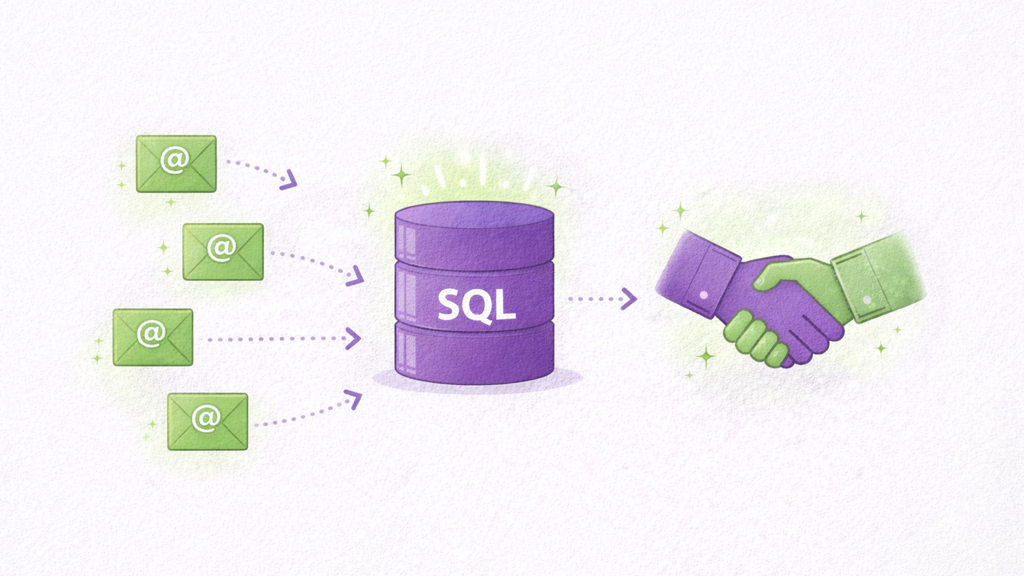
The real objective is to move from simply collecting contacts to intelligently cultivating a healthy pipeline. This approach makes your marketing spend far more efficient and dramatically improves conversion rates further down the line.
Building Automated Nurture Sequences
Think of an email nurture sequence as a pre-planned series of automated emails designed to educate a prospect over time. The key is that these should not be a random blast of sales pitches. For them to work, they have to be context-aware, delivering content based on what the lead first converted on and how they have behaved since.
Let’s say someone downloads your guide on “reducing operational costs”. A smart nurture sequence would follow up with something like this:
- An email sharing a case study of a similar company that slashed costs using your solution.
- A follow-up inviting them to a webinar all about improving operational efficiency.
- A final email offering a free, personalised consultation to help diagnose their specific cost issues.
Each step provides more value, gently moving them along their buying journey while keeping your brand top of mind.
Effective nurturing is about being a helpful guide, not a persistent salesperson. You earn the right to a sales conversation by consistently delivering value and insight, which makes the eventual handoff feel natural and welcome.
Introducing Lead Scoring for Sales Readiness
So, how do you know when a lead is actually ready for that sales conversation? The answer is lead scoring. This is a system where you assign points to leads based on who they are and how they engage with you. It turns a subjective feeling into an objective, data-driven process.
Points are usually given out based on two main categories:
- Demographic Fit: How well does the lead match your Ideal Customer Profile (ICP)? You might give points for their industry, company size, or job title. A ‘Director’ at a perfect-fit company is worth more points than a ‘Student’.
- Engagement Level: What actions has the lead taken? Visiting your pricing page is a massive buying signal and should earn far more points than just opening an email.
Once a lead hits a certain score, they are automatically flagged as a Marketing Qualified Lead (MQL) and are ready to be passed over to the sales team. This simple automation ensures your sales reps only spend their valuable time on the most engaged and relevant prospects, boosting their efficiency.
Defining the Marketing to Sales Handoff
A smooth handoff from marketing to sales is absolutely vital for maximising the return on your inbound efforts. Without it, good leads get dropped, and friction builds up between the two teams. The solution is a crystal-clear, mutually agreed-upon definition of a Sales Qualified Lead (SQL).
This definition is more than just the lead score. It is a formal agreement that outlines the precise criteria a lead must meet before the sales team will accept it. This creates total alignment and holds everyone accountable.
The financial impact of a well-oiled inbound machine is huge. A UK survey back in 2022 showed companies using inbound saw a 3.2x increase in lead volume at a 61% lower cost per lead. This alignment is where the real commercial value is unlocked. To refine your own process even further, it is well worth looking into the capabilities of modern B2B sales intelligence platforms.
Answering Your B2B Inbound Strategy Questions
So, you have the blueprint. But even with the best plan, committing to inbound marketing brings up some big, practical questions. It is only natural. Business owners and directors always want to get to the bottom of the investment, the timeline for results, and how we really measure success.
Let’s tackle those common questions head-on, just as we would with our own clients.
How Long Until We See Results From B2B Inbound Marketing?
This is always the first question, and the honest answer has a couple of parts. You can definitely get some quick wins. By smartly promoting your new content with a paid budget, it is possible to start seeing leads and MQLs pop up within a few weeks.
However, the real power of inbound, the compounding, self-sustaining engine, is a medium-term game.
You are typically looking at six to nine months before organic search and your growing library of content become a truly predictable source of leads. The crucial thing to remember is that the content you create in that first year does not just stop working; it keeps attracting leads for years, bringing your cost per lead down over time.
That does not mean you are flying blind for half a year. You should be tracking progress much sooner.
Within the first three months, you should absolutely expect to see:
- A noticeable upward tick in organic website traffic.
- Your site starting to rank for some of those important, high-intent keywords.
- A slow but steady flow of marketing qualified leads (MQLs) coming from your new content.
What Is a Realistic Inbound Marketing Budget?
There is no single magic number here. A realistic budget really depends on how fast you want to grow, how competitive your market is, and what resources you might already have in-house. To make a real impact, you will need to invest meaningfully, often starting from a few thousand pounds per month for a small or medium-sized business.
A solid B2B inbound budget typically covers three main areas:
- Content Creation: This is the fuel for your engine. Creating high-quality, deeply researched articles, guides, and case studies that actually resonate with your ideal customers requires a consistent investment.
- Technology Stack: You need the right tools for the job. This means a marketing automation platform like HubSpot or a similar system for nurturing leads, plus professional SEO software to track what is working.
- Specialist Expertise: Pulling this all together takes skill. You need someone who knows SEO, content strategy, Conversion Rate Optimisation (CRO), and often paid media. For many businesses, working with a growth partner is far more cost-effective and gets better results than trying to hire an entire specialist team from scratch.
How Do I Measure the ROI of Inbound Marketing?
Measuring return on investment properly means connecting your marketing spend directly to actual, closed deals. It is about moving beyond vanity metrics like traffic and focusing on what really matters: revenue.
To pull this off, you absolutely need a CRM that can show you a lead’s entire journey, from the first blog post they read to the moment they sign a contract. This is how you attribute revenue back to the specific marketing that brought them in.
The ultimate ROI calculation is simple but incredibly powerful: (Sales Growth – Marketing Investment) / Marketing Investment. This gives you a hard commercial figure, showing exactly how inbound is contributing to your bottom line.
To get to this number, you also need to have a solid handle on your Customer Lifetime Value (LTV) and your Lead-to-Customer Conversion Rate. Without those, you are just guessing.
Should Our B2B Company Stop Outbound Marketing?
Not at all. In fact, some of the most powerful growth strategies we see today are a blend of inbound and targeted outbound. It is not about inbound versus outbound; it is about making them work together.
Inbound is fantastic for building that long-term, sustainable pipeline by attracting buyers who are already looking for solutions like yours. It builds the brand authority and trust that makes all your marketing more effective.
At the same time, a smart outbound campaign, like account-based marketing (ABM), is brilliant for proactively targeting a handful of specific, high-value accounts. Think of it this way: inbound builds the giant magnet, and outbound is a tool you can use to pull your most-wanted prospects a little closer to it. The strongest results often come from an integrated approach where you use outbound to point key decision-makers towards your valuable inbound content.
Ready to build an inbound marketing strategy that delivers a predictable pipeline of qualified leads? At Lead Genera, we act as a hands-on growth partner, building and executing data-driven strategies that deliver measurable commercial results. Contact us today to discuss your growth ambitions.
Categories
Do You Need Assistance With
Sign Up To Our Newsletter