


Weekly marketing wisdom you can read in 5 minutes, for free. Add remarkable ideas and insights to your inbox, once a week, by subscribing to our newsletter.
Lead Generation
A Practical Guide to LinkedIn Lead Generation for a Stronger B2B Pipeline
To generate meaningful results from LinkedIn lead generation, you must treat it as the professional powerhouse it is, not just another social media feed. Success requires a blend of art and science: a polished profile, razor-sharp targeting, and intelligent outreach to engage the decision-makers who sign the cheques.
Table of contents:
Why LinkedIn Is the Only B2B Playground That Matters
For any UK business serious about growth, LinkedIn is not a nice-to-have; it is your primary engine. It cuts through the noise of consumer social media, providing a direct line to the executives who can make or break a deal. The entire platform is built around professional life, meaning users are already in a business mindset.
When deciding where to allocate your marketing budget, it all comes down to commercial outcomes. While other platforms may boast larger user numbers, they cannot match the sheer concentration of high-value professionals you will find on LinkedIn.
This is where its real power for B2B comes into focus. Imagine being able to connect directly with a specific job title, in a specific industry, at a company of a specific size. That is not a theoretical benefit; it is the key to an efficient sales process, and LinkedIn delivers it at a scale no other network can match.
The Numbers Do Not Lie
The data is clear. LinkedIn is responsible for generating an incredible 80% of all B2B leads from social media. Think about that. It is more effective than all other platforms combined.
In fact, one study found it to be 277% more effective for lead generation than Facebook and Twitter. And we are not talking about just any leads. A significant 40% of B2B marketers state that LinkedIn is their top channel for finding high-quality leads.
The UK is a major market for the platform, with around 47.5 million users, the fourth largest in the world.
What this means in practical terms is that roughly eight out of every ten professionals you want to reach in the UK are active on LinkedIn. That level of access is a goldmine for building a reliable sales pipeline.
A Platform Designed for Business
Unlike networks built for personal updates and entertainment, LinkedIn is about professional identity, networking, and career growth. This creates a unique environment where posting about your business is not seen as an annoying interruption; it is what people expect to see.
This professional foundation is perfect for achieving key business goals:
- Pinpoint Targeting: You can filter your audience by job title, company size, industry, and seniority to find your ideal customer profile.
- Build Your Authority: It is the ideal stage to share your expertise, post insightful content, and establish your credibility as a go-to expert in your field.
- Fuel Your Sales: The platform has tools specifically designed for direct outreach and nurturing professional relationships.
- Track Your ROI: You can measure your results, tracking the journey from the first connection all the way to a closed deal.
Ultimately, a smart LinkedIn strategy shifts your business from chasing leads to attracting them. It creates a system where your ideal customers start finding you. In the next sections, we will dive into the practical, step-by-step playbook for turning that potential into real, measurable revenue.
Transform Your LinkedIn Presence Into a Lead Magnet
Before you consider spending money on LinkedIn Ads or sending a single connection request, we need to address your shop window. Your personal profile and Company Page are the first things a potential client sees. Get them wrong, and you have lost before you have even started.
Too many businesses treat their LinkedIn presence like a static, dusty CV. This is a significant missed opportunity. A poorly constructed profile does not just look unprofessional; it actively damages trust. When you get it right, your profile starts working for you, warming up prospects and positioning you as an expert who can solve their problems.
Optimise Your Personal Profile for Commercial Impact
Your personal profile is where the first handshake happens. It needs to do the heavy lifting, quickly showing visitors what you do and why they should care.
-
Your Headline is Your Pitch: Ditch the standard job title. Think of your headline as a mini-advertisement that communicates, “Here is how I can help you.”
- Before: Managing Director at ABC Solutions
- After: Helping UK Manufacturing Firms Reduce Operational Costs & Improve Efficiency | Lead Generation Specialist
-
Your Banner is Your Billboard: This is prime advertising space. Use it to showcase your brand, state a clear benefit, and tell people what to do next.
-
The ‘About’ Section is Your Story: This is not the place to list past duties. Instead, tell a story. Show you understand your ideal client’s challenges and use short paragraphs and bullet points to highlight the real-world results you deliver.
Making these adjustments turns your profile from a passive document into an active landing page, built to capture the attention of the right people.
Build Credibility with a Conversion-Focused Company Page
Think of your Company Page as the central headquarters for your business on LinkedIn. It is where you build authority and prove you are a legitimate, active company. In fact, companies that post regularly see twice as much engagement, which is a huge factor for brand recognition and trust.
An empty or outdated page is a red flag. It suggests you are either out of business or simply do not care. Go through every section with a fine-toothed comb. Fill out your tagline, your ‘About Us’ section, and ensure your website URL and address are correct. Your tagline, just like your personal headline, needs to instantly tell visitors the value you provide.
The statistics do not lie. LinkedIn is the undisputed king of B2B, which makes getting these foundational elements right an absolute necessity.
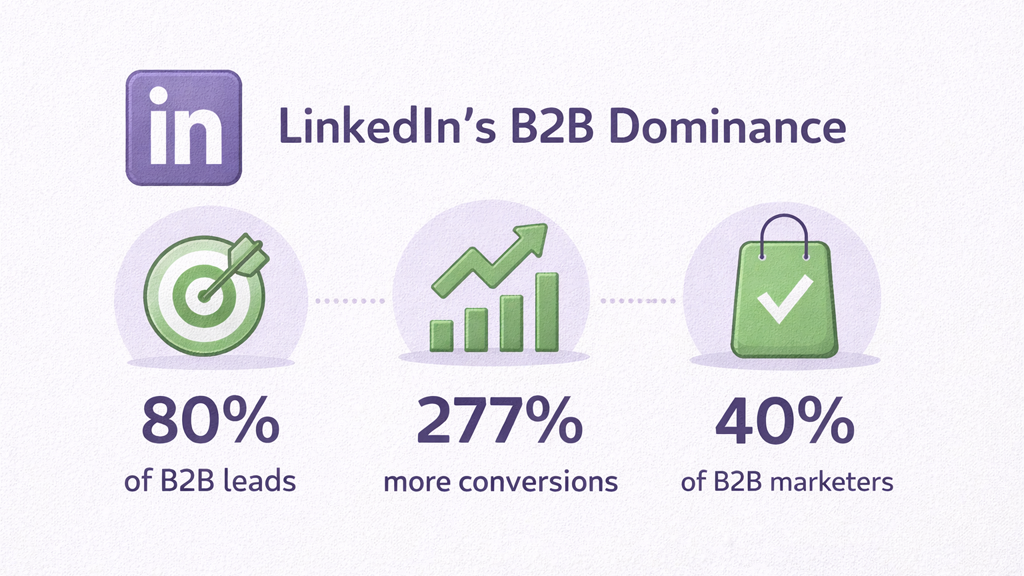
The data makes it crystal clear why this platform is essential. A staggering 80% of B2B leads come from LinkedIn, and 40% of B2B marketers name it as their top source for finding high-quality prospects.
A strong profile and page are not about aesthetics; they are about performance. Every single element should be fine-tuned with one goal in mind: persuading your ideal customer that you understand their problem and are the right partner to help solve it. This is the bedrock of successful LinkedIn lead generation.
When you treat your LinkedIn presence as a conversion-focused system, you create a powerful magnet for new business. Getting this foundation solid ensures that when you do start running campaigns, you are sending people to a place that is ready to turn them into genuine, qualified leads.
Develop a Content Strategy That Attracts Your Ideal Buyers
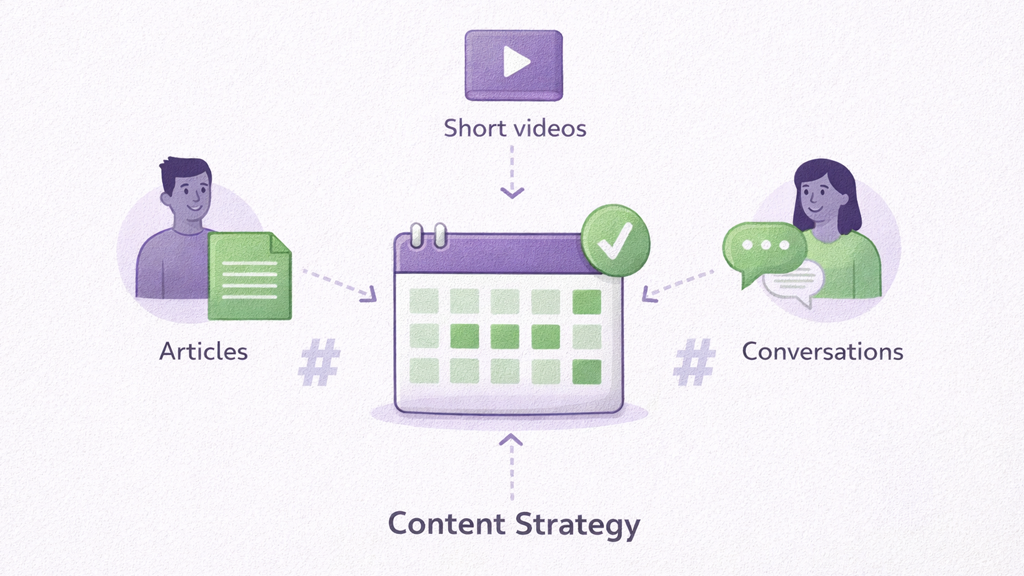
Content is the engine for generating organic leads on LinkedIn. A polished profile gets your foot in the door, but a strategic content approach is what brings the business in. It is easy to be told to ‘post more often’, but real impact comes from a structured plan that establishes you as an authority and pulls your ideal buyers towards you.
The goal is not just to be seen; it is to be valuable. Your content needs to educate, inform, and spark conversations that naturally lead to business opportunities. When you get this right, you create a system where high-quality inbound interest becomes a predictable part of your growth, meaning you can spend less time on cold, manual outreach.
Define Your Core Content Pillars
Your content must have a clear focus. Without one, you will end up posting randomly, which confuses your audience and weakens your message. The most effective way to create this focus is by defining your core content pillars. These should be tied directly to the commercial problems your services solve.
Think about the top three to five challenges your ideal customer is facing. These challenges become your content pillars. For instance, a company providing outsourced IT support could build its pillars around:
- Cybersecurity for SMEs: Posts covering common threats, compliance issues, and practical risk reduction.
- Cloud Migration: Content that explains the real-world benefits, processes, and common pitfalls of moving to the cloud.
- IT Cost Optimisation: Sharing insights on how businesses can reduce their technology spending without harming performance.
When you align your content with these pillars, every post reinforces your expertise and speaks directly to a buyer’s pain points. It is a targeted approach that attracts the right kind of audience and begins to pre-qualify them by demonstrating you truly understand their world.
Master Different Content Formats
LinkedIn offers a menu of content formats, and the most successful B2B marketers use a mix to maintain audience interest. If you only stick to one type of post, your feed can become repetitive, and you will limit your reach. Instead, plan your content calendar around a blend of formats and observe what your audience responds to.
- Text and Image Posts: These are the foundation of LinkedIn content. Use them for sharing quick insights, asking a challenging question, or telling a short, compelling story. Pairing sharp text with a high-quality, relevant image can easily double the comment rate.
- Video Content: Video is an excellent tool for building a personal connection. Short-form videos (under 90 seconds) that explain a concept or share a quick tip tend to perform extremely well. Live videos can also generate up to 24 times more engagement than pre-recorded posts.
- Carousels (PDF Documents): These are perfect for breaking down complex topics into simple, digestible slides. You can use them to create mini-guides, share checklists, or present data in a more visual way.
- Polls: A simple but surprisingly effective way to start engagement and gather quick market intelligence. Use polls to get your network’s opinion on an industry trend or a common business challenge.
By mixing up your formats, you are not just catering to different audience preferences; you are giving the LinkedIn algorithm more opportunities to feature your content.
The goal is to move beyond broadcasting sales messages. Your content should act like a consultant, offering genuine insight and building trust long before a prospect considers your services. This is the foundation of effective, long-term LinkedIn lead generation.
Consistency and Strategic Hashtags
Posting consistently is more important than posting constantly. In fact, companies that post weekly on LinkedIn see twice the engagement. We recommend aiming for a realistic schedule of two to four high-quality posts per week. This keeps you top-of-mind without you having to sacrifice the quality of your insights.
To expand your reach beyond your immediate network, always use a strategic mix of hashtags on every post.
For the best results, combine broad, niche, and branded hashtags:
- Broad: Use one to two popular tags like
#DigitalMarketingor#B2B. - Niche: Add two to three specific tags relevant to your audience, like
#UKManufacturingor#SEOtips. - Branded: Always include your own unique company tag, like
#LeadGenera.
Finally, ensure you analyse your post performance. LinkedIn provides analytics on every post, showing you views, likes, comments, and the demographics of who is engaging. Use this data to determine which topics and formats are hitting the mark. This feedback loop is crucial for refining your approach and improving the commercial return on your content efforts. If you want more in-depth guidance, you can learn more about how to create a content strategy that drives measurable results.
Mastering Outreach That Builds Genuine Connections

While a solid content strategy is excellent for attracting prospects, direct outreach remains one of the most powerful ways to target high-value accounts. The problem is that most people execute it poorly. Their approach is to flood inboxes with generic, automated sales pitches that get ignored or deleted.
Successful outreach is not about spamming prospects with your price list. It is a careful process: identify the right people, understand their world, and build a real connection based on value, not volume. This professional, non-pushy method is what separates a genuine consultant from a pushy salesperson, and it is the only way to get consistent results from your lead generation on LinkedIn.
Identifying and Connecting With Ideal Prospects
Your outreach must start with precision. Casting a wide net is not only inefficient but can also damage your reputation. You need to be surgical. While LinkedIn’s standard search is a decent starting point, for any serious effort, LinkedIn Sales Navigator is an essential investment. Its advanced filters are brilliant for building highly specific lists of decision-makers who match your ideal customer profile.
When you are ready to send a connection request, you must personalise it. A blank request signals a lack of care and is easy to ignore. Your job is to give them a compelling reason to click ‘Accept’.
- Reference Mutual Ground: Mention a shared connection, a group you are both in, or a recent event.
- Acknowledge Their Content: Show you have paid attention by referring to a post they shared or an article they wrote.
- State a Clear, Non-Salesy Purpose: Briefly explain why you want to connect, focusing on their industry or role, not what you want to sell them.
Your connection request is your first impression. It should be concise, relevant, and human. The goal is simply to open the door for a future conversation, not to force a sale on the first attempt.
Taking a moment to personalise a request shows you have done your homework and respect their time. This simple step will dramatically increase your acceptance rate and set a positive, professional tone for what comes next.
Executing a Multi-Touch Messaging Sequence
Once someone connects, the worst thing you can do is dive straight into a pitch. Resist the urge. The best approach is a patient, multi-touch sequence designed to build rapport and uncover their needs. Think of it as a helpful consultation, not a rigid sales cycle.
An effective sequence might look something like this:
- The Thank You and Value-Add: A day or two after they accept, send a message thanking them for connecting. Do not ask for a meeting. Instead, offer something valuable with no strings attached, like a link to a relevant industry report or an insightful article.
- The Gentle Probe: About a week later, follow up with a message that gently probes for a business challenge. Ask a thoughtful question related to their industry or role, such as, “I was curious how your team is navigating the recent changes in data privacy regulations?”
- The Soft Offer: If they respond and engage, you have earned the right to make a soft offer. You could suggest a brief, no-obligation call to share a few more ideas on the topic they showed interest in. Frame it as a chance for them to gain insights, not for you to sell something.
This methodical process builds trust and positions you as a helpful expert. You are guiding the conversation towards a business need rather than trying to force one. As you explore the benefits of using LinkedIn InMails, you will see how these private messages are the perfect channel for this kind of nuanced communication.
To put this into perspective, let us look at how different outreach channels typically perform.
LinkedIn Outreach Channel Performance Comparison
The table below provides a general idea of what to expect from different outreach methods. It is clear that a personalised, value-driven approach on LinkedIn outperforms traditional cold outreach significantly.
| Outreach Channel | Average Response Rate | Key Advantage |
|---|---|---|
| Personalised LinkedIn Message | 8-15% | High personalisation and context builds rapport |
| LinkedIn InMail (Sales Navigator) | 10-25% | Reaches beyond your network with high visibility |
| Cold Email | 1-5% | Scalable, but low engagement and high competition |
| Cold Calling | 1-2% | Direct, but highly intrusive and often unwelcome |
The numbers speak for themselves. Taking the time to build a genuine connection on LinkedIn delivers a far better return than simply blasting out generic messages.
Handling Objections and Moving the Conversation Forward
Realistically, not every prospect will be ready for a chat. You will receive silence, and you will get polite dismissals. The key is to remain professional and persistent without becoming pushy. If you face an objection, acknowledge it gracefully and offer to stay in touch. A “not right now” can often turn into a “let’s talk” in a few months if you handle that initial interaction well.
The goal of your LinkedIn messaging is to qualify interest and determine if there is a real business problem you can help solve. Once you have identified a potential need and built some initial rapport, it is time to move the conversation off LinkedIn. Suggest a phone call, a video meeting, or a switch to email to discuss their situation in more detail. This transition is the critical step that turns a LinkedIn connection into a tangible sales opportunity and a measurable return on your outreach efforts.
Running High-Performance LinkedIn Ad Campaigns
While a strong organic presence is excellent for building authority, sometimes you need high-quality leads immediately. This is where paid LinkedIn ad campaigns come in.
Think of LinkedIn advertising not as an expense, but as a direct investment in your sales pipeline. When executed correctly, it delivers a predictable stream of targeted leads with a return you can measure.
The real power of LinkedIn Ads is how specific you can be. Unlike other social networks, you can put your message directly in front of the exact decision-makers you want to reach. This means less wasted budget and more focus on people who can actually buy from you. It is about shifting from hopeful outreach to a reliable system for acquiring new business.
Choosing the Right Ad Formats for Your Goals
LinkedIn provides several ad formats, and each has its own purpose. A common mistake is using the same format for everything, which almost always leads to poor results and a high cost per lead.
A much smarter approach is to match the format to what you are trying to achieve:
-
Sponsored Content (Single Image or Video Ads): These appear directly in the news feed. They are perfect for promoting your guides, whitepapers, or case studies to build awareness and capture leads at the top of your funnel.
-
Carousel Ads: These let you tell a more detailed story using several images or cards. They work brilliantly for breaking down a complex service, highlighting different features, or walking someone through a step-by-step process.
-
Lead Gen Forms: This is arguably LinkedIn’s most powerful tool for lead generation. Instead of sending people to an external landing page, these forms pre-fill with the user’s profile data. This reduces the effort required and can dramatically boost your conversion rates. They are the go-to for capturing high-intent leads efficiently.
The numbers support this. LinkedIn InMail can achieve response rates of 10-25%, a world away from the typical 1-5% seen from cold emails. This engagement helps drive an average platform conversion rate of 6.3%, an exceptional figure for B2B advertising.
LinkedIn’s own Lead Gen Forms are even more impressive, converting at 15-20% compared to just 4-9% for standard website forms. Furthermore, LinkedIn’s cost per lead is often 28% lower than Google Ads, with double the conversion rate.
Precision Audience Targeting for Commercial Impact
Your campaign’s success boils down to your targeting. LinkedIn’s options are incredibly granular, letting you build audiences based on specific professional details so your ads are only seen by relevant people.
A solid targeting strategy involves layering several attributes:
- Job Title and Seniority: Go straight to the decision-makers by targeting roles like ‘Finance Director’ or ‘Head of Operations’.
- Company Size and Industry: Focus your budget on companies that match your ideal customer. For instance, you could target UK-based manufacturing firms with 50-200 employees.
- Member Skills and Interests: Get even more specific by including people with certain professional skills or those who have shown interest in topics relevant to your business.
The secret to a low cost per lead is not just about reaching a big audience; it is about reaching the right one. By combining these options and using exclusion lists to filter out competitors or irrelevant job titles, you create a highly focused audience of potential buyers.
For anyone serious about getting the most from their ad spend, it pays to dig into the platform’s more advanced features. To help you get started, check out our guide on making the best use of LinkedIn audience targeting.
Budgeting and Optimising for Return on Ad Spend
When you set up your first campaign, you need a clear budget and a realistic idea of the costs involved. For the UK market, a daily budget of at least £50-£100 is a sensible starting point. This should be enough to gather the data you need to start optimising.
Here are a few key cost benchmarks to keep in mind for 2025:
- Average Cost Per Click (CPC): This typically lands somewhere between £4.50 and £7.50.
- Average Cost Per Mille (CPM): Expect to pay between £18 and £32 for every 1,000 impressions.
However, these are just averages. The metrics you should really care about are your Cost Per Lead (CPL) and, most importantly, your Return on Ad Spend (ROAS). A successful campaign is one that generates qualified leads at a price that makes sense for your business.
This means you cannot just set it and forget it. You need to be constantly reviewing your campaign performance, testing different ad creatives, headlines, and audience combinations. By analysing what works best, you can systematically drive down your CPL, improve your ROAS, and turn your LinkedIn ad spend into a predictable source of revenue.
How to Measure and Optimise Your LinkedIn Performance
Generating leads on LinkedIn is not a ‘set it and forget it’ exercise. If you are looking for predictable growth and a positive return on your time and money, you must get comfortable with the numbers. Success means constantly measuring what is working, abandoning what is not, and using what you learn to sharpen your strategy.
This means looking past vanity metrics like likes and followers. Instead, you need to focus on the numbers that actually fill your sales pipeline and boost your bottom line. A good approach is to look at your organic efforts and your paid campaigns separately, as they each have their own important numbers to track.
Tracking Your Organic Outreach and Content
Your organic activity is about playing the long game, building your authority and nurturing relationships. The return on investment may not be as instant as with paid ads, but tracking its performance is crucial to see how it is contributing to the business. The aim here is to see a clear, upward trend in engagement from the right kind of people.
Your main organic metrics to watch should include:
- Profile and Page Views: A spike in views after a period of activity is a great sign that your content and outreach are getting noticed. It is the first real signal that your visibility is growing among potential clients.
- Connection Acceptance Rate: This number tells you exactly how well your personalised connection requests are performing. If your rate is low (for example, under 20%), it is a strong hint that you need to rethink either your targeting or your messaging.
- Content Engagement: Look deeper than just likes. Are your posts sparking comments and shares? More importantly, are the people engaging with your content from the right industries and job roles? High engagement from your ideal customer profile (ICP) is a fantastic leading indicator of future leads.
- Sales Conversations Started: This is the key metric for organic efforts. How many real, two-way conversations are you starting from your content or outreach each month? This is where connections start to become genuine opportunities.
Measuring Paid LinkedIn Ad Campaigns
Paid campaigns provide data much faster, and they demand close monitoring to ensure your budget is being spent wisely. Here, your focus must be on the quality of your leads and how much it costs to acquire them. It is not just about getting clicks; it is about finding leads that have a genuine chance of becoming valuable customers.
The average conversion rate for LinkedIn Lead Gen Forms is a powerful 13%. This is significantly ahead of the typical 2-4% seen on standard website landing pages. It is why keeping users on the platform to convert is often a very smart commercial move.
Focus your analysis on the following:
- Click-Through Rate (CTR): A low CTR is a red flag that your ad creative or headline is not resonating with your audience. It is time to test different images, videos, and copy to see what works better.
- Conversion Rate: What percentage of people who click your ad actually complete the desired action, like filling out a Lead Gen Form? This is the ultimate test of how appealing your offer is.
- Cost Per Lead (CPL): This is your main efficiency metric. You calculate it by dividing your total ad spend by the number of leads you generated. Your goal should be to push this number down over time without letting the quality of your leads drop. In the UK, a CPL between £40 and £120 is a common benchmark, but this can vary massively depending on your industry.
- Lead Quality: Not all leads are created equal. You need to work with your sales team to score your leads based on how closely they match your ICP. A cheap CPL is worthless if the leads are a poor fit for your business.
By checking in on these metrics regularly, you create a powerful feedback loop. This data-first process allows you to make smart decisions, whether it is tweaking your ad targeting, adjusting your content, or changing your outreach messages. This cycle of continuous optimisation is what turns your LinkedIn activity into a reliable, scalable engine for business growth.
Frequently Asked Questions About LinkedIn Lead Generation
When you start getting serious about using LinkedIn for leads, a few practical questions always arise. We understand. Business owners and marketing directors want to know what to expect.
Here are the straight answers to the questions we hear most often from teams looking to make LinkedIn a predictable part of their growth.
How Long Does It Take to See Results?
This really depends on your strategy. If you are going the organic route, building your network and creating great content, you should expect to see real, consistent momentum after about three to six months of solid effort.
On the other hand, a paid LinkedIn Ad campaign can start bringing in leads within a few days. Just remember you will still need a couple of weeks to test and refine your ads to get the cost and quality right.
Is LinkedIn Sales Navigator Essential?
You can certainly get started without it, but for any serious or scalable lead generation, Sales Navigator quickly becomes a must-have tool.
Its advanced search filters, lead lists, and the ability to send more connection requests give you a significant advantage over the free version. It is a huge time-saver and makes your targeting much more accurate.
What Is a Good Cost Per Lead?
This varies a lot depending on your industry. In the UK, a general benchmark for Cost Per Lead (CPL) is somewhere between £40 and £120.
If you are in a highly specialised niche, you might see that figure go up. The real test, though, is how your CPL stacks up against the lifetime value of a customer. That is how you will know if your campaigns are truly profitable.
How Much Should I Post on LinkedIn?
Consistency beats frequency, every time. Aim to share two to four high-quality posts per week.
For most businesses, this is a sustainable rhythm that keeps you on your network’s radar without overwhelming them. It also means you will not have to compromise on the quality of what you are posting just to hit a target.
Ready to turn LinkedIn into a reliable source of high-quality leads? Lead Genera builds performance-led strategies that deliver measurable results and a predictable sales pipeline. Learn how we can help you grow.
Categories
Do You Need Assistance With
Sign Up To Our Newsletter