


Weekly marketing wisdom you can read in 5 minutes, for free. Add remarkable ideas and insights to your inbox, once a week, by subscribing to our newsletter.

Lead Generation
A Practical Guide to Digital Marketing Lead Generation
Digital marketing lead generation is the process of identifying and attracting potential customers for your business using online channels. It is a structured approach that moves beyond traditional cold outreach, focusing instead on attracting prospects who are already showing an interest in the solutions you offer.
Table of contents:
What Exactly Is Digital marketing lead generation?
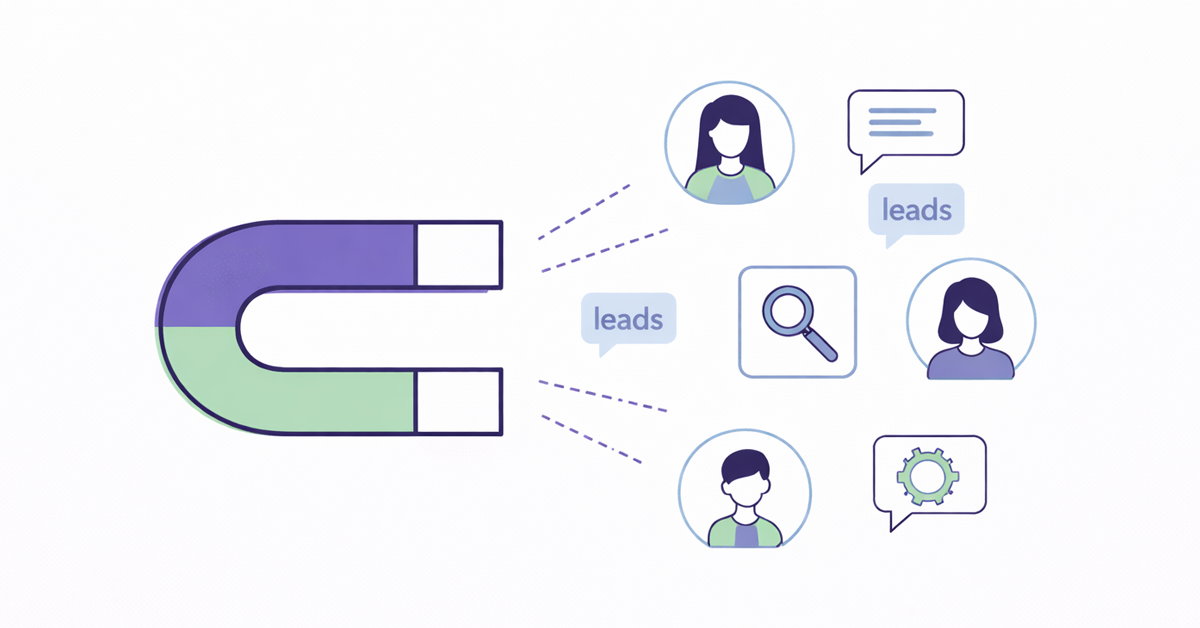
Lead generation should be understood as the commercial engine of your business. It is the system you build to consistently find potential customers who have a genuine, demonstrable interest in what you sell.
Instead of casting a wide, inefficient net with outdated sales tactics, modern digital lead generation acts as a powerful magnet. It is designed to attract the very people who are actively online, right now, searching for the exact solutions you provide.
This shift from interrupting people to attracting them is the cornerstone of modern business growth.
A Commercially Focused Approach
At its core, the entire purpose of digital lead generation is to build a predictable, scalable pipeline of high quality sales opportunities. This is what shifts marketing from a cost centre to a direct driver of revenue. It is all about focusing on measurable results that impact the bottom line.
For any UK business serious about sustainable growth, getting this process right is not just a nice to have; it is essential. To fully grasp its importance, you need to understand what is lead generation in sales and how it serves as the crucial first step in turning a curious prospect into a loyal customer.
It is about creating a machine that consistently feeds opportunities to your sales team, freeing them to focus on what they do best: closing deals.
The Key Components of Success
An effective lead generation strategy is not a single activity; it is built on several interconnected pillars. Each one plays a vital role in attracting, engaging, and ultimately converting your ideal customer.
The main elements you need to get right are:
- Targeted Traffic: Using channels like SEO and paid ads to bring the right kind of people to your digital assets.
- Compelling Offers: Providing something of genuine value, such as an expert guide or a free consultation, in exchange for their contact details.
- An Optimised Website: Ensuring your website is a conversion focused system, built to turn casual visitors into tangible leads.
- A Nurturing Process: Building relationships and maintaining visibility with prospects who are not yet ready to buy.
At its heart, lead generation is a trust building exercise. You are demonstrating your expertise and solving a prospect’s problem before you ever ask for the sale. This builds the foundation for a valuable, long term commercial relationship.
Ultimately, this is about meeting potential clients on their terms, creating a reliable pipeline of opportunities, and forging a direct path to sustainable revenue growth for your business.
Choosing Your High Impact Lead Generation Channels
Once you have a handle on what digital marketing lead generation is, the next question is simple: where do you start?
This is about selecting the right channels to find your best prospects. The aim is not to be everywhere at once. It is about allocating your budget and effort where they will deliver a real commercial return.
Your choice of channel should not be a shot in the dark. It needs to be a direct reflection of who your ideal customer is, how long your sales cycle typically is, and what kind of budget you are working with. For most UK businesses, a handful of core channels consistently deliver the best results.
Search Engine Optimisation (SEO) for Long Term Growth
Think of SEO as building a valuable commercial asset for your business. It is the practice of optimising your website so that you appear at the top of search results when your target customers are looking for what you offer. When someone in Manchester searches for “commercial accounting services,” SEO is what gets your firm’s website seen.
The biggest advantage of SEO is its power to generate a steady, ongoing stream of high quality organic leads. Unlike paid ads, where the traffic stops the moment you stop paying, a well ranked website continues to attract prospects month after month.
This approach is particularly effective for businesses with a considered purchase process, where clients conduct thorough research before committing. By creating valuable content that answers their questions, you build authority and trust, making your business the obvious choice when they are finally ready to engage. It is a long term investment, but one that pays dividends in sustainable, cost effective growth.
Paid Advertising for Immediate Impact
While SEO is a long term strategy, paid advertising delivers instant, targeted traffic. Platforms like Google Ads and Meta Ads allow you to place your message directly in front of a very specific audience, often within hours of activation.
This channel is ideal for:
- Testing new offers or markets quickly and gathering real world data on what works.
- Generating immediate lead flow to keep your sales team busy while longer term strategies like SEO gain traction.
- Targeting prospects with strong buying intent, such as people searching for a specific service provider in their local area.
The secret to success with paid advertising is meticulous measurement. By keeping a close eye on metrics like Cost Per Lead (CPL) and Return On Ad Spend (ROAS), you can make smart, data driven decisions. This ensures every pound you spend is working hard to generate revenue. If you want to dig deeper, have a look at our guide comparing social media vs pay-per-click for lead generation.
LinkedIn for B2B Authority and Engagement
For any business in the B2B sector, especially professional services, tech, and consultancy, LinkedIn is non negotiable. It has evolved from a simple CV platform into a powerhouse for building credibility and connecting directly with decision makers.
UK B2B marketers have clearly recognised its value. A significant 82% report their biggest successes on LinkedIn compared to any other social platform. This is not a coincidence; the platform is built for professional networking, making it the ideal environment for sourcing high value leads. For many UK firms, it is simply the most effective way to build a scalable sales pipeline.
The real commercial advantage comes when you stop treating these channels as separate silos and start running them as an integrated system. Data from one channel should inform the strategy for another, creating a flywheel effect that drives superior results.
For instance, insights from your Google Ads campaigns can identify high converting keywords to focus on with your SEO. Similarly, you can use paid ads to boost the reach of the high value content created for your organic strategy, getting it in front of more people, faster. This integrated thinking creates a robust system that delivers a consistent, predictable flow of qualified leads.
How to Build a Lead Generation Funnel That Converts
Forget complex marketing theories for a moment. A lead generation funnel is simply a map of your customer’s journey, showing the path they take from being a complete stranger to becoming a valued client. Once you understand this journey, you can stop using random marketing tactics and start building a proper system that guides prospects towards a sale.
It completely changes how you communicate with potential customers. Instead of sending everyone the same generic message, you start delivering the right information at exactly the right time. This builds trust, demonstrates your value, and is the key element that separates a high performing campaign from wasted ad spend.
Top of the Funnel (ToFu): Awareness and Attraction
At the top of the funnel, you will find people who are just starting to realise they have a problem. They are not actively looking for solutions yet, so your goal is not to sell; it is to educate and attract. This is where you grab their attention with genuinely helpful, problem focused content.
Effective tactics for the top of the funnel include:
- Actionable Blog Posts: Articles that directly address the common pain points and questions your ideal customers have.
- Informative Guides and Checklists: Downloadable resources that offer real utility and start positioning you as an expert.
- Engaging Social Media Content: Posts, short videos, and infographics that capture interest and introduce your brand as a helpful authority, not a pushy salesperson.
The entire point here is to become a trusted resource. You are earning the right to have a more detailed conversation with them later on.
The diagram below shows how different channels work together to pull potential customers into your funnel.
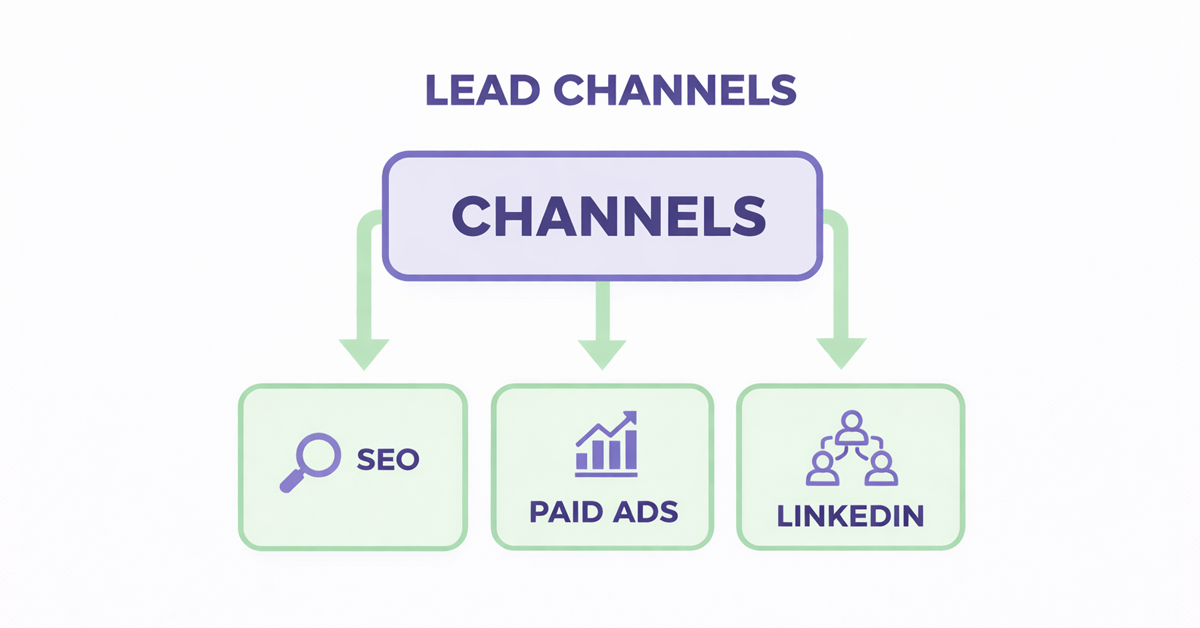
Whether it is through SEO, paid ads, or activity on LinkedIn, all these channels are designed to draw prospects into the top of your funnel, initiating their journey with you.
Middle of the Funnel (MoFu): Consideration and Evaluation
Once someone moves into the middle of the funnel, the situation has changed. They know they have a problem, and now they are actively looking at different ways to solve it. Your objective shifts from broad education to demonstrating exactly why your solution is the best choice. This is where you build serious credibility.
Content at this stage needs to be more specific and solution focused. Assets like case studies, detailed webinars, and in depth service pages are ideal here. They provide the evidence and social proof that decision makers need to feel confident in their choice.
This digital first approach is now the standard. In the UK B2B market, 73% of decision makers now expect the first contact to be digital. This highlights just how critical a strong online presence is. The best strategies often blend digital touchpoints with traditional methods; for instance, integrating targeted email outreach with follow up sales calls can boost qualified lead conversion by 67%.
A well structured funnel does more than just generate leads; it qualifies them. By providing the right information at each stage, you ensure that by the time a prospect reaches your sales team, they are educated, engaged, and genuinely interested in a commercial conversation.
Bottom of the Funnel (BoFu): Decision and Action
Finally, at the bottom of the funnel, your prospect is ready to act. They have done their research, weighed up their options, and are now looking for a clear reason to choose you. Your communication must be direct, compelling, and laser focused on action.
This is the time for high intent offers that make it incredibly easy to take that final step. Think free consultations, personalised quotes, or a product demonstration. Your call to action needs to be crystal clear, removing any friction between their decision and making contact.
For a deeper dive into structuring each stage, you can learn more about how to create a lead generation funnel in our dedicated guide.
Applying the Tactics That Maximise Your Results
With a clear funnel and your chosen channels in place, it is time to shift your focus to execution. This is where strategy becomes reality. Success in digital marketing lead generation is not about abstract theories; it is about consistently applying the right tactics to turn plans into genuine commercial opportunities.
Avoid the trap of trying to do everything at once. The real secret is mastering a few critical disciplines that work together, creating a system that attracts, engages, and converts your ideal customers. It is about getting the maximum return from every pound you invest.
Fuel Your Funnel With High Value Content Marketing
Think of content as the fuel for your entire lead generation engine. Without it, your SEO efforts will stall, your paid ads will lack substance, and your social media will have nothing meaningful to say. Effective content marketing is not about producing generic blog posts; it is about creating genuinely useful assets that solve real world problems for your audience.
Every piece of content you create should act as a salesperson working for you 24/7. It is there to answer questions, handle objections, and build trust long before a prospect ever picks up the phone. The aim is to position your business as the undisputed expert in your field.
To achieve this, your content must be:
- Problem Centric: Focus relentlessly on the pain points and challenges your ideal customer faces.
- Actionable: Provide practical advice and clear steps they can use immediately.
- Data Informed: Use proper keyword research to understand exactly what your audience is searching for online.
When you create content that truly educates and empowers, you attract high quality prospects at the top of the funnel and give them a compelling reason to engage further.
Drive Engagement With Strategic Email Marketing
Once you have earned a lead’s contact details, email marketing becomes one of your most powerful tools for building the relationship. However, simply sending out a monthly newsletter is not a strategy; it is just noise. The real commercial value comes from segmentation and automation.
Segmented campaigns allow you to send highly relevant messages based on a lead’s demonstrated interests. For example, if someone downloaded a guide about a specific service, the follow up emails they receive should expand on that topic, not just deliver generic company news. This tailored approach makes your communication feel personal and valuable.
It is about keeping your business top of mind for the right reasons.
Automated nurturing sequences are a powerful tool. They guide leads through the consideration phase on autopilot. A well crafted welcome series or a sequence triggered by a specific action can educate prospects, build trust, and prime them for a sales conversation, all without manual intervention.
Maximise Every Opportunity With Conversion Rate Optimisation
If there is one discipline that is absolutely critical in modern digital marketing, it is Conversion Rate Optimisation (CRO). CRO is the science of improving your website and landing pages to get more visitors to take the action you want, whether that is filling out a form or booking a demo.
Your website is not just a digital brochure; it is your most important sales tool. Many businesses spend thousands driving traffic to a site that is not built to convert. It is like pouring water into a leaky bucket. CRO is about plugging those leaks, ensuring you get maximum value from the traffic you already have before you spend another penny acquiring more.
Key areas to focus on for CRO include:
- Compelling Calls to Action (CTAs): Your CTAs need to be crystal clear and action oriented. Vague buttons like “Submit” or “Learn More” almost always underperform. Use specific commands like “Get Your Free Quote” or “Download the Guide Now.”
- Simplified Forms: Every extra field you add to a form is another reason for someone to abandon it. Only ask for the information you absolutely need. One study found that reducing form fields from four to just three can boost conversions by as much as 50%.
- Optimised Landing Pages: Every paid ad campaign should point to a dedicated landing page that perfectly matches the ad’s message. That page needs one clear objective and should be free from any distractions that could pull the visitor away.
By applying these core tactics, you transform your marketing from a collection of random activities into a cohesive, high performance system. This is what turns website traffic into a healthy sales pipeline, and a healthy pipeline into tangible revenue.
How to Measure What Truly Matters
Effective lead generation is a commercial activity, driven by hard data, not guesswork. It is easy to become distracted by vanity metrics like clicks, impressions, and follower counts, but those numbers rarely tell the full story.
If you want to make smart investment decisions, you need to focus on the Key Performance Indicators (KPIs) that are directly tied to the financial health of your business. This is what transforms marketing from an expense into a predictable engine for growth.
Focusing on Commercial Outcomes
To determine if your lead generation is actually working, you need to track the metrics that connect your marketing activity to your sales revenue. These are the numbers that business owners and directors care about because they measure efficiency, profitability, and ultimately, return on investment.
Here are the essential KPIs every business should be tracking:
- Cost Per Lead (CPL): This is the most direct measure of campaign efficiency. It tells you exactly what you are spending to acquire a single lead from a specific channel. For instance, if you spend £500 on a Google Ads campaign and it generates 25 leads, your CPL is £20.
- Customer Acquisition Cost (CAC): This metric goes a step further. CAC calculates the total cost of acquiring a new client, factoring in all your marketing and sales expenses. If you spend £2,000 on marketing and sales in a month and sign four new customers, your CAC is £500.
- Lead to Customer Rate: This percentage is a critical indicator of lead quality. It measures how many of your leads actually convert into paying customers. A low rate often indicates a mismatch between your marketing message and your sales process, or it might mean you are attracting the wrong audience entirely.
By focusing on these outcome driven metrics, you can diagnose problems, reallocate your budget for maximum profitability, and build a powerful business case for future marketing investment. It is the difference between hoping for results and engineering them.
Interpreting the Data for Growth
Simply tracking these numbers is only half the battle. The real value lies in how you interpret them to make informed, strategic decisions. Your data should be answering critical business questions and guiding your next steps.
Consider this: a high CPL is not automatically a bad thing, especially if the leads from that channel have a high lead to customer rate and a high lifetime value. Conversely, a channel that delivers a very low CPL might look efficient on paper, but if none of those leads ever convert, it is just wasting your sales team’s time and your money.
Building a Performance Led System
The ultimate goal is to build a crystal clear picture of your entire customer journey, from the first click to the final sale. This is what allows you to understand the true Return on Investment (ROI) of your lead generation efforts.
When you can confidently say that every £1 invested into a particular channel generates £5 in new business, you have unlocked the secret to scalable growth. This data driven clarity allows you to stop guessing where to put your budget and start investing strategically in the channels and tactics that deliver proven, profitable results.
Avoiding the Common Lead Generation Pitfalls
Investing in digital marketing without a clear strategy is one of the fastest ways to exhaust your budget. We have seen this scenario play out countless times: businesses make the same critical mistakes, leading to frustration and a poor return on investment.
Understanding these common pitfalls is the first step toward building a system that delivers predictable revenue, not just a flurry of activity. By sidestepping these challenges, you can diagnose weaknesses in your own approach and build a more resilient, effective lead generation engine. This foresight is what turns marketing spend into measurable growth.
Focusing on Quantity Over Quality
The most common trap is chasing a high volume of leads at any cost. It is easy to get excited by a spike in form submissions, but a database full of thousands of low quality contacts who will never buy is not an asset; it is a commercial liability. It wastes your sales team’s valuable time and drains morale as they follow up on one dead end after another.
True success is not measured by the number of downloads or sign ups, but by the number of qualified opportunities that enter your sales pipeline.
A lead generation strategy must be judged on its ability to produce sales ready opportunities. Prioritising lead quality over sheer quantity directly improves sales efficiency, reduces cost per acquisition, and drives profitable growth.
To get this right, you need to:
- Define a Qualified Lead: Your sales and marketing teams must agree on a crystal clear definition of a good lead. What industry are they in? What is their job title? What specific problems are they trying to solve?
- Implement Lead Scoring: Not all leads are created equal. Assign points based on their actions and attributes. Someone who visits your pricing page is far more valuable than someone who only downloads a top of funnel guide. This helps you focus on the most promising prospects.
- Align Marketing and Sales: Create a robust handover process. Marketing should only pass leads to sales once they meet the pre agreed qualification criteria. There should be no exceptions.
Neglecting the User Experience
You can have the best ads and the most compelling content in the world, but if they lead to a slow, confusing, or poorly designed website, you have wasted your investment. Think of your website as your digital storefront and your number one salesperson; it is your most critical conversion tool.
A poor user experience creates friction, erodes trust, and sends potential customers straight to your competitors. Every single element, from page load speed to the clarity of your contact forms, has a direct commercial impact. Research shows that even a one second delay in page load time can reduce conversions by 7%. For an e commerce site generating £100,000 per day, that single second costs a staggering £2.5 million in lost sales annually.
Lacking Sales and Marketing Alignment
When marketing and sales teams operate in separate silos, the entire lead generation process grinds to a halt. Marketing generates leads without understanding what the sales team actually needs, and the sales team dismisses those leads as low quality without providing constructive feedback. This is a common and costly problem.
This disconnect leads to wasted resources, missed opportunities, and significant internal friction. A truly effective lead generation system requires a seamless feedback loop where both teams are working towards the same commercial objectives. This alignment ensures that marketing efforts are directly contributing to pipeline value and, ultimately, revenue growth.
Frequently Asked Questions
Have questions? You are not alone. Here are some of the most common questions we are asked by business owners and marketing managers across the UK. We will provide straight answers to help you move forward.
How Long Does It Take to See Results?
This is the million pound question, and the honest answer is: it depends entirely on the channel you are using.
Paid advertising, like Google Ads or Meta Ads, is like flicking a switch. You can have leads coming in within days, sometimes even hours, after launching a campaign. Its speed makes it ideal for kickstarting your sales pipeline or testing a new offer.
SEO, on the other hand, is more like planting a tree. It is a long term commercial strategy that builds value over time. You will typically start seeing meaningful movement in organic traffic and leads around the three to six month mark. The payoff is that leads from SEO are often higher quality and become more cost effective over the long run. The smartest approach often involves both: use paid ads for immediate impact while you patiently grow a strong, sustainable organic presence.
How Much Should I Budget for Lead Generation?
Your budget should never be a guess. It needs to be tied directly to your business goals, your industry, and the competitiveness of your market. The best place to start is by working backwards from your target Cost Per Lead (CPL) and your overall Customer Acquisition Cost (CAC).
For example, if a new customer is worth £5,000 to your business over their lifetime, you might decide that spending up to £500 to acquire them is a profitable investment.
For SMEs in the UK starting out, a test budget for paid campaigns often falls between £1,000 and £5,000 per month. For a professional SEO retainer, you are typically looking at a starting point of around £750 per month. The key is to start with a budget you are comfortable with, measure the return meticulously, and then scale your investment in the channels that are delivering profitable results.
What Is the Difference Between a Lead and a Qualified Lead?
Understanding this distinction is absolutely critical. It is the difference between a busy sales team and a productive one.
A lead is anyone who has shown a minor level of interest. They might have downloaded an e book or filled out a generic contact form. They have raised their hand, but that is all. A large portion of these individuals are not ready to buy.
A qualified lead, however, is someone who has been properly vetted. They have been checked against a specific set of criteria that shows they have genuine potential to become a customer. We often assess factors such as:
- Budget: Can they afford your solution?
- Authority: Is this person a decision maker?
- Need: Do they have a real problem that you can solve?
- Timeline: Are they looking to make a purchase in the near future?
When your sales team focuses its energy on qualified leads, they are not wasting time on prospects with no commercial intent. They are engaging in conversations that lead to improved conversion rates and a healthier bottom line.
Ready to build a predictable pipeline of high-quality leads for your business? At Lead Genera, we specialise in creating and executing commercially-focused digital marketing strategies that deliver measurable results. Find out how we can help you grow.
Categories
Do You Need Assistance With
Sign Up To Our Newsletter