


Weekly marketing wisdom you can read in 5 minutes, for free. Add remarkable ideas and insights to your inbox, once a week, by subscribing to our newsletter.

Marketing
How to Conduct Competitor Analysis for Commercial Growth
What exactly is competitor analysis? It is the process of systematically reviewing your rivals to gather intelligence on their strategies, products, pricing, and marketing. This process helps you benchmark your own performance, spot gaps in the market, and make informed decisions that improve your lead generation and, ultimately, your profitability.
Table of contents:
Why Competitor Analysis Is Essential for Growth
Attempting to grow your business without assessing the competition is like navigating without a map. In today’s crowded market, understanding their strategy is not just advisable; it is vital for survival and growth. A systematic competitor analysis is the foundation of any robust commercial strategy, turning simple observation into a powerful tool for gaining a competitive advantage.
This process is not about blindly copying what others are doing. It is about using data to position your business intelligently.
Regular, structured analysis delivers a real commercial edge. It allows you to anticipate market shifts, handle competitive threats, and build a more resilient and profitable UK business. The main benefits are:
- Identifying Market Gaps: You can discover underserved customer needs or market segments that your competitors are ignoring.
- Refining Your Value Proposition: It helps you sharpen your messaging by understanding what makes you different and more valuable to your ideal customers.
- Improving Commercial Performance: You can make informed decisions that directly impact your lead volume, reducing your cost per lead and boosting profitability.
In the competitive UK lead generation market, this is absolutely essential, especially for small and medium-sized enterprises (SMEs). For instance, market data showed that businesses systematically benchmarking competitors’ AI-driven lead generation strategies saw a 215% increase in qualified leads within 90 days. Their average costs also dropped to just £32 per lead, leaving those who skipped this crucial step far behind. You can review the complete findings in this no-nonsense guide for UK SMEs.
A proper competitor analysis gives you the intelligence to stop reacting to the market and start shaping it. It replaces guesswork with a clear, strategic roadmap for acquiring better leads more efficiently than your rivals.
Building Your Analysis Framework
Effective competitor analysis starts with a simple question: what are we trying to achieve? Before gathering data, you need a clear purpose. Diving in without one leads to wasted time and a mountain of useless information. It is far better to tie your goals directly to a commercial outcome.
Are you looking to increase market share in a specific vertical? Is the goal to reduce your cost per lead on paid advertising, or do you need to adjust your pricing model to boost profitability? Setting these clear, measurable goals from the outset ensures every step is focused and purposeful.
The process I always come back to is simple: analyse, strategise, and then grow.
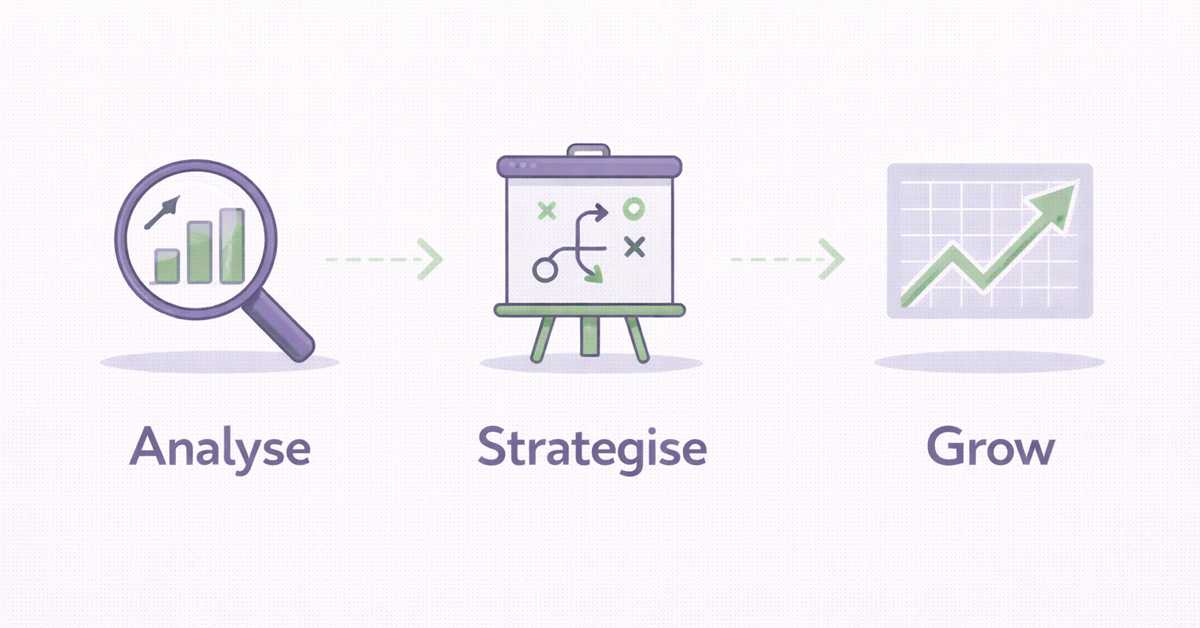
This is not just a diagram. It is a reminder that analysis is never the end goal. It is the catalyst for strategic decisions that fuel real, tangible business growth.
Identifying Your True Competitors
Once you know your goals, it is time to identify who you are really competing against. It is tempting to focus only on the obvious names in your industry, but that is a mistake. A proper analysis involves examining different types of rivals who could be impacting your lead generation and sales pipeline.
A smart way to do this is to segment your competitors into distinct categories. This helps you prioritise where to focus your energy. For a more detailed look at this, our guide on how market mapping can sharpen your competitive focus is a great resource.
When we work with clients, we usually break their rivals down into a few key groups.
Competitor Categorisation Framework
Using a simple framework helps you sort through the noise and decide who warrants a deep-dive analysis versus who just needs monitoring.
| Competitor Type | Description | Example | Primary Focus for Analysis |
|---|---|---|---|
| Direct | Businesses offering a similar product or service to your exact target market. | A local bakery competing with another bakery on the same high street. | Product features, pricing, marketing messaging, and customer reviews. |
| Indirect | Companies solving the same core problem for customers but with a different solution. | A cinema competing with a streaming service for evening entertainment. | Their value proposition, customer experience, and content marketing strategy. |
| Emerging | New, often innovative, companies that could disrupt the market. They may be small now. | A new FinTech app challenging traditional high street banks. | Their unique selling points (USPs), funding, early market traction, and technology. |
Categorising your competitors this way means you can put your resources where they will have the most impact. You can conduct a deep analysis of high-threat rivals while simply keeping an eye on the others, which prevents you from getting bogged down in irrelevant data.
Gathering Your Intelligence
With your competitors identified, the next job is to start collecting information. This is where you become a detective. The data you need is scattered across a huge number of sources, both online and off.
Some of the most valuable places to look include:
- Their Website: This is their digital storefront. Scrutinise their product pages, pricing, case studies, and blog content. How do they talk about themselves? What problems do they claim to solve?
- Social Media & Content: Look at their LinkedIn, Twitter, and any other relevant platforms. What are they posting? How much engagement do they get? This gives you a feel for their brand voice and community.
- Customer Reviews: Review sites and Google Reviews are goldmines. You will find unfiltered feedback on their strengths and, more importantly, their weaknesses.
- SEO & Paid Ads: Using the best competitor analysis tools can show you what keywords they are ranking for and what ads they are running. This reveals their targeting strategy and where they are spending their marketing budget.
- Financial Reports & News: For public companies, financial reports are essential reading. For all businesses, press releases and news articles can give you clues about new product launches, partnerships, or strategic shifts.
Putting together a solid framework and knowing where to look for information are the first crucial steps. It sets the stage for a proper analysis that will give you actionable insights, not just a list of facts.
Gathering Actionable Intelligence
You have set your goals and identified your key competitors. Now the real work begins. This is not about collecting mountains of data for its own sake; you are hunting for actionable intelligence. Every piece of information you gather should help you answer a commercial question, such as how to generate better quality leads or reduce your customer acquisition costs.
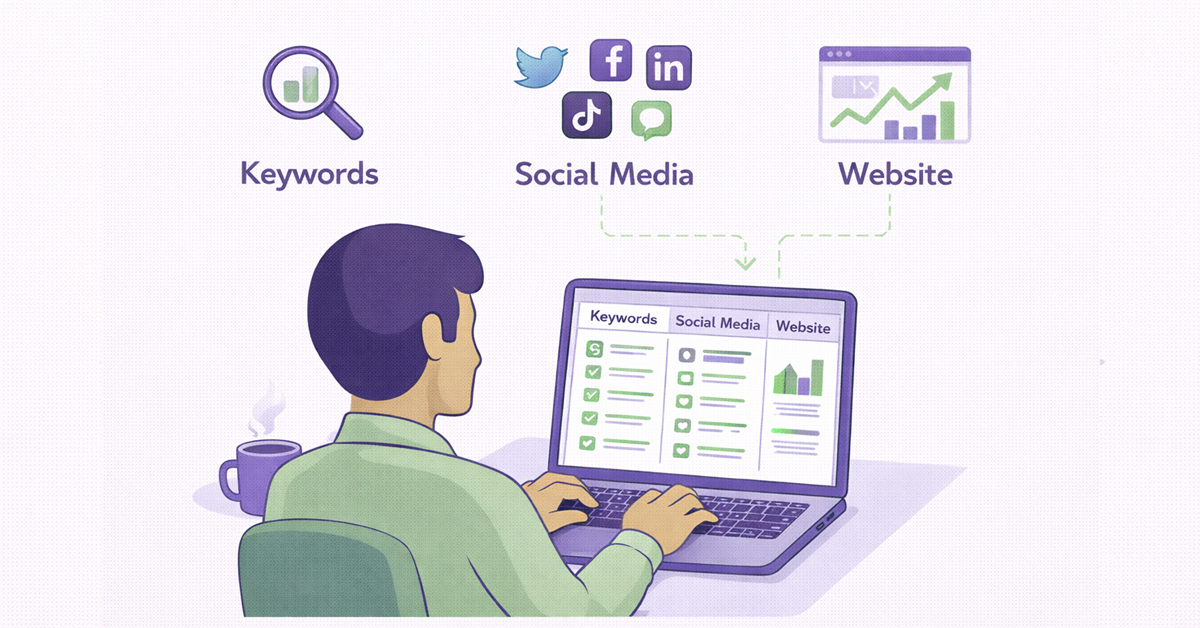
Think of it as a digital reconnaissance mission. You are mapping out your competitor’s online territory to spot their strengths, weaknesses, and any opportunities they have missed. A scattergun approach just leads to information overload. A structured approach is always better.
Website and Customer Journey Analysis
Your competitor’s website is their best salesperson, working 24/7. The first thing you should do is put yourself in the shoes of a potential customer and explore their site. Click through their entire journey, from landing on the homepage to the final “contact us” or “buy now” button.
Keep a sharp eye out for these elements:
- Messaging and Value Proposition: What problem do they solve? Is their unique selling proposition (USP) immediately obvious and convincing, or is it buried in jargon?
- User Experience (UX): Is the site easy to navigate, or a frustrating maze? Count the clicks it takes to find essential information, like pricing or case studies. A slow, confusing website is a weakness you can exploit.
- Calls-to-Action (CTAs): What do they want visitors to do? Are the buttons and links bold and persuasive? Pay attention to the specific language, like “Get a Free Quote” versus “Book a Discovery Call,” as it reveals their sales approach.
- Conversion Points: Make a list of all the ways they try to capture a lead. This could be anything from a simple newsletter sign-up to a demo request, a free tool, or a downloadable guide.
This hands-on work shows you exactly where the friction is in their sales funnel. Suddenly, you will have a list of clear ideas for making your own website a smoother, more effective lead generation asset.
A competitor’s website is a public blueprint of their sales process. By walking through it as a prospect, you can identify the gaps between the experience they promise and the one they deliver.
Digital Marketing Footprint
Next, you need to determine how they attract people to their website. Digging into their digital marketing footprint uncovers their customer acquisition strategy and, crucially, where they are spending their money. Getting this right is fundamental to understanding how to conduct competitor analysis.
Your investigation should focus on three key areas:
- SEO Performance: Use SEO tools to find out which keywords they are ranking for. Are they targeting high-intent commercial terms (“buy product x”) or broader informational ones (“how to solve problem y”)? Check their top-performing blog posts and pages to see what topics their audience engages with.
- Paid Advertising: It is time to see what they are paying for. Look into their paid search ads and social media campaigns. Tools like the Meta Ad Library are brilliant for this, giving you a transparent look at the ads they are running. Analyse their ad copy, images, and the landing pages they send traffic to. This tells you who they are targeting and what offers are working for them.
- Content and Social Media Strategy: Read their blog, case studies, and any white papers. Then, scroll through their social media channels. Take note of the topics they discuss, the formats they prefer (video, long-form text, infographics), and how much engagement they get. This gives you fantastic insight into their brand positioning and how they are trying to build authority.
By systematically gathering this intelligence, you build a clear picture of how your competitors’ marketing engines run. It exposes the keywords you should be targeting, the ad strategies that are working, and the content gaps you can fill to attract your ideal customers.
Analysing SEO and Paid Media Performance
Think of your competitors’ digital marketing as a public record of their commercial strategy. By digging into their search engine optimisation (SEO) and paid media campaigns, you can see the exact moves they are making to win high-intent customers. This is not just about observation; it is about reverse-engineering their playbook to accelerate your own growth.
The aim here is to get past vanity metrics and focus on what actually drives revenue. When you understand which keywords are sending them traffic, which ads are converting, and where their blind spots are, you gain a massive commercial edge. It allows you to invest your marketing budget where it counts and compete for crucial leads with confidence.
Dissecting Competitor SEO Strategy
Good SEO is a long-term investment that, when done right, builds a predictable stream of inbound leads. Analysing a competitor’s search performance shows you what is working for them, which immediately highlights opportunities for you to outrank them for valuable search terms.
Your analysis should focus on a few core areas:
- Keyword Gaps: Find the commercial keywords your competitors rank for, but you do not. These are low-hanging fruit: clear opportunities to create targeted content or landing pages and start capturing that traffic.
- Top Performing Content: Identify the blog posts, guides, and pages that bring them the most organic traffic. This is a direct signal of what your shared audience finds valuable and what type of content performs well.
- Backlink Profile: Look at which authoritative websites are linking to your competitors. A strong backlink from a respected industry source is a significant vote of confidence, and mapping their profile can give you a clear direction for your own digital PR and outreach.
- On-Page Optimisation: Examine how they use title tags, meta descriptions, and headers on their key pages. If their optimisation is sloppy, that is a quick win waiting for you.
To stay on top of a rival’s SEO performance and search visibility, using the best AI search tracker tools can provide serious insights. For more hands-on recommendations, have a look at our guide on the top 10 SEO tools for businesses.
Investigating Paid Media Campaigns
Paid media campaigns, like Google Ads and Meta Ads, offer a clear window into a competitor’s spending habits and lead generation priorities. Where they choose to invest their money is a massive clue about what they believe delivers the best return.
Analysing a rival’s ad campaigns is not about copying their creative. It is about understanding their targeting logic, value propositions, and conversion funnels to find weaknesses you can strategically exploit.
Try to find the answers to these questions:
- What platforms are they using? Are they focused on Google Search, or do they prefer LinkedIn or Meta? This tells you where they believe their ideal customers are active.
- What ad copy and offers are they running? Look closely at their headlines, descriptions, and calls to action. Are they promoting free demos, percentage-off discounts, or downloadable guides?
- What do their landing pages look like? Follow the user’s journey after they click the ad. Is the experience smooth and focused on a single conversion goal, or is it disjointed?
This deep dive into paid ads is commercially vital. Recent data on B2B marketing performance shows that while standard conversion rates in professional services sit around 3-7%, companies that consistently analyse their rivals can boost their lead quality by 156% and see a 3.2x ROI. Dissecting a competitor’s targeting strategy directly translates into bigger wins for your own campaigns.
Translating Insights Into a Commercial Action Plan
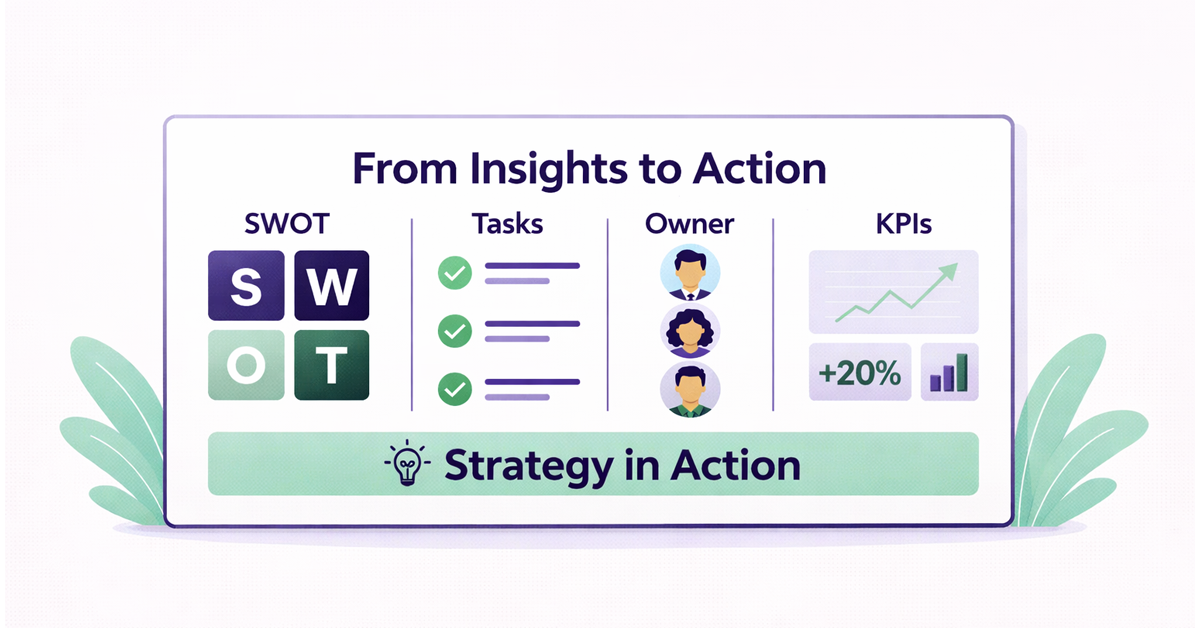
You have gathered the data. Now for the most important part: turning that research into a commercial action plan that drives growth. Without this step, your analysis is just an interesting report, not a strategic tool for improving lead quality and boosting revenue.
A classic SWOT analysis is an excellent way to make sense of everything you have found. This simple grid helps you map out your Strengths, Weaknesses, Opportunities, and Threats against your key competitors.
Your strengths are where you are winning, and weaknesses show where they have the upper hand. Opportunities are the gaps in the market you can exploit, while threats are competitor moves or market shifts that could cause problems.
From Analysis to Actionable Initiatives
Once your SWOT is complete, it is time to turn each point into a tangible marketing initiative. This is where you move from thinking to doing, creating a prioritised list of actions that will make a real difference to your sales pipeline.
Let’s imagine a few real-world scenarios your analysis might uncover:
- Weakness: A major competitor consistently outranks you for a high-value keyword that brings in ready-to-buy customers.
- Action: Launch a targeted SEO campaign, building a pillar page and several supporting articles around that topic. A focused backlink push would give it the authority needed to climb the rankings.
- Opportunity: You notice your rivals have clunky, multi-page contact forms. It is a poor user experience, and they are likely losing leads because of it.
- Action: Streamline your own contact page into a simple, single-step form. You could also A/B test a “Request a Callback” button on your main service pages to see if it boosts conversions.
- Threat: A new competitor is gaining traction on Meta Ads with a compelling introductory offer.
- Action: Launch a counter-offer in your own paid social campaigns. Focus on what makes you better, perhaps a unique feature or a superior value proposition they cannot match.
Every action must be specific and measurable, directly tied to a commercial goal like increasing lead volume or improving your return on ad spend. Getting this right means having a solid grasp of your wider market position. If you are looking to sharpen your overall approach, our go-to-market strategy template is a great place to start.
Building Your Action Plan
To ensure these ideas are implemented, you need to organise them into a proper action plan. This document is about accountability, assigning clear ownership and deadlines to turn your strategy into reality.
A great action plan bridges the gap between insight and execution. It makes your strategy tangible by defining who is responsible for what, by when, and what success looks like.
Your plan does not need to be complicated. A simple table is often the best way to keep everyone aligned.
Here is a straightforward template to get you started. It is designed to help you quickly translate what you have found into a prioritised set of tasks with clear owners and KPIs.
Competitor Analysis Action Plan Template
| Key Finding | Identified Opportunity/Threat | Action Item | Priority (High/Med/Low) | Owner | Success Metric (KPI) |
|---|---|---|---|---|---|
| Competitor A has no content on ‘X’ | Opportunity to own a keyword | Create a comprehensive guide on ‘X’ | High | Marketing | Rank top 3 for the keyword |
| Competitor B’s pricing is 20% higher | Opportunity to capture market share | Run a paid campaign on their brand name | Medium | Paid Media | 15% increase in lead volume |
| New rival has a strong review score | Threat to our brand reputation | Launch a customer testimonial campaign | High | Sales | 5 new video testimonials |
With this structured process, your competitor analysis is no longer a one-off project. It becomes a living tool for continuous improvement, ensuring your business stays agile and a step ahead of the competition.
Common Questions About Competitor Analysis
Even with the best plan, questions are bound to arise when you start digging into your competitors’ strategies.
Here, we will tackle some of the most common queries we hear from business leaders. The aim is to provide practical, straight-to-the-point answers that provide clarity and allow you to move forward.
How Often Should I Conduct a Competitor Analysis?
This is an excellent question. For most UK businesses, we recommend a deep, comprehensive competitor analysis once a year. This provides the big-picture view needed to inform your annual strategic planning.
However, the market does not stand still. That is why we also suggest lighter, more focused reviews every quarter. This is the perfect rhythm for monitoring factors like a rival’s paid media spend, their SEO rankings, or shifts in their marketing messages.
If you are in a fast-moving digital market, continuous monitoring is even better. You can set up alerts and use specific monitoring tools to get real-time updates on new campaigns or strategic changes. This allows you to react quickly without conducting a full analysis every month.
What Are the Best Free Tools for Competitor Analysis?
You can gather a surprising amount of intelligence without spending anything. Some of the most powerful insights are available for free, as long as you know where to look.
- Google Search and Keyword Planner: Google’s own tools are a fantastic starting point. You can use them to check a competitor’s keyword rankings, brainstorm content ideas, and get a feel for the search terms driving traffic in your industry.
- Social Media and Newsletters: It sounds simple, but following your competitors on platforms like LinkedIn and subscribing to their newsletters is a hugely effective way to monitor their messaging and content strategy first-hand.
- Meta Ad Library: An invaluable and completely free resource. The Meta Ad Library gives you total transparency into every ad a business is running across Facebook and Instagram.
When used together, these tools provide a powerful, cost-effective foundation for understanding your competitive environment.
My Competitors Are Much Larger—How Can I Compete?
We hear this concern often, but the answer is simple: do not try to beat them at their own game. Large competitors might have huge budgets, but they are often slow to adapt and can be impersonal in their approach. Your real advantage is your agility and focus.
Use your competitor analysis to find the niche areas that larger players are neglecting. Their scale is often their biggest weakness.
Focus on a specific, underserved customer segment or a geographic location they are ignoring. You could also target a long-tail keyword strategy they have decided is too small for them to bother with.
Your goal should be to deliver a superior, more personal customer experience. Your analysis should actively search for their weaknesses, such as poor customer reviews or generic, corporate messaging, and turn them into your biggest strengths.
Ready to turn competitive insights into a pipeline of high-quality leads? The team at Lead Genera builds data-driven marketing strategies that deliver measurable commercial growth. Contact us today to discuss your goals.
Categories
Do You Need Assistance With
Sign Up To Our Newsletter