


Weekly marketing wisdom you can read in 5 minutes, for free. Add remarkable ideas and insights to your inbox, once a week, by subscribing to our newsletter.
Web Development
How Much Does a Business Website Cost in the UK?
You need to know how much a new website costs to build in the UK. The honest answer is a lot like asking “how much does a vehicle cost?”. It depends on whether you need a basic runaround or a high-performance commercial asset engineered for results.
A simple website might start from around £500, but a complex e-commerce or custom software platform could easily extend beyond £15,000. The key is to stop seeing it as a cost and start viewing it as an investment in your most important sales tool.
A Quick Guide to UK Website Costs
The real question is not about the price tag; it is about the return you will get. A cheap website that fails to generate business is just wasted money. A website built with a clear commercial strategy, however, can become a predictable engine for new leads and sales.
Your first major decision is whether to hire a freelancer or an agency. There is a significant difference in what you will pay and what you will receive. Freelancers are often suitable for smaller, straightforward jobs, whereas agencies are structured for more complex projects demanding a deeper strategic approach.
This comparison of typical costs paints a clear picture.
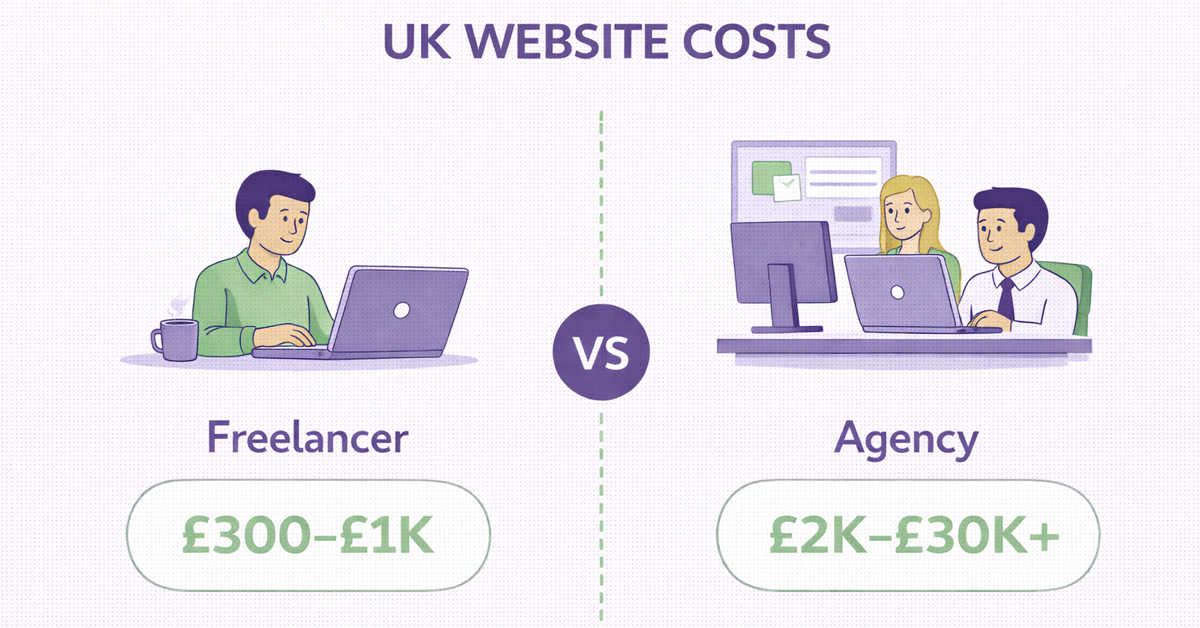
As you can see, freelancer projects tend to occupy the lower end of the budget scale. Agency projects command a higher investment because they typically include strategy, project management, and a full team focused on long-term commercial growth.
To give you a clearer idea of what to expect, let’s break down the typical project costs you will find in the UK.
Typical Website Design Cost Ranges in the UK
| Website Type | Typical Freelancer Price (GBP) | Typical Agency Price (GBP) |
|---|---|---|
| Simple Brochure Website | £300 – £1,000 | £2,000 – £5,000 |
| Small Business Website | £1,000 – £3,000 | £3,000 – £7,000 |
| E-commerce Website | £2,000 – £5,000 | £5,000 – £15,000 |
| Custom Enterprise/SaaS | £5,000+ | £10,000 – £30,000+ |
This table shows that while a freelancer might be the right choice for getting a simple site online, an agency investment is often necessary for businesses needing a robust, scalable, and conversion-focused platform. Your budget should be guided by your business goals.
A Closer Look at Freelancer vs. Agency Pricing
The price you pay will vary significantly depending on who you hire. A freelancer can offer excellent value if your needs are simple. A basic ‘digital business card’ website could set you back just £300 to £1,000. For a more typical small business site with a few extra pages, you are likely looking at £1,000 to £3,000. Even a small e-commerce store could fall between £2,000 and £5,000.
Agencies, on the other hand, operate in a different league. They are built for businesses that need more than just a website; they need a sales machine. The pricing reflects the additional layers of strategy, project management, and focus on delivering measurable results.
- Small Business Websites: An agency will typically quote between £2,000 and £7,000. This covers in-depth work on the user journey, building in proper lead capture mechanisms, and integrating the site with your other marketing tools from day one.
- Medium-to-Large E-commerce: Expect to invest anywhere from £5,000 to £15,000. This budget allows for advanced features, custom payment integrations, and a robust platform built to handle high traffic and sales volumes without failing.
- Custom Enterprise Solutions: For completely bespoke platforms with complex software integrations, the price can easily climb past £10,000 to £30,000 and beyond. This reflects the significant time dedicated to discovery, design, development, and testing.
The real difference is not just the price; it is the depth of service. A freelancer is often hired to execute a specific task you have defined. A performance-led partner, by contrast, takes ownership of the business outcome. Your choice depends on whether you just need an online presence or a powerful tool to grow your business.
Matching Your Website Type to Your Business Goals
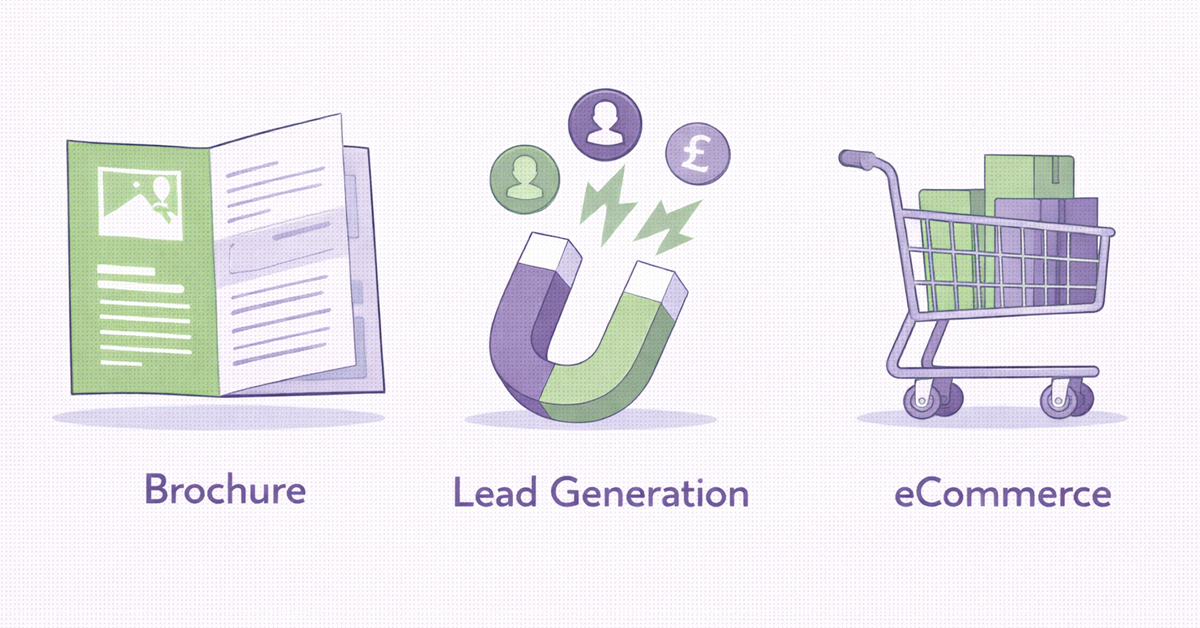
Before you can budget for a new website, you must be crystal clear on one thing: what is this website supposed to do for your business? A website is not just a website. Its cost is tied directly to its function.
Getting this right is the first, and most important, step. Are you looking for a simple online presence, a machine that actively finds you new customers, or a full-blown digital storefront? The answer changes everything, from the features you will need to how much your website design will cost.
Let’s break down the three main types.
The Brochure Website
Think of this as your digital handshake. A brochure website’s main job is to give your business a credible online presence and answer the most basic questions: who you are, what you offer, and how people can get in touch.
These sites are generally small and straightforward. You will usually find a homepage, an ‘About Us’ page, a summary of your services, and a contact form. They are not built for frequent updates or complex user interactions.
- Who it is for: Perfect for new businesses, sole traders, or companies that get most of their work offline but need a professional site to prove they are legitimate.
- The Goal: To build trust and provide essential information. It is not designed to be a primary source of new business.
- Typical Cost: Low. The price reflects its simple purpose and limited features.
A brochure website is a great starting point for brand credibility. It is, however, a passive asset. It will not function as a growth engine that brings in leads or revenue on its own.
The Lead Generation Website
Now we are talking about a proper sales and marketing tool. A lead generation website is engineered from the ground up to do one thing exceptionally well: turn anonymous visitors into qualified sales leads for your business.
This is an active asset that works for you. Every part of it, from the copy to the layout, is designed to encourage action. It often plugs directly into your CRM system and is built to support marketing campaigns like SEO and paid ads. You will see clear calls to action, intelligent forms, and genuinely useful content that visitors are happy to exchange their details for. Our guide on web design and development explains how these pieces fit together.
- Who it is for: A must-have for service-based businesses, B2B companies, and any organisation that needs a steady stream of enquiries to keep the sales team busy.
- The Goal: To generate a predictable flow of high-quality leads, drive down your cost per lead (CPL), and make your entire sales process more efficient.
- Typical Cost: Medium to high. This investment reflects the strategic thinking, conversion-focused design, and technical work needed to deliver measurable results.
The E-commerce Website
An e-commerce website is your entire shop, online. It is so much more than just a pretty product gallery. It is a complex system that must manage inventory, customer accounts, secure payments, shipping, and order fulfilment, all in one place.
For these sites, security and scalability are absolutely critical. They need to be powerful enough to handle sudden spikes in traffic and process thousands of transactions without breaking, all while keeping customer data completely safe. They almost always require complex integrations with other systems for functions like shipping, accounting, and marketing.
- Who it is for: Any business selling products directly to customers (B2C) or even to other businesses (B2B).
- The Goal: To drive online sales, increase average order value, and run a full retail operation smoothly and efficiently.
- Typical Cost: High. The cost is significant, but it is justified by the site’s complexity, the critical need for security, and its role as a direct source of revenue.
Choosing the right type from the start is the single most important decision you will make. It ensures your budget is directed towards a tool built for what you want to achieve, whether that is simply looking professional, capturing leads, or selling products 24/7.
The Key Factors That Drive Your Final Website Cost
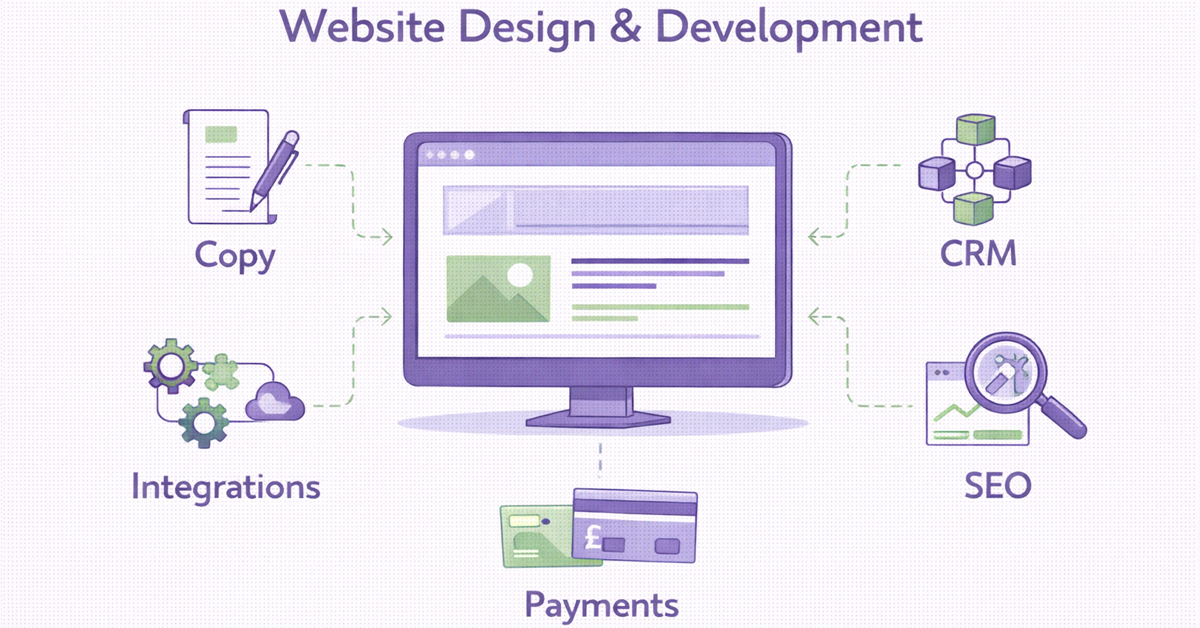
Ever wondered why one website quote is for £2,000 and another is for £20,000? The answer is rarely just the number of pages. The real difference lies in the strategic thinking and technical components that transform a simple online brochure into a revenue-generating machine.
Understanding these key cost drivers is vital. It means you can have a productive conversation about your project and ensure your investment will deliver a commercial return. The final price tag simply reflects the time, skill, and strategy needed to build a site that achieves your specific business goals.
Let’s break down what you are really paying for.
Design and User Experience (UX)
It is a common mistake to view design as just the aesthetic part, the colours and the fonts. In a business context, good design is about guiding your visitors to take a desired action. A strategic design process goes much deeper than just picking a nice-looking template.
It involves:
- User Journey Mapping: Charting out how your ideal customer will move through the site to find what they need and, ultimately, become a lead.
- Wireframing: Creating a blueprint for each page. This ensures the layout is logical and pushes visitors towards taking action, like completing a form or making a purchase.
- Custom Visuals: Developing a unique look and feel that builds brand trust and makes you stand out. To manage costs in this area, you could look at resources like free logo animation templates to add a professional touch without a huge investment.
A cheap website often cuts corners here. The result might look acceptable on the surface, but it will not be effective at converting visitors into customers. Investing in proper UX is a direct investment in your bottom line.
Functionality and Integrations
This is a significant cost driver. The complexity of your website’s features is a major factor in the final cost. A simple contact form is one thing; a booking system that syncs with your calendar and processes payments is a completely different challenge.
Key features that increase the price include:
- E-commerce Capabilities: Adding secure payment gateways, inventory management, and customer accounts requires significant development work.
- Booking and Scheduling Systems: Integrating real-time availability and sending automated confirmations is technically complex.
- CRM Integration: This is a game-changer for sales efficiency. Automatically sending lead data from your website forms straight into your sales system (like HubSpot or Salesforce) saves a huge amount of administration but adds to the initial build cost.
Every piece of custom functionality should solve a business problem or create a commercial opportunity. The goal is not to add features for their own sake, but to build a system that makes your business more profitable and scalable.
Content and SEO Foundations
The words on your website and the way it is structured are what persuade customers and get you found on Google. This is an area where businesses often try to save money, but it almost always proves to be a false economy.
- Conversion Copywriting: This is not just about filling pages with text. It is the art of writing persuasive copy that speaks directly to your ideal customer, addresses their problems, and encourages them to take action. Professional copywriting is a direct investment in the quality and quantity of your leads.
- Foundational SEO: A properly built website has technical SEO integrated from the very start. This means logical URL structures, fast page speeds, mobile-friendly design, and other signals that help search engines understand what your site is about. If you skip this, you will only end up paying to fix it later, often at a much higher cost.
For example, a basic WordPress page might start at £400, but the average sits closer to £3,700, and complex sites can exceed £7,000. Adding a blog for SEO or lead capture tools will increase the price, and full e-commerce functionality can push that average to £3,000. These figures show how trying to save money on a flexible Content Management System (CMS) can lead to 20-30% higher costs in the long run, a common pitfall for small businesses.
Finally, do not forget the ongoing costs for hosting and maintenance. These services keep your site secure, fast, and online. You can learn more about these essential services by reading our guide on what makes up a site hosting cost.
Decoding Common Web Design Pricing Models
Understanding how a potential web design partner will charge you is one of the most important parts of the process. It helps you manage your budget and ensures you do not get a shock when the final bill arrives. The price you are quoted is tied directly to the value and amount of work involved, so it really pays to understand the different ways projects are priced.Most of the time, you will encounter three main pricing models: fixed-price projects, hourly rates, and value-based pricing. Each has its own advantages and disadvantages, and the best fit for you will depend on your project’s clarity, complexity, and the level of risk you are comfortable with.
The Fixed-Price Project
This is the most straightforward model. You both agree on a detailed list of what needs to be done, and the agency gives you a single, all-in price for delivery. For many businesses, the budget predictability this offers is a massive advantage.
However, its greatest strength can also be its biggest weakness. A fixed price depends on having a very rigid scope from the start. If you decide to add a new feature or change direction halfway through, it is almost guaranteed to require a new quote and contract, which can cause delays and increase the cost.
- Best for: Projects with crystal-clear requirements where the end goal is already well-defined. Think of a simple brochure or a lead generation website where the scope is not likely to change.
- Commercial Risk: The agency takes on the risk of delivering within budget. Your risk is that what you scoped at the start might not be exactly what your business needs by the time the project is underway.
The Hourly Rate Model
With this model, you simply pay for the actual time spent working on your project. This gives you maximum flexibility, which is perfect for projects where the scope might change or for ongoing support and maintenance. If you need to pivot or add something new, the agency can just proceed with the work.
The obvious downside is the lack of a predictable budget. Without a firm limit on hours, costs can quickly spiral if the project is not managed with tight control. This is often called “scope creep,” where many small, uncosted changes slowly add up to a much bigger final bill.
- Best for: Ongoing development, website maintenance, or complex projects where the final outcome is not entirely clear from the beginning. It works best when there is a high level of trust between you and your partner.
- Commercial Risk: The risk sits squarely with you. You are responsible for monitoring the hours and ensuring the project stays on track and within a reasonable budget.
Value-Based Pricing
This is a much more strategic and collaborative way of working. Instead of focusing on hours worked or a fixed list of features, the price is tied directly to the commercial value the website is expected to bring to your business.
For example, if a new website is projected to increase your annual lead value by £100,000, the project cost will be a percentage of that anticipated value. This model aligns your interests with your partner’s, as you are both focused on achieving a specific business result, not just ticking off a list of tasks.
Strategic Takeaway: Value-based pricing changes the dynamic from a simple supplier-client transaction to a genuine strategic partnership. The conversation shifts from “how many hours will this take?” to “what business result are we trying to achieve, and what is that worth?”
Performance-focused partners often prefer this model because it puts the emphasis on what truly matters: measurable growth. It forces a deeper level of strategic thinking from the outset and ensures that every part of the project is justified by its potential return on investment.
Ultimately, understanding these models helps you ask the right questions when you are reviewing quotes. It gives you the power to see beyond the bottom-line price and choose a partner, and a pricing structure, that genuinely aligns with your commercial goals.
How to Evaluate Quotes and Choose a Growth Partner
Getting a few quotes for your new website is the easy part. The real work begins when you have to compare them. It is a classic mistake to assume the cheapest quote is the best deal, just as it is a mistake to think the most expensive one guarantees the best results.
What you are looking for is a partner, not just a supplier. You need a team that understands what you are trying to achieve commercially and can build a website that actively helps you get there. A poor choice here is not just a sunk cost; it is months of lost opportunity. The right partner, on the other hand, will deliver an asset that generates leads and drives predictable growth.
Look Beyond the Price Tag
A quote is your first real insight into an agency’s way of thinking. A suspiciously low price often means they are cutting corners on the very things that generate a return: strategy, user experience (UX), and conversion rate optimisation.
When you are sifting through proposals, keep an eye out for these things:
- A Clear Scope of Work: Is everything laid out in plain English? Vague promises like “SEO-friendly build” are a red flag. A proper proposal will be specific, detailing everything from the number of design revisions to the exact technical SEO tasks they will complete.
- Evidence of Listening: Does the proposal feel like a copy-and-paste job, or does it reflect the conversations you have had? A true growth partner connects their proposed solution directly to your business challenges.
- A Solid Process and Timeline: A professional quote will break the project down into clear milestones with realistic deadlines. It shows they have a structured process and are not just improvising.
A detailed, well-thought-out proposal is a sign of strategic thinking. A one-page quote with a single price suggests a transactional supplier selling a commodity, not a long-term partnership.
To help you compare apples with apples, a checklist can be incredibly useful. It forces you to look past the final number and dig into the details that truly matter for your business’s growth.
Quote Comparison Checklist
| Evaluation Criteria | Quote A | Quote B | Quote C |
|---|---|---|---|
| Clarity of Scope (Deliverables) | |||
| Bespoke Strategy vs. Template | |||
| Detailed Project Timeline | |||
| On-page & Technical SEO Included | |||
| Content Creation / Migration Plan | |||
| Number of Revisions | |||
| UX/UI Design Process Explained | |||
| Post-Launch Support & Training | |||
| Clear Hosting & Maintenance Costs | |||
| Demonstrated Understanding of Goals |
Using a simple table like this provides a side-by-side view, making it much easier to spot where the real value lies and which agency is truly aligned with your vision.
Assess Their Portfolio with a Commercial Eye
Honestly, almost anyone can build a website that looks nice. You need a partner who builds websites that sell. When you are looking through their past work, you need to put on your commercial hat.
For each project in their portfolio, ask yourself:
- Is there a clear call to action?
- Do I immediately understand what this business does and who it is for?
- Does the design guide me towards a goal (like filling out a form), or is it just cluttered?
- Do their case studies talk about actual results, like an increase in leads, conversions, or revenue?
A portfolio full of beautiful but commercially weak websites is a massive red flag. You are looking for proof that they know how to turn visitors into customers. For a deeper dive on this, our article on how to choose a web design agency has a full checklist to guide you.
Ultimately, picking the right partner is the single most important decision you will make. Take your time, ask the tough questions, and choose an agency that is as invested in your growth as you are.
Calculating the True ROI of Your Website Investment

Getting your new website live is the starting line, not the finish. While the initial build cost is a significant part of the budget, it is just one piece of the puzzle. For a website to become a reliable lead generation engine, it needs ongoing investment. This means shifting your mindset from a one-off cost to its long-term return on investment (ROI).
Many business owners are caught out by the recurring costs needed to keep a website fast, secure, and effective. These are not optional extras; they are vital for protecting your investment and ensuring it continues to deliver real commercial value.
Forgetting to budget for them is like buying a performance car but then refusing to pay for fuel or its annual service. It simply will not perform.
Uncovering the Hidden Ongoing Costs
Before you can work out your return, you need to understand your total investment. The fee for the initial design and build is just the beginning. Your website will have several running costs that you need to factor into your budget.
These usually include:
- Web Hosting: Think of this as the ‘rent’ you pay for your website’s spot on the internet. High-quality hosting ensures your site is quick and dependable, which has a direct impact on user experience and your SEO rankings.
- Security and Maintenance: This covers items like regular software updates, security scans, and crucial backups. Skimping on this leaves your site vulnerable to hackers and performance problems, which can kill trust and cost you leads.
- Software and Plugin Licences: Many sites use premium software for specific features, like advanced contact forms, e-commerce functions, or performance boosters. These often come with annual renewal fees.
These ongoing costs are the very foundation upon which your website’s performance is built. Cutting corners here is a false economy that will almost certainly lead to bigger, more expensive problems down the line.
Moving from Cost to Return on Investment
Once you have a clear picture of your total investment, you can start to measure the commercial success of your website. This is where the conversation shifts from “how much does it cost?” to “what return is it generating?”
To truly understand the long-term value your website brings, it is essential to grasp what is Return on Investment (ROI)? and how to apply it to your digital marketing.
For a lead generation website, ROI is not measured in vague metrics like ‘traffic’ or ‘brand awareness’. It is measured in cold, hard commercial numbers that directly affect your bottom line.
Your website is not just a marketing expense; it is a sales system. Its success should be judged on its ability to generate high-quality leads that your sales team can convert into profitable revenue.
Tracking the Metrics That Matter
To calculate the true ROI of your website, you need to be tracking the right key performance indicators (KPIs). These numbers tell you whether your investment is paying off and, just as importantly, where you can make improvements.
You should be focusing on these core commercial metrics:
- Lead Volume: The total number of enquiries your website generates. This is your top-line metric for sales activity.
- Lead Quality: Not all leads are created equal. You must track how many enquiries turn into genuine, qualified sales opportunities.
- Conversion Rate: This is the percentage of website visitors who take a desired action, such as filling out a contact form. A higher conversion rate means you are getting more leads from the exact same amount of traffic.
- Cost Per Lead (CPL): Your total marketing spend (including website costs) divided by the number of leads generated. The goal is to get this figure consistently lower over time.
By framing your website as a dynamic sales asset that needs ongoing optimisation, you can build a realistic long-term budget. This is how you ensure your digital platform delivers what every business owner wants: predictable, scalable, and profitable growth.
Frequently Asked Questions About Website Costs
Thinking about how much to budget for a new website brings up a lot of questions. It is a big investment, so it is only right you get some straight answers. We have pulled together the most common queries we hear from business owners to help provide clarity.
Can You Build a Website for Free?
Technically, yes, you can get a website up and running for free using certain platforms. These “free” sites, however, always come with a catch, and it is usually a big one for any serious business.
You will almost certainly be stuck with an unprofessional web address (like yourbusiness.wordpress.com), the platform’s own advertising on your pages, and very basic features. It might be acceptable for a personal project, but it lacks the credibility and power a real business needs. A professional site that actually helps you grow requires your own domain name and proper hosting.
How Much Does a One-Page Website Cost?
For a single-page website, you can expect to pay anywhere from a few hundred to a few thousand pounds. The final figure really depends on what goes into it: the level of design, the quality of the writing, and whether you need it to perform any complex functions, such as feeding leads into your CRM.
A simple one-pager built from a template will sit at the lower end of that scale. A strategically designed page with top-notch content and conversion tracking built-in is a different proposition altogether and will command a higher investment. The real question is: do you just want a page that exists, or one that actively brings in business?
Why Do Quotes for the Same Website Vary So Much?
The quotes you receive will vary wildly because you are not just buying a “website.” You are buying a process, a level of expert thinking, and a business asset with a specific job to do.
A low quote almost always means you are getting a template-based site with very little strategic input. A higher quote, on the other hand, usually includes:
- Strategic Planning: A deep dive into your business, your market, and what your customers actually want.
- Custom UX Design: Crafting a user journey from the ground up, designed specifically to turn visitors into enquiries.
- Professional Copywriting: Words that are written to sell and persuade, not just to fill a page.
- Technical SEO Foundations: Building the site correctly from day one, so Google understands what you are about.
In short, a bigger price tag often reflects a partnership focused on delivering a return on your investment, not just handing over a set of webpages.
Is a Website Worth It for a Small Business?
Absolutely. A professional website is not a luxury anymore; it is the foundation for your credibility and growth. Think of it as your 24/7 sales representative, letting people find you, learn what you do, and get in touch whenever they are ready.
Without a credible online home, you are effectively invisible to most of your potential customers. A well-made website is one of the most powerful and cost-effective marketing tools any small business can own.
Ready to invest in a website that acts as a lead generation engine for your business? The team at Lead Genera builds conversion-focused websites designed for measurable growth. Discover how we can help you build a powerful online asset.
Categories
Do You Need Assistance With
Sign Up To Our Newsletter